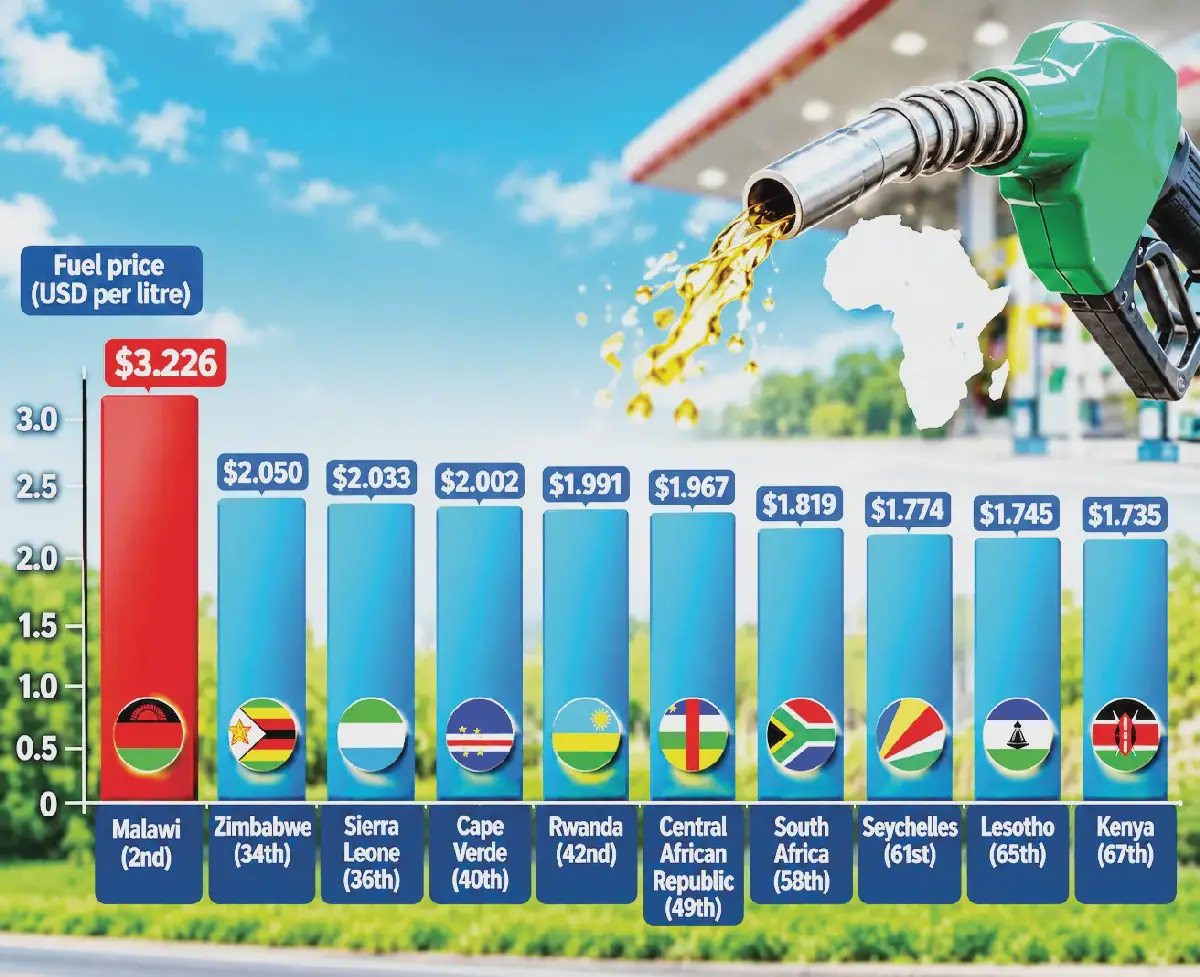
The fuel crisis in Malawi has taken a turn for the worse, with motorists struggling to find fuel and facing unprecedented prices. As of November 4, 2026, the price of petrol stands at K5,619.00, equivalent to $3.23 per litre, making it the most expensive in the region. This has put a significant strain on the livelihoods of Malawians, who are already facing economic challenges.
A graph depicting price trends in the region shows that Malawi's fuel prices are significantly higher than those of its peers. The rising fuel prices have been attributed to various factors, including global market trends and local economic conditions. The situation has been exacerbated by the scarcity of fuel, with many petrol stations experiencing shortages.
The fuel crisis has had a ripple effect on the economy, with various sectors feeling the pinch. The automobile industry, for instance, has been hit hard, with many car owners struggling to afford fuel for their vehicles. The economic slowdown has also affected the production and distribution of goods, leading to shortages and increased prices.
The Malawi government has been urged to intervene in the fuel crisis, with many calling for a reduction in fuel prices. However, the government has been constrained by global market trends and local economic conditions. The Reserve Bank of Malawi (RBM) has implemented monetary policies aimed at stabilizing the economy, but the fuel crisis persists.
The fuel shortages have also affected the dairy industry, with many farmers struggling to transport milk to processing plants. This has resulted in spoilage and losses for many farmers, who are already operating on thin margins. The situation has been worsened by power outages, which have disrupted the cold chain and further compromised the quality of milk.
In response to the fuel crisis, some companies have unveiled initiatives aimed at mitigating the impact. Sky Energy, for instance, has launched a K15 billion electric mobility project aimed at reducing reliance on fossil fuels. The project is expected to provide a sustainable solution to the fuel crisis and promote environmentally friendly transportation.
The fuel crisis in Malawi is expected to continue in the short term, with many experts predicting that prices will remain high. The government and other stakeholders are working to find a lasting solution to the crisis, but it is likely that motorists will continue to feel the pinch in the coming months. The situation has highlighted the need for Malawi to diversify its energy sources and reduce its reliance on imported fuel.
Key points
- Malawi's fuel price stands at K5,619.00 per litre, the highest in the region.
- The fuel crisis has affected various sectors, including the automobile and dairy industries.
- The government and other stakeholders are working to find a lasting solution to the crisis.