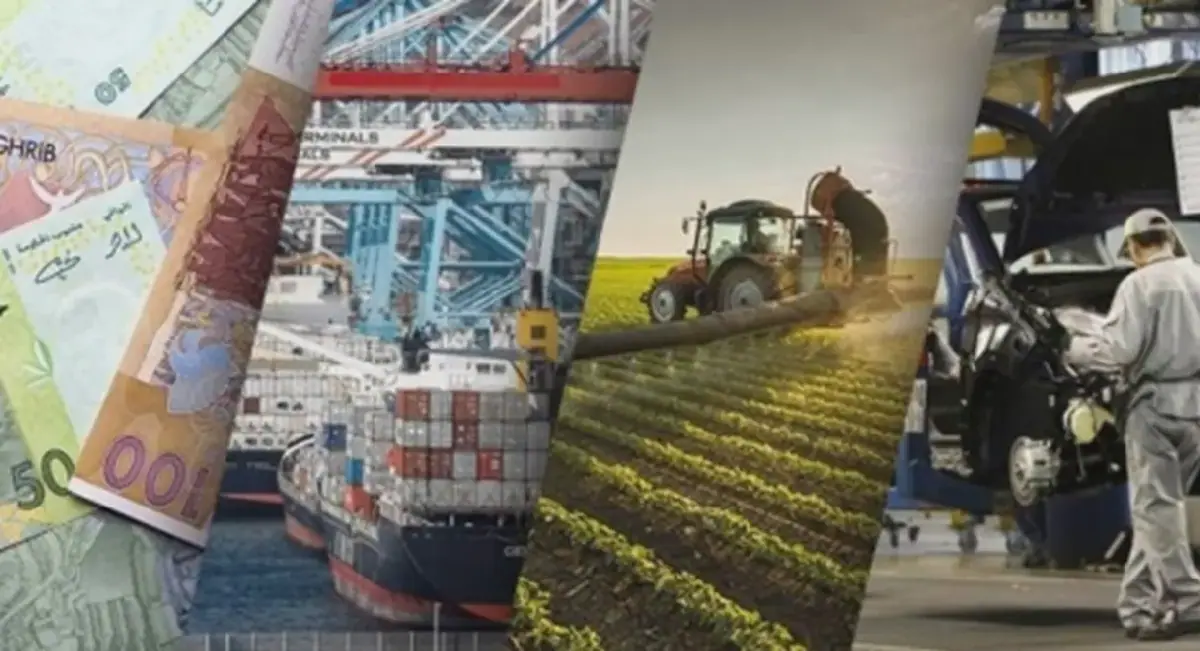
The Moroccan government's projection of 3.7% economic growth for 2027 exceeds estimates by the country's central bank and planning commission. The central bank forecasts 2.9% growth, while the planning commission estimates 3% growth. This disparity raises questions about the government's ability to stimulate economic growth through fiscal policy. According to economist Abdelrazak Hiri, the government's investment efforts will play a crucial role in achieving its growth projections.
The government's public investment plan for 2027 totals 400 billion dirhams, which Hiri considers a strategic move to boost economic activity and create jobs. This investment is expected to have a multiplier effect on national income by stimulating demand for goods and services, increasing employment opportunities, and rising household incomes. Hiri notes that public investment can drive economic growth, especially when combined with targeted social and tax measures.
Hiri highlights the importance of the government's planned tax and social measures, including the gradual reform of income tax. These measures aim to support domestic consumption by improving the net disposable income of beneficiary households. The effectiveness of these measures depends on the marginal propensity to consume, which is typically higher among low- and middle-income households.
However, Hiri cautions that the impact of these measures may be limited if prices for essential goods and services, such as food, housing, energy, and healthcare, continue to rise. He also notes that if these measures primarily benefit high-income households with high savings rates, their overall effect on economic growth may be muted.
The government's challenge, according to Hiri, is to shift from a budget focused on resource mobilization and allocation to one that fosters a positive cycle of investment, employment, income, consumption, and growth, while maintaining public financial sustainability. Achieving this goal will require careful planning and coordination of fiscal policies.
The 2027 budget will need to balance the government's growth objectives with the need to maintain economic stability and ensure that the benefits of growth are shared equitably among all segments of society. Morocco's economic growth is closely watched by investors, policymakers, and citizens, who are eager to see the country maintain its economic stability and achieve sustainable growth.
As Morocco prepares to implement its 2027 budget, the government faces a critical test of its economic policies. With the right combination of investment, tax reform, and social measures, the country may be able to achieve its growth projections and create a more prosperous future for its citizens. However, if the challenges of inflation, unemployment, and inequality are not addressed, the country's economic growth may fall short of expectations.
Key points
- The Moroccan government's 2027 growth projection of 3.7% exceeds estimates by the central bank (2.9%) and planning commission (3%).
- The government's public investment plan for 2027 totals 400 billion dirhams, aiming to stimulate economic growth and create jobs.
- The effectiveness of the government's tax and social measures in supporting domestic consumption and economic growth depends on various factors, including the marginal propensity to consume and inflation rates.