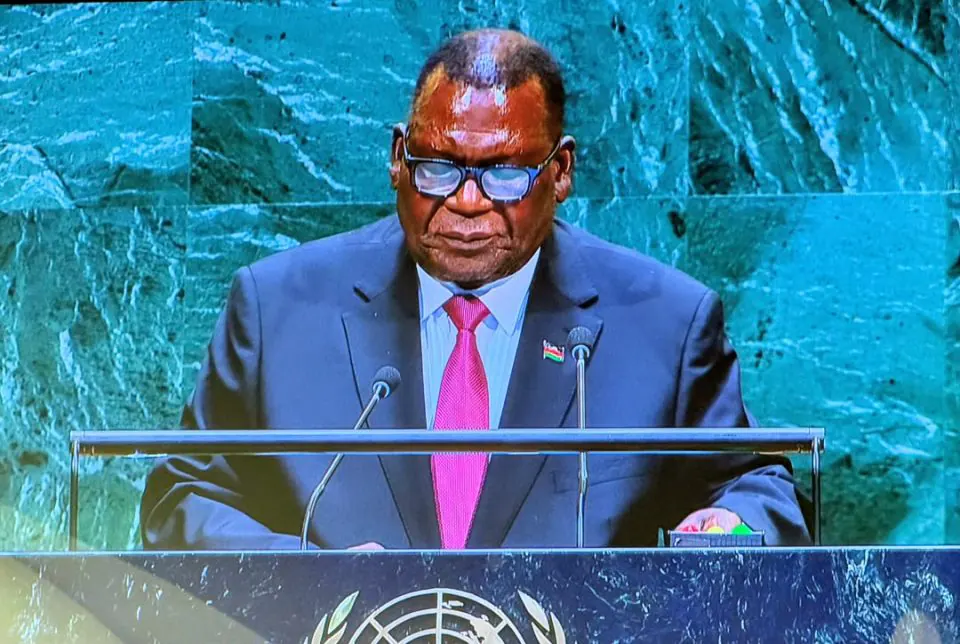
Malawi's Minister of Foreign Affairs and International Cooperation, Dr. George Chaponda, has called for urgent reforms to the global multilateral system during the 81st UN General Assembly. He emphasized the need for the United Nations to shift from a "forum of speeches to an engine of delivery" for vulnerable nations. This call for transformation comes as the international community seeks to address pressing global challenges. Chaponda's remarks were made during the General Debate of the 81st UN General Assembly.
Dr. Chaponda highlighted several key areas that require concrete action, including development, climate change, debt, global governance, health, and peace. To restore trust in the international system, he stressed the importance of addressing these pressing issues. Malawi's foreign minister also called for comprehensive debt relief and restructuring, increased concessional financing for agriculture, industrialization, and infrastructure. These measures, he believes, are crucial for supporting Malawi's development goals, as outlined in the Malawi 2063 vision.
Climate change was another critical issue addressed by Dr. Chaponda. He urged the full operationalization and capitalization of the Loss and Damage Fund, as well as predictable and accessible climate finance for vulnerable developing countries. This, he emphasized, is essential for supporting countries like Malawi in their efforts to mitigate and adapt to the impacts of climate change. The Minister's remarks reflect the concerns of many developing nations, which are disproportionately affected by climate-related disasters.
Malawi also renewed its call for comprehensive reform of the UN Security Council. Dr. Chaponda advocated for permanent African representation with full veto privileges, as well as reforms to the international financial architecture. These changes, he believes, are necessary to ensure that the voices of all nations are heard and that the international system is more equitable and representative. The issue of UN Security Council reform has been a long-standing concern for many countries, particularly those from the African continent.
In the area of global health, Dr. Chaponda called for stronger pharmaceutical manufacturing capacity in Africa and a legally binding Pandemic Treaty based on equity, solidarity, and resource sharing. He also urged an end to active conflicts, suggesting that resources spent on warfare should instead support poverty reduction, education, and sustainable development. These proposals reflect Malawi's commitment to promoting global health and security, as well as its desire to see more resources devoted to development.
The Minister also touched on the issue of emerging technology, specifically artificial intelligence. He called for inclusive and ethical global governance of AI, ensuring that developing countries benefit from technological advancements rather than being left behind. This, he believes, is crucial for promoting equitable development and ensuring that the benefits of technology are shared by all. Malawi's stance on AI governance reflects its desire to harness the potential of technology for development.
Dr. Chaponda concluded his address by reaffirming Malawi's commitment to economic diplomacy, international justice, human rights, and multilateralism. He declared that Malawi is open for business and urged world leaders to build a United Nations that delivers wealth instead of poverty, resilience instead of vulnerability, and peace instead of conflict. The 81st UN General Assembly high-level week, which opened on September 22, 2026, was held under the theme 'restoring trust, managing transformation: a United Nations that delivers for all'.
Key points
- Malawi calls for comprehensive UN reforms to address global challenges.
- Dr. Chaponda urges stronger international support for vulnerable nations.
- Malawi advocates for permanent African representation on the UN Security Council.