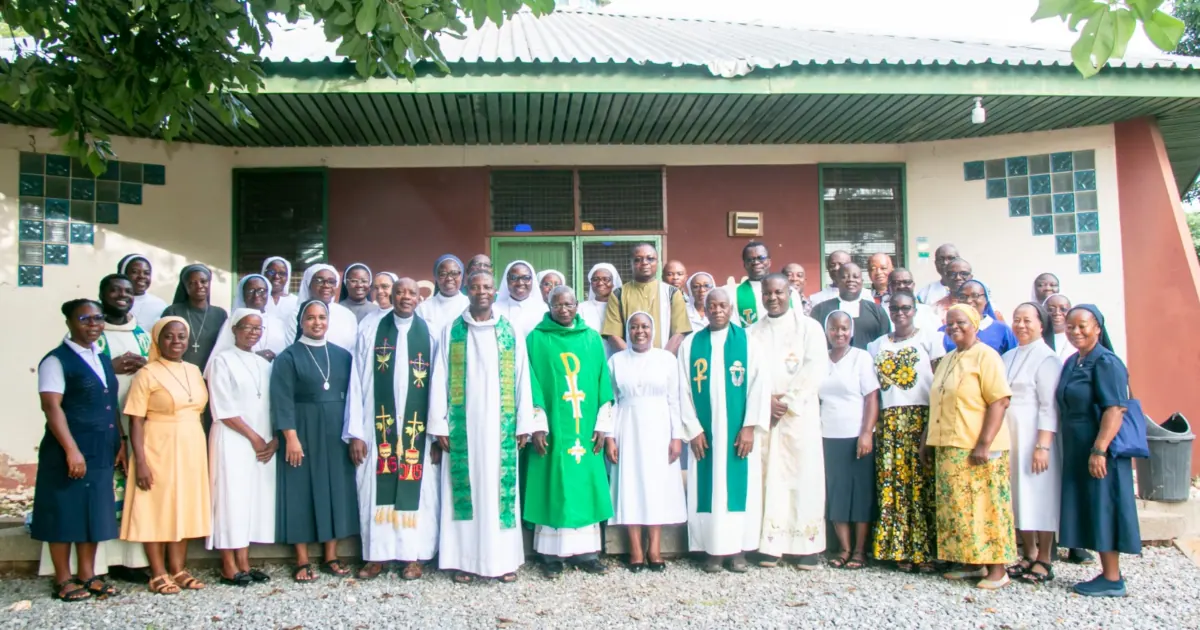
Leaders of Catholic religious institutes and consecrated men and women from across Ghana have gathered in Wa for a week-long plenary assembly. The Biannual Plenary Assembly of the Conference of Major Superiors of Religious, Ghana (CMSR-Gh), is taking place from 4 to 10 October 2026 at the In-Service Training Centre in the Diocese of Wa. The assembly brings together religious leaders, consecrated persons, and other collaborators for prayer, reflection, dialogue, and discernment on their service to the Church and society.
The assembly's theme, "Synodal paths to mission sustainability: Walking together in hope," reflects the need for stronger collaboration among congregations. CMSR-Gh President Sr Dr Lucy Hometowu, SMMC, called for greater collaboration, saying their different charisms, traditions, and apostolates should serve as a source of strength rather than division. She urged consecrated persons to pool their gifts, experience, personnel, and resources to respond more effectively to contemporary challenges.
The priorities for greater collaboration include formation, vocation promotion, youth empowerment, safeguarding, ecological justice, healthcare, education, pastoral ministry, social transformation, and communication. Other priorities include caring for elderly and infirm clergy and consecrated persons, as well as managing resources sustainably. Sr Dr Hometowu said the CMSR-Gh offered a platform for members to learn from and support one another, while discerning how best to serve the Church and society.
The Bishop of Wa, Most Rev Francis Bomansaan, M.Afr., welcomed participants to the diocese, describing them as co-workers in the vineyard of the Lord. He expressed appreciation for the various charisms and contributions of congregations serving in Ghana. The bishop described the assembly as an opportunity for renewal, reflection on the prophetic and apostolic role of consecrated persons, and stronger collaboration in evangelisation.
Delivering the keynote address, Franciscan priest and academic Friar Dr Joseph Kwame Blay challenged the Major Superiors to look beyond maintaining existing projects and structures and consider how the Church's mission could endure beyond the current generation of leaders. He said schools, hospitals, social care institutions, and church buildings established by religious institutes were means through which the Church participated in Christ's mission, rather than the mission itself.
Fr Blay outlined the spiritual, vocational, leadership, institutional, charismatic, financial, and material dimensions of sustainability, urging religious institutes to prepare successors deliberately. He warned that a leadership system dependent on one strong individual was fragile and called for a culture that developed people, shared responsibility, and prepared the next generation. The assembly continues until 10 October, with participants reflecting on the challenges and opportunities facing consecrated life and its contribution to the Church in Ghana.
The future of consecrated life in Ghana depends on moving from an ego-centred approach to mission towards one rooted in Christ and collaboration. Fr Blay advocated stronger cooperation between religious institutes and dioceses, saying they had complementary roles in sustaining the Church's mission. He urged participants to listen deeply to God and one another during their time in Wa and to return to their communities with renewed zeal, fresh vision, and stronger bonds of fraternity.
Key points
- Consecrated persons in Ghana gather to reflect on their role in the Church and society.
- The assembly aims to promote greater collaboration among congregations.
- The future of consecrated life in Ghana depends on sustainability and collaboration.