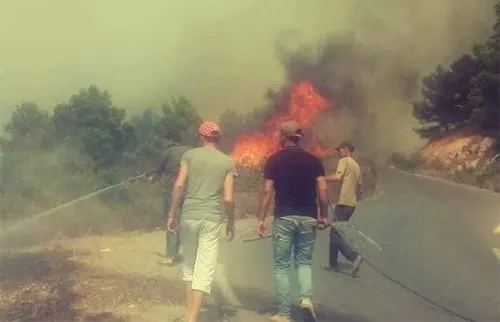
A significant forest fire broke out in Adrar Oumaza, located in the commune of Tamokra, Algeria, on the afternoon of an unspecified day. The fire, fueled by strong winds, rapidly spread and destroyed approximately 70 hectares of land, primarily consisting of highly flammable Aleppo pine trees. This type of tree is particularly prone to igniting and spreading fires during periods of high temperatures.
The fire was eventually brought under control by firefighters and forest conservation agents at the start of the following morning, after hours of intense battling. Despite this, a substantial response team remained on site to monitor the situation. Local residents described the aftermath as a scene of desolation, with hundreds of hectares of forest, underbrush, and trees reduced to ashes.
The challenging terrain hindered firefighting efforts, as the absence of accessible roads prevented firefighters from reaching certain areas. In the past, conservation officials in Béjaïa's wilaya have advocated for the deployment of aerial support to combat fires in inaccessible zones. This request highlights the need for enhanced resources to effectively manage and extinguish forest fires in the region.
The recent fire is not an isolated incident, as the Béjaïa Civil Protection unit reported 58 fire outbreaks in various communes within the wilaya last week. Nine of these incidents were classified as significant, resulting in the destruction of over 20 hectares of land, including maquis, underbrush, dozens of olive trees, and beehives.
According to the Civil Protection authorities, the current climate conditions are conducive to such fires. The combination of high temperatures, strong winds, and dry vegetation creates a highly combustible environment. This situation underscores the importance of preventive measures and effective emergency response strategies to mitigate the impact of forest fires.
The local community and authorities are likely to face challenges in restoring the affected areas, given the extent of the damage and the difficulties in accessing the terrain. Efforts to rehabilitate the forest and prevent future fires may require coordinated actions from various stakeholders, including conservation agencies, local authorities, and residents.
The incident serves as a reminder of the ongoing risks associated with forest fires in the region, particularly during periods of hot and dry weather. It highlights the need for sustained vigilance, improved emergency preparedness, and enhanced resources to protect the region's forests and natural resources.
Key points
- 70 hectares of Aleppo pine trees were destroyed in the fire.
- The fire was fueled by strong winds and challenging terrain.
- The incident is part of a larger pattern of forest fires in the region, with 58 outbreaks reported in Béjaïa's wilaya last week.