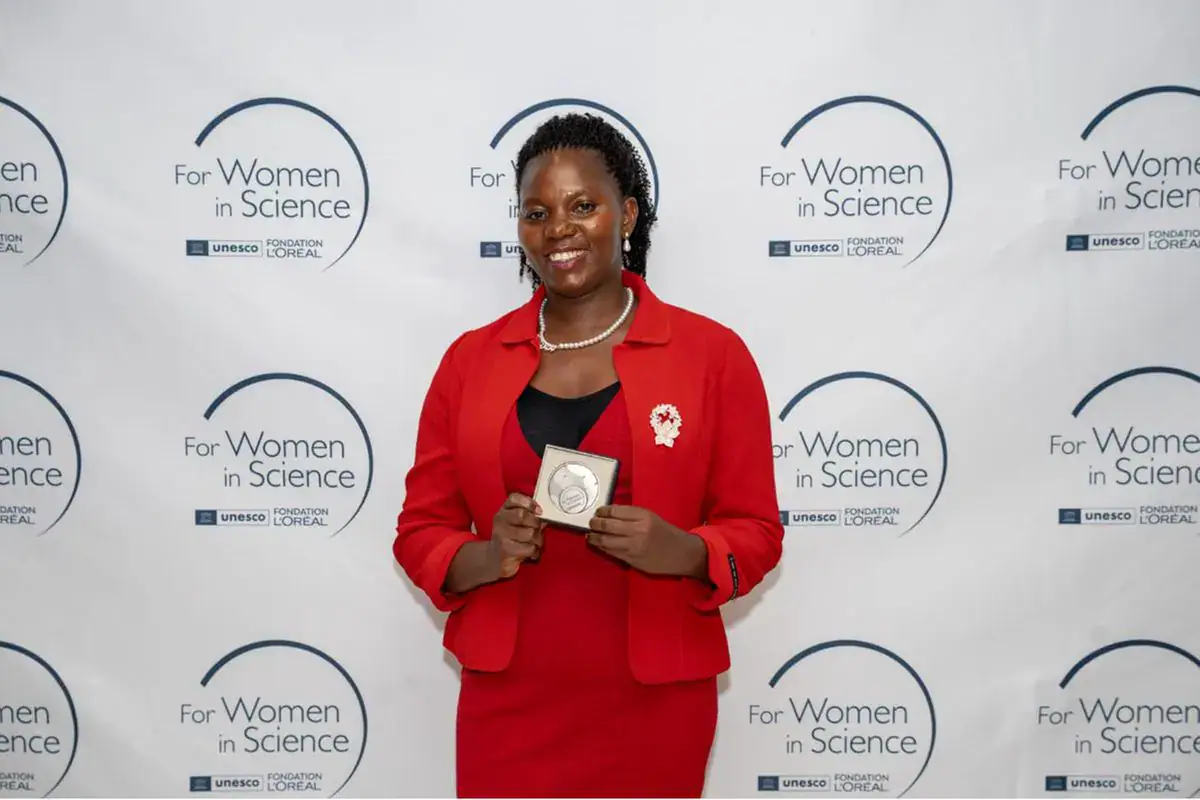
Tanzanian researcher Dativa Pereus has been recognised among 38 scientists from sub-Saharan Africa in the 2026 L’Oréal-UNESCO For Women in Science programme. The programme, which took place in Johannesburg on November 19, 2026, highlights the contributions of women in scientific research addressing real-world challenges. Ms Pereus's work focuses on using genetic information to improve malaria surveillance, a significant achievement given her background and the challenges she has faced.
Ms Pereus's journey to scientific recognition was not straightforward. She grew up in a difficult environment, losing her mother in Form Three, which left her family struggling financially. She almost gave up on education but was encouraged by her headteacher to continue. She received support through a programme that enabled her to complete secondary school at Maswa Girls Secondary School in Shinyanga, where she pursued science subjects. Despite struggling to adjust to advanced-level education, she worked hard to catch up with her classmates.
The challenges Ms Pereus faced were compounded by her community's suffering, where people died due to lack of medical treatment. This reality motivated her to contribute to finding solutions to problems affecting people's lives. She became determined to change her circumstances and pursued a career in bioinformatics, a field that combines biology, computing, and data analysis. At the University of Nairobi, Ms Pereus is conducting research titled "Improving Malaria Surveillance through Integrated Genomic Metrics and Epidemiological Data to Monitor Transmission and Intervention Impact in Tanzania."
Ms Pereus's research aims to improve understanding of malaria transmission, including infections among people who do not seek treatment at health facilities, while identifying areas requiring more targeted interventions. She also examines genetic changes in malaria parasites to establish their potential implications for treatment effectiveness and the emergence of drug resistance. Her work is conducted in collaboration with the National Institute for Medical Research (NIMR) and the Ifakara Health Institute (IHI).
As a woman in a male-dominated field, Ms Pereus has faced significant challenges. She believes she is the first woman in Tanzania to pursue a PhD in bioinformatics, highlighting the limited representation of women in the field. With few established female role models to guide her career, she has relied on professional networks, online learning, and personal initiative to develop her expertise. She has built connections with researchers from the United States, Switzerland, Kenya, and Cambridge, who have helped her access learning resources and professional guidance.
Balancing scientific ambitions with motherhood has also been a significant challenge for Ms Pereus. As a mother of five, she must manage family responsibilities alongside the demands of academic research. Financial uncertainty has added to the pressure, with funding supporting her studies running out before she could complete her academic journey. Despite these challenges, Ms Pereus's recognition in the L’Oréal-UNESCO For Women in Science programme has brought continental attention to her work.
Ms Pereus's achievement is a testament to her determination and hard work. Her recognition in the programme highlights the contribution of Tanzanian women to scientific research addressing real-world challenges. As she continues her research, she hopes to inspire other women to pursue careers in science, particularly in male-dominated fields like bioinformatics. Her journey serves as an inspiration to young women in Tanzania and across the continent.
Key points
- Tanzanian researcher Dativa Pereus receives recognition in the 2026 L’Oréal-UNESCO For Women in Science programme for her work on using genetic information to improve malaria surveillance.
- Ms Pereus overcame significant challenges, including financial hardship, limited academic support, and balancing scientific ambitions with motherhood.
- Her recognition highlights the contribution of Tanzanian women to scientific research addressing real-world challenges.
Reporting sources
- From near school dropout to continental science recognition: Tanzanian researcher Dativa Pereus defies the odds · https://www.thecitizen.co.tz/