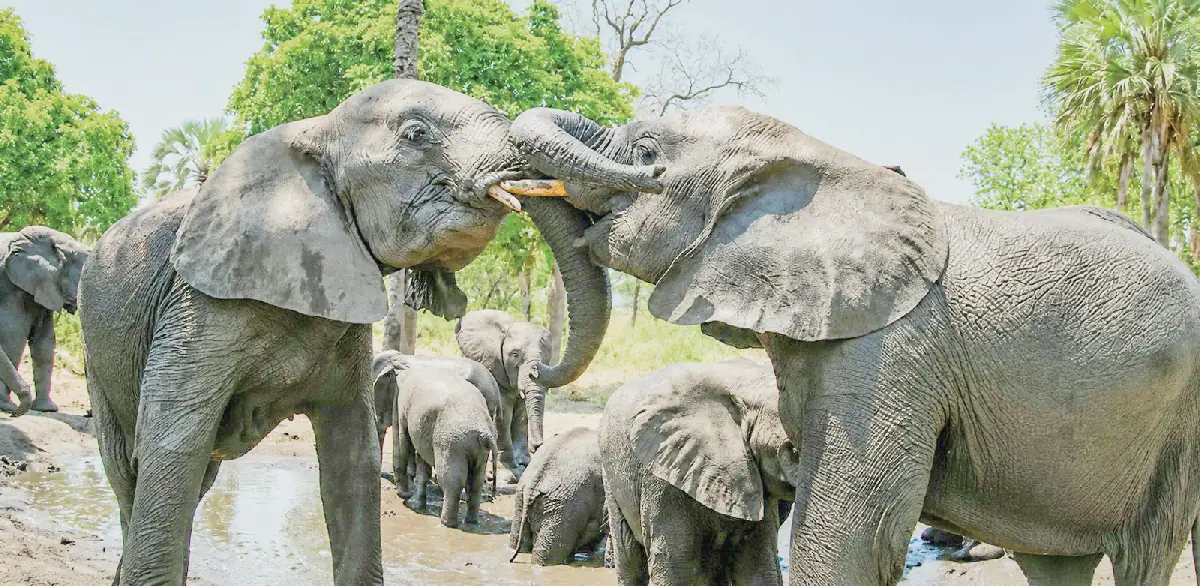
Majete Wildlife Reserve in Malawi has undergone a significant transformation from a nearly extinct wildlife reserve to a thriving conservation success. A veteran wildlife ranger who witnessed the reserve's collapse and revival described the change as striking and emotional. The reserve's revival is attributed to a public-private partnership between African Parks and the Government of Malawi, which has restored the 700 square kilometer reserve into one of the country's most successful conservation stories.
The reserve now hosts all of the "Big Seven" species: lion, leopard, elephant, buffalo, rhino, wild dog, and cheetah, alongside a steadily recovering population of other native species. This contrasts sharply with conditions two decades ago when the reserve had been pushed to the brink of ecological collapse due to years of uncontrolled poaching, illegal settlements, and deforestation. By 2002, only a handful of antelopes remained, and there was no recorded tourist activity.
The turning point came in 2003 when African Parks assumed management under a public-private partnership agreement with the Government of Malawi. Park Manager John Adendorff said that intensive protection, improved fencing, and community engagement created the conditions for wildlife to return. The recovery has gone beyond conservation alone and has become a model for ecological restoration and rural development.
Majete's success is also reflected in its role as a source population for other protected areas. Since 2016, the reserve has translocated more than 1,100 animals to support wildlife restoration elsewhere in Malawi. This includes over 100 elephants moved during the historic 500-elephant translocation exercise in 2017, one of the largest wildlife relocation efforts in the region.
The reserve recently reported earning about $1.036 million from international tourism in the past year, a figure that reflects its growing global appeal. Government officials say the partnership has become a benchmark for conservation management in Malawi. Director of National Parks and Wildlife Brighton Kumchedwa says Majete demonstrates what strong collaboration can achieve.
Traditional leaders have also welcomed the transformation, saying it has brought tangible benefits to their communities. Senior Chief Kanduku of Mwanza District said that community engagement remains a central pillar of Majete's recovery strategy. The reserve has invested heavily in education and local development initiatives, providing support to schools across surrounding districts.
Community Extension Manager Dixie Makwale explained that the reserve continues to support schools, providing funds to improve learning conditions and access to materials. The partnership agreement is expected to be renewed due to its success, with government officials praising African Parks for integrating conservation with community development.
Key points
- The reserve now hosts all of the "Big Seven" species.
- Over 1,100 animals have been translocated to support wildlife restoration elsewhere in Malawi.
- The reserve earned $1.036 million from international tourism in the past year.