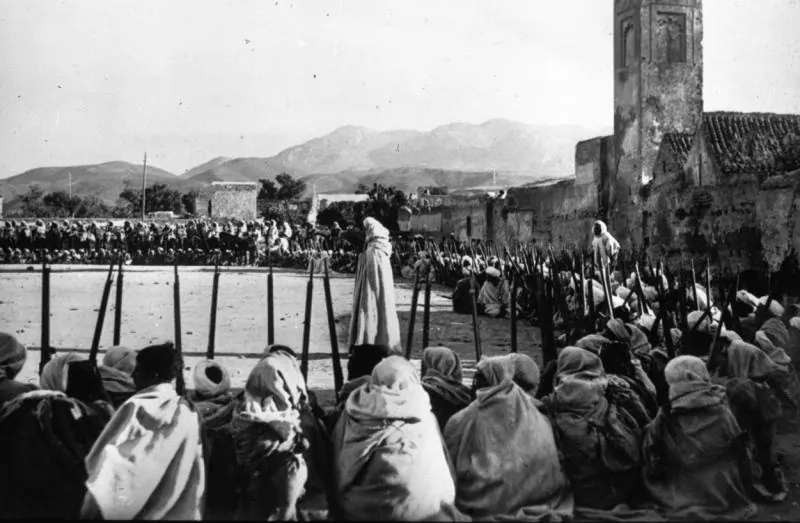
Maintaining order was a crucial aspect of colonial situations, where representatives of colonial powers and local allies interacted with colonized populations to quell perceived anarchy. This concept was central to the colonial experience, as it enabled colonial powers to justify their control over vast territories and populations. According to historian Stève Bessac-Vaure, maintaining order was a primary tool of domination, allowing colonial powers to impose their will on colonized populations. This topic has garnered significant attention from historians in recent years.
The maintenance of order in colonial situations was characterized by a blurring of lines between military action and policing. European powers often relied on local allies and indigenous forces to carry out policing duties, with the understanding that these local forces would be more effective in managing local populations. For instance, in Madagascar, the indigenous guard played a key role in collecting taxes and suppressing dissent. The use of local forces allowed colonial powers to project their authority while minimizing their own military presence.
Historians have identified certain patterns and characteristics of maintaining order in colonial situations. One key aspect was the division of labor along racial lines, with European powers reserving control over European populations and delegating responsibility for controlling colonized populations to local forces. This division of labor was often influenced by prevailing racial attitudes and stereotypes. For example, during the 1930s, Moroccan nationalists were repressed by local forces under the command of Mohammed el Baghdadi.
Despite the importance of local forces in maintaining order, colonial powers often struggled to gather accurate intelligence on the populations they sought to control. To overcome this challenge, colonial administrators established networks of informants and agents to gather information and anticipate potential threats. In Algeria, for instance, officers from the bureaux arabes played a key role in gathering intelligence and advising on policy.
Historians have engaged in debates about the nature of colonial order and its relationship to coercion and consent. Some scholars have questioned whether colonized populations acquiesced to colonial rule or were simply coerced into submission. Others have explored the connections between colonial policing practices and those used in metropolitan centers. For example, Clive Emsley has suggested that colonial policing models drew on a range of influences, including the Royal Irish Constabulary.
Recent research has focused on the practicalities of maintaining order in colonial situations, given the limited resources available to colonial powers. Historians have examined the various strategies and tools used by colonial authorities to prevent or respond to conflicts, including the use of local allies and the development of surveillance networks. These studies aim to shed light on the complex dynamics of colonial control and the ways in which colonial powers adapted to local circumstances.
The study of maintaining order in colonial situations offers insights into the complex and often fraught relationships between colonial powers and colonized populations. By examining the various strategies and tactics used by colonial authorities, historians can gain a deeper understanding of the mechanisms of colonial control and the ways in which colonized populations resisted or acquiesced to colonial rule. This topic remains an important area of research, with implications for our understanding of colonialism and its ongoing legacies.
Key points
- The maintenance of order was a crucial aspect of colonial situations, enabling colonial powers to justify their control over vast territories and populations.
- Colonial powers often relied on local allies and indigenous forces to carry out policing duties, blurring the lines between military action and policing.
- Historians have identified patterns and characteristics of maintaining order in colonial situations, including the division of labor along racial lines and the use of local forces to control colonized populations.