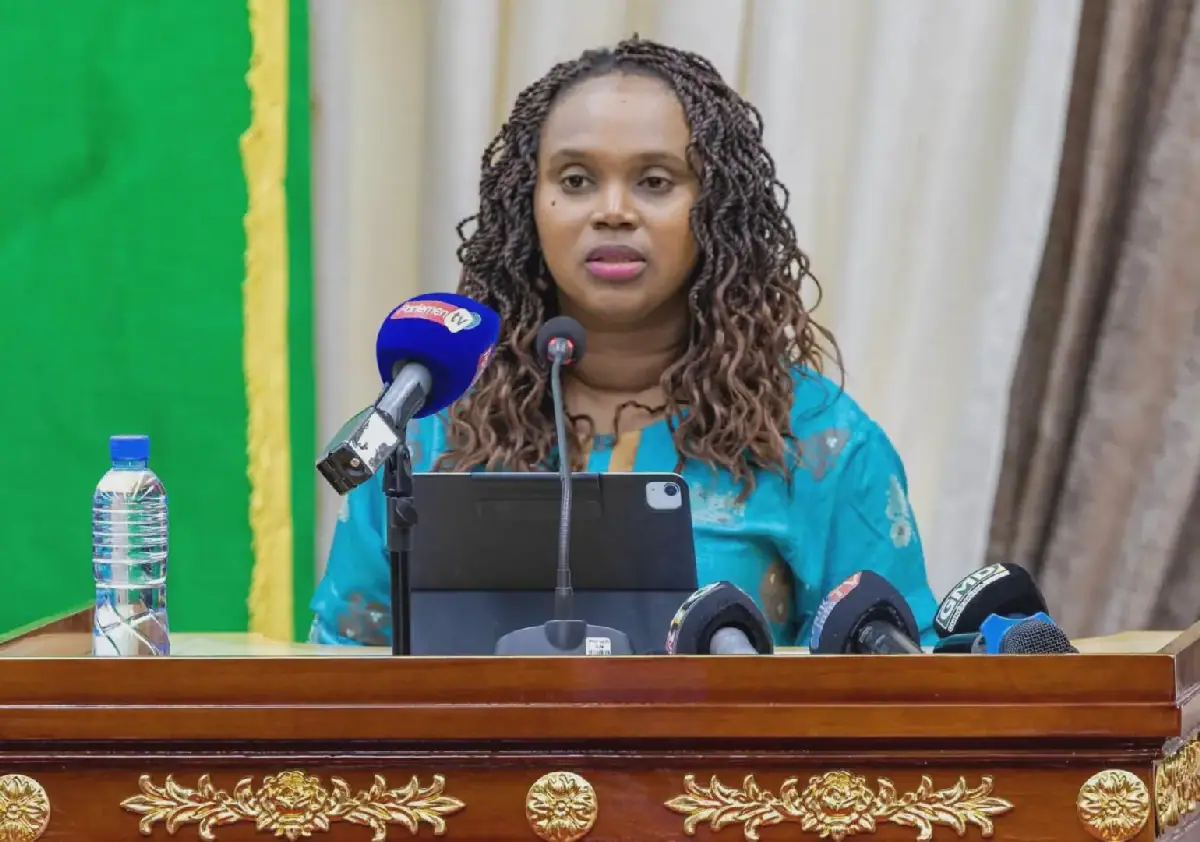
The Guinean government's proposed 2026 revised budget law aims to achieve an 8.6% economic growth rate, with significant investments in social sectors and measures to support purchasing power. The bill, presented to parliament on October 24, 2026, by Minister of Economy, Finance, and Budget Mariama Ciré Sylla, outlines the government's strategy for economic dynamism, public resource mobilization, and social investment. This comes amid accelerated economic activity driven by the mining sector and the Simandou project.
Guinea's economic growth is projected to reach 8.6% in 2026, following 5.4% in 2024 and 7.1% in 2025. The growth is attributed to mining activities, structural investments, and the Simandou project. Foreign direct investments are estimated at $7.8 billion in 2025. The government's challenge is to ensure that the generated wealth benefits households and communities, improving their living standards.
To mitigate the impact of international price pressures, the government has allocated 5,489.7 billion Guinean francs to maintain the fuel price at 12,000 GNF per liter. This policy aims to shield consumers from global oil price fluctuations and transportation cost increases. However, it represents a significant budgetary effort, highlighting the trade-off between protecting purchasing power and managing public finances.
The government's decision to maintain the fuel price has raised questions about potential future increases to reduce the subsidy burden on public finances. While the minister emphasized the budgetary effort to keep the price stable, no explicit announcement was made regarding a potential price hike. The communication may be aimed at justifying the state's support cost or signaling a possible revision of the fuel pricing policy.
The mining sector and Simandou project have contributed to Guinea's economic acceleration. The project's impact on the country's economy and the government's revenue is significant. The authorities must balance economic growth with social welfare and ensure that the benefits of growth are equitably distributed.
The revised budget law and the government's economic strategy will be crucial in determining the country's economic trajectory. The implementation of the proposed measures and investments will be closely monitored to assess their effectiveness in improving living standards and driving sustainable growth.
As Guinea navigates the complexities of economic growth and social welfare, the government's policies and decisions will have a lasting impact on the country's development. The challenge lies in translating economic growth into tangible improvements in the lives of Guinean citizens.
Key points
- The Guinean government has allocated 5,489.7 billion Guinean francs to maintain the fuel price at 12,000 GNF per liter.
- Guinea's economic growth is projected to reach 8.6% in 2026.
- The government's policies aim to balance economic growth with social welfare and improve living standards.