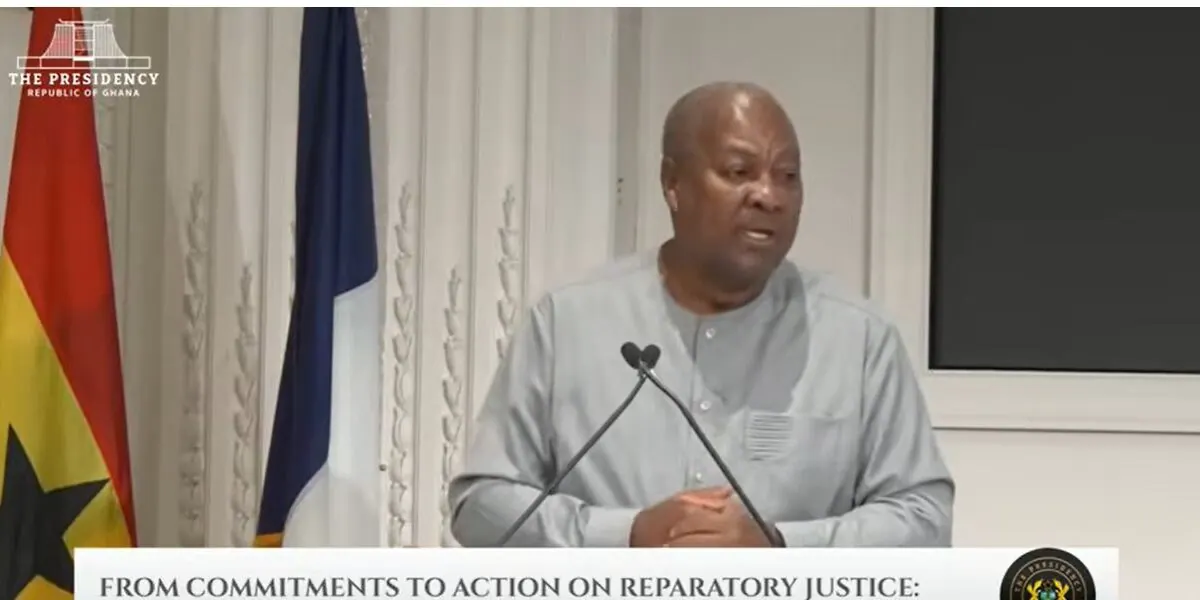
Former Ghanaian President John Dramani Mahama has urged the international community to return Africa's cultural heritage and human remains held in museums and private collections outside the continent. Speaking at a High-Level Side Event on the sidelines of the 81st United Nations General Assembly in New York, Mahama emphasized that the continued possession of African artifacts and remains was not simply an issue of ownership but one of dignity, identity, and justice. He noted that generations of Africans had been separated from important elements of their history and heritage.
Mahama stressed that human remains were not collectibles or specimens but the ancestors of Africans. He cited the 1874 destruction and looting of the Asante Royal Palace in Kumasi by British forces, which led to the dispersal of African heritage across museums and collections worldwide. Although some heritage items have been returned to Ghana, including the Mpomponsuo sword in 2024, Mahama believes that more needs to be done to restore Africa's cultural heritage. He recounted the case of King Badu Bonsu II of Ahanta, who was executed by Dutch authorities in 1838, and his head was taken to the Netherlands for phrenological studies.
The former President's call for restitution forms part of Ghana's broader push for reparatory justice, following the adoption of a UN resolution recognizing the trafficking and enslavement of Africans and calling for action on the enduring consequences of that history. Mahama argued that African artifacts and remains should be returned to the communities and institutions to which they belong, describing them as part of living traditions rather than relics of a distant past. He emphasized that restoring these items was not a matter of legal ownership but a fundamental test of shared human dignity.
Mahama's comments were made on the sidelines of the 81st United Nations General Assembly in New York, where he engaged with global leaders on issues related to Africa's development and cultural heritage. The event, titled "The Next Steps," aimed to discuss ways to address the historical injustices faced by African communities. Mahama's speech resonated with many Africans who have long called for the return of their cultural heritage and human remains.
The issue of restitution has gained significant attention in recent years, with many museums and institutions acknowledging the need to repatriate cultural artifacts and human remains to their countries of origin. In 2009, the Netherlands returned the remains of King Badu Bonsu II to Ghana, setting a precedent for the return of other cultural artifacts and human remains. Mahama's call for action is expected to add momentum to the growing movement for reparatory justice and the restitution of Africa's cultural heritage.
Ghana has been at the forefront of efforts to reclaim its cultural heritage, with the government launching initiatives to promote the return of artifacts and human remains. The country's efforts have been recognized by the international community, with the UN resolution on reparatory justice acknowledging the need for action on the enduring consequences of historical injustices. Mahama's speech is seen as a significant contribution to the ongoing debate on restitution and reparatory justice.
The debate on restitution is expected to continue, with many experts and policymakers calling for a more nuanced approach to addressing the complex issues surrounding cultural heritage and human remains. As the international community grapples with the challenges of restitution, Mahama's call for action serves as a reminder of the need for a concerted effort to address the historical injustices faced by African communities. The return of Africa's cultural heritage and human remains is seen as a crucial step towards promoting dignity, identity, and justice for the continent's people.
Key points
- Former Ghanaian President John Dramani Mahama calls for the return of African cultural artifacts and human remains held in museums and private collections outside the continent.
- Mahama emphasizes that human remains are not collectibles or specimens but the ancestors of Africans.
- The restitution of Africa's cultural heritage and human remains is part of Ghana's broader push for reparatory justice.