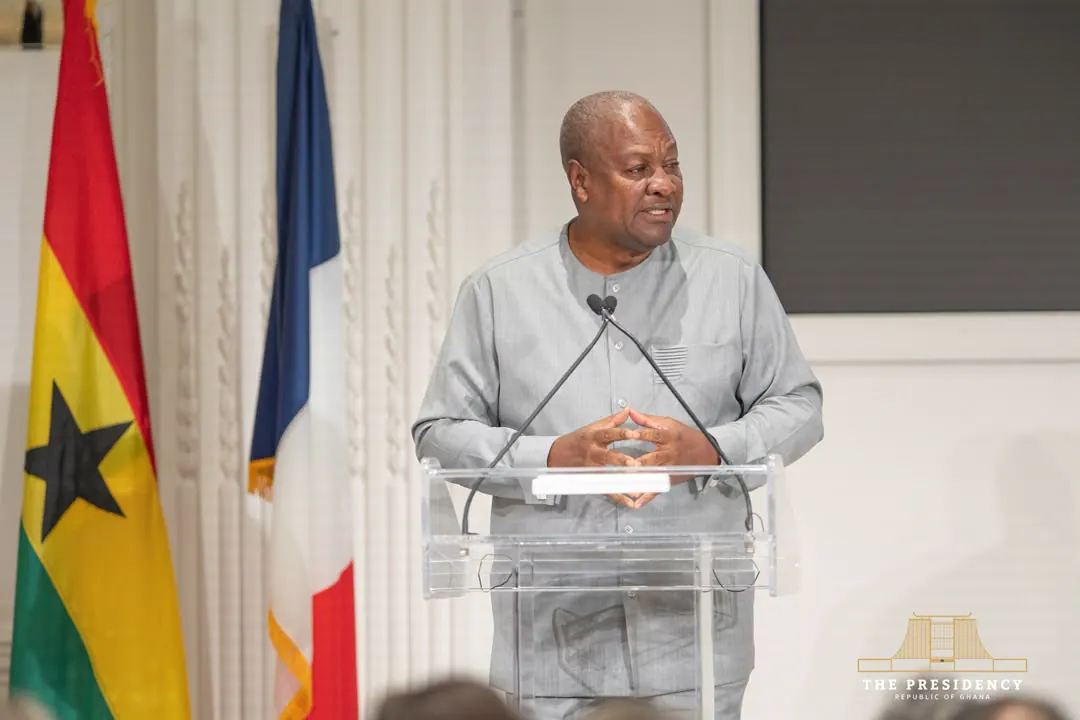
On the sidelines of the 81st United Nations General Assembly Meeting in New York, President John Dramani Mahama of Ghana unveiled three pillars for the "Next Steps" towards attaining global Reparatory Justice. This development follows the June 2026 Next Steps High-Level Consultative Conference on Reparatory Justice held in Accra. The conference brought together leaders from Africa, the Caribbean, and the African diaspora to discuss the way forward for reparatory justice.
President Mahama recalled that on March 25, 2023, the UN General Assembly adopted Resolution 80/250, where 123 member states declared the trafficking of enslaved Africans as a grave crime against humanity. He described this resolution as an indispensable moment of global truth and emphasized the need for the prompt and unhindered restitution of cultural property, sacred artifacts, and national archives. The President noted that the truth about historical injustices is not a destination but a starting point for action.
In June 2023, Ghana convened a High-Level Consultative Conference in Accra, which gathered leaders to answer the fundamental question: "What comes next?" The answer, according to President Mahama, was clear: moving from acknowledgment to action and from commitments to implementation. The adoption of the Accra Next Steps commitment for Reparatory Justice provides a blueprint for achieving this goal. The three pillars of the Next Steps aim to transform this vision into a global reality.
The first pillar acknowledges and salutes the progress made since the resolution was passed. President Mahama thanked countries like the Netherlands for cataloging 2,000 Ghanaian artifacts for return and Germany for engaging with the Kpando-traditional area. He also acknowledged France's legislative frameworks and the return of sacred talking drums from Cote d'Ivoire. Additionally, he recognized the apology and acknowledgment of Church institutions like the Catholic Church for their role in slavery.
President Mahama called on UNESCO, the United Nations, and countries holding these artifacts to establish clear, standardized legal and diplomatic mechanisms that streamline provenance research. He mentioned that through the African Union's flagship Agenda 2063 projects, they are advancing the Great African Museum, which will receive and preserve these artifacts. In Ghana, a state-of-the-art national and traditional institution is being constructed to preserve research and exhibits on returning treasures.
The second and third pillars focus on implementing the agreed-upon actions and investing in Africa's cultural infrastructure. President Mahama emphasized that cultural heritage is not a luxury item to be addressed after economic development but an engine of development. Properly preserved and showcased heritage can fuel education, identity, international tourism, and a booming creative economy. He called on multilateral development banks, international financial institutions, global foundations, and private sector partners to invest in Africa's cultural infrastructure.
President Mahama concluded that the story of Africa's cultural heritage cannot end with its removal but must continue with its return. He urged the international community to come together to build the future, not dwell on the past. The President's message at the 81st UN General Assembly Meeting emphasizes the need for collective action towards achieving global reparatory justice and promoting Africa's cultural heritage.
Key points
- President Mahama unveils three pillars for achieving global reparatory justice at the 81st United Nations General Assembly Meeting.
- The three pillars aim to acknowledge progress, implement agreed-upon actions, and invest in Africa's cultural infrastructure.
- President Mahama calls for the establishment of clear, standardized legal and diplomatic mechanisms for the return of cultural artifacts.