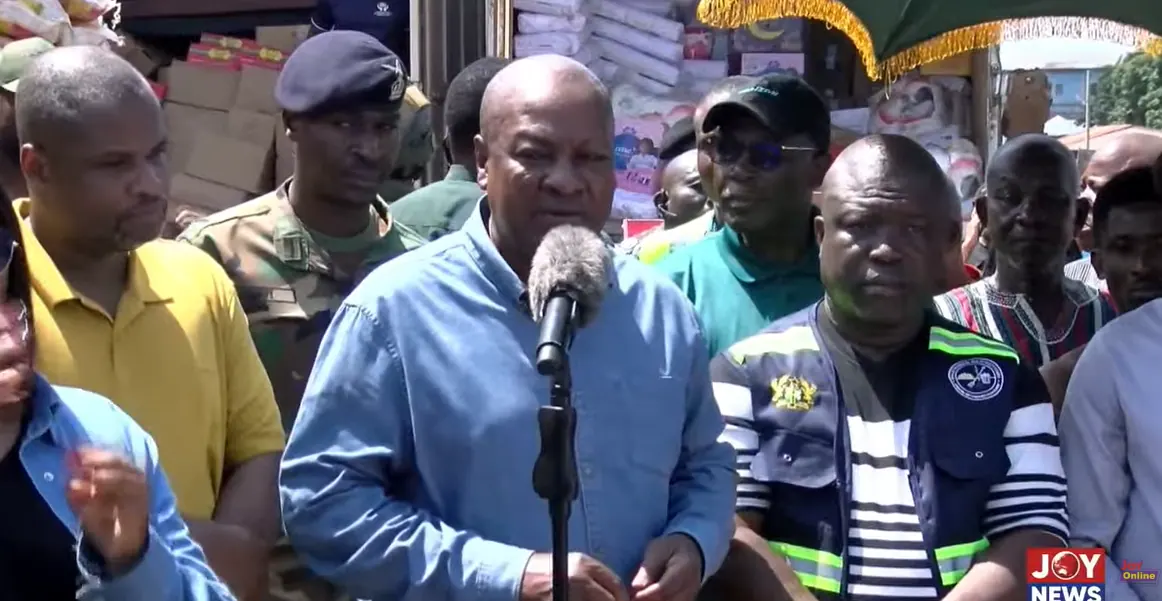
President John Mahama has attributed the recent flooding in Hohoe, Ghana, to extreme weather patterns associated with climate change. During a visit to affected communities, he stated that changing rainfall patterns are making it increasingly difficult to predict the weather. Mahama presented relief items, including bags of rice, mattresses, and other supplies, to residents displaced by the disaster. The flooding, triggered by the overflow of the River Dayi, affected over 5,000 people and hundreds of homes.
The President learned about the disaster while returning from New York, where he had attended the United Nations. He decided to visit the affected communities to sympathize with residents and support the relief effort. Mahama acknowledged the efforts of traditional leaders, the Zongo chiefs, the Member of Parliament, and the Municipal Chief Executive, who had supported the response to the disaster. He emphasized that the flooding was part of a wider pattern of extreme weather events linked to climate change.
According to Mahama, rainfall patterns have become less predictable, with periods of excessive rainfall followed by drought. He explained that heavy rainfall in neighboring Togo sent large volumes of water into the River Dayi, causing it to overflow and flood low-lying communities in Hohoe. The President's visit aimed to sympathize with affected residents and provide immediate support. He mentioned that several government institutions and individuals had already provided assistance to the affected communities.
The Hohoe Municipal Chief Executive, Prosper Kumi, reported that over 5,000 people had been affected by the flooding. The disaster impacted the Zongo community, one of the largest Zongo communities in the country, as well as six other communities along the River Dayi. Several homes and critical structures had collapsed, and the destruction of three key bridges disrupted movement between communities. One affected area had been completely cut off, leaving residents unable to move between communities.
Authorities managed to restore access to one of the affected areas temporarily by using boulders to reinforce the damaged section. President Mahama directed that the relief items be distributed fairly to ensure they reached people directly affected by the flooding. He also disclosed that the owner of Dzata Cement had pledged 5,000 bags of cement to help residents rebuild their homes. The President conveyed the sympathies of his wife, Lordina Mahama, who was concerned about the impact of the flooding on the local hospital.
The relief items presented during Mahama's visit were from the Presidency. He left the distribution of the items in the hands of the MP, the MC, and the Regional Minister to ensure fairness. The President appreciated the efforts of the Minister of Gender, the Minister of Roads and Highways, and the National Disaster Management Organisation (NADMO), among others, who had provided relief. Mahama's visit demonstrated the government's commitment to supporting affected communities.
The flooding in Hohoe serves as a reminder of the impact of climate change on communities. President Mahama's visit and the government's response highlight the need for continued support and efforts to mitigate the effects of extreme weather events. The incident underscores the importance of addressing climate change and its consequences. Key stakeholders will likely continue to work together to provide relief and support to affected residents.
Key points
- President John Mahama links Hohoe flooding to climate change
- Over 5,000 people affected by the flooding in Hohoe
- Government and individuals provide relief items to affected communities