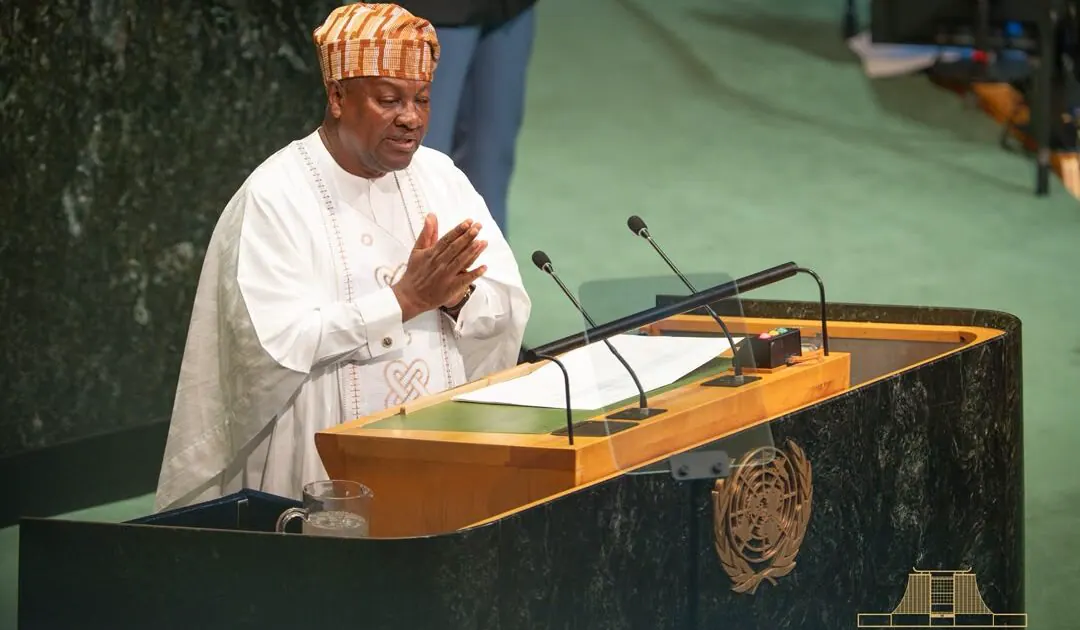
President John Dramani Mahama has emphasized the importance of Africa building greater capacity to finance and manage critical sectors, particularly healthcare. Speaking at the Council on Foreign Relations in New York, he noted that Ghana's experience with the withdrawal of $174 million in programmed US development support exposed vulnerabilities in the country's public systems. This included a reported $74 million annual gap in health financing, affecting areas such as medical research and laboratory testing for HIV.
The disruption caused by the withdrawal of US development support had far-reaching consequences, impacting programmes supported through PEPFAR. President Mahama stated that this experience had strengthened the case for "health sovereignty", enabling African countries to develop the capacity to manufacture medicines and vaccines locally and build more resilient supply chains. This, he emphasized, was not about isolating Africa from international partners but about reducing structural dependence and enabling countries to exercise greater control over essential sectors.
President Mahama also addressed the security situation in the Sahel region, linking the escalation of instability to the aftermath of the Libya conflict and the proliferation of arms. He noted that the movement of terrorist groups into the region had contributed to the insecurity. Military coups in parts of the Sahel, he suggested, should be considered against that wider security background. He called for greater efforts to address the underlying security challenges, emphasizing the need for cooperation among countries in the region and with international partners.
On regional cooperation, President Mahama advocated for continued dialogue and efforts to rebuild cooperation between the Economic Community of West African States (ECOWAS) and the Alliance of Sahel States (AES). He stressed that combating terrorism would require collective action, and Ghana was strengthening surveillance and intelligence-sharing with neighbouring states to protect its borders. This, he believed, was crucial in the fight against terrorism.
Looking ahead to Ghana's 2027 chairmanship of the African Union, President Mahama outlined the country's intentions to advance regional integration and facilitate the movement of goods across the continent. He also expressed support for continental efforts towards peace and security. The Accra Reset initiative, presented by Ghana as an Africa-led approach, aims to strengthen self-reliance and reshape global cooperation, with health sovereignty forming a major component.
President Mahama's comments on the Accra Reset initiative come amid ongoing discussions about Ghana's rejection of a US health compact. He explained that the rejection was due to concerns over medical records and FDA regulations. The incident highlighted the need for Ghana to assert its independence in healthcare decision-making. The Accra Reset initiative seeks to promote African self-reliance in healthcare and other critical sectors.
In conclusion, President Mahama's address at the Council on Foreign Relations emphasized the need for Africa to build greater capacity for self-reliance in healthcare and other critical sectors. The Accra Reset initiative, he stressed, was a step towards achieving this goal. By promoting health sovereignty and reducing structural dependence on external partners, Africa could exercise greater control over its essential sectors and build a more resilient future.
Key points
- President Mahama links Accra Reset to Africa's push for health sovereignty.
- Ghana's experience with US development support withdrawal exposed vulnerabilities in public systems.
- Accra Reset aims to promote African self-reliance in healthcare and other critical sectors.