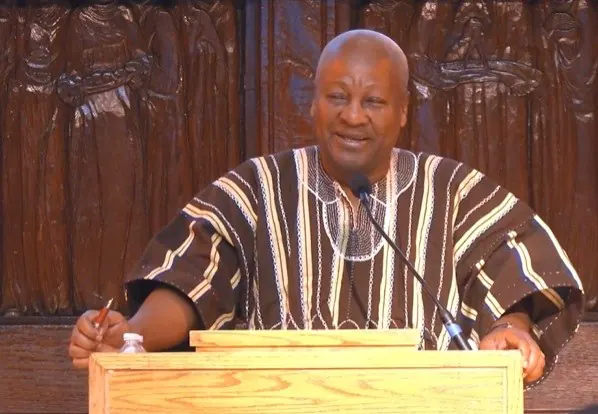
Ghana's President John Dramani Mahama has called for a national conversation on regulating social media platforms like TikTok. He made the comments in response to growing concerns over the spread of misinformation, cyberbullying, and unregulated political content online. Mahama emphasized that as a leader, he is not bothered by online insults, likening his tolerance to the tough hide of a crocodile. This "crocodile skin" allows him to withstand criticism, but he believes the country cannot afford to leave the regulation of social media unresolved.
The President's comments come amid persistent unease in Ghana over the role of social media in public life. In recent years, concerns have mounted over the impact of social media on Ghanaian society, particularly among younger audiences drawn to TikTok's short-video format. The platform has become a popular tool for entertainment, business, and political commentary, with millions of Ghanaian users. Mahama's call for a national conversation suggests that the government wants to revisit the question of social media regulation through public dialogue rather than unilateral policy.
This is not Ghana's first attempt to grapple with social media regulation. In 2018, the government proposed a tax on social media use, which sparked public backlash before being folded into broader discussions around digital and financial levies. Since then, the National Media Commission has repeatedly pushed for firmer rules governing online content, though no comprehensive regulatory framework specific to platforms like TikTok has been enacted. The proposed national forum may provide an opportunity for stakeholders to discuss the regulation of social media.
The outcome of such a forum could have significant implications for Ghanaian users, content creators, influencers, and small businesses that rely on social media for income. Any future regulation could affect how freely users post, what content creators can share, and how political speech online is policed. Ghana's ongoing struggles with misinformation, especially around elections and public health messaging, also make the outcome of such a forum consequential for how information spreads nationally.
Mahama's comments were reported by Graphic Online, which did not specify who would convene the proposed national forum, what form it would take, or which stakeholders would be invited to participate. The President's call for a national conversation suggests that the government is seeking a collaborative approach to regulating social media, rather than imposing rules unilaterally. This approach may help to build consensus and ensure that any regulations are effective and widely accepted.
The proposed national forum is likely to be closely watched by stakeholders, including telecom regulators, civil society groups, and social media users. The scope and timeline of Ghana's next attempt at social media regulation remain open questions, with no date, venue, or organizing body announced as of Graphic Online's report. Until further details emerge, it is unclear whether the discussion would lead to new legislation, a voluntary code of conduct for platforms, or simply guidelines for public officials and citizens.
The regulation of social media is a complex issue that requires careful consideration of competing interests and values. Mahama's call for a national conversation on TikTok rules and social media regulation more broadly reflects the need for a nuanced and inclusive approach to this issue. As Ghana continues to grapple with the challenges and opportunities presented by social media, the outcome of this conversation will be closely watched by stakeholders both within and outside the country.
Key points
- President Mahama wants national talks on regulating TikTok and other social media platforms.
- Mahama brushes off online insults, saying he has "crocodile skin".
- The proposed national forum may lead to new regulations or guidelines for social media use in Ghana.