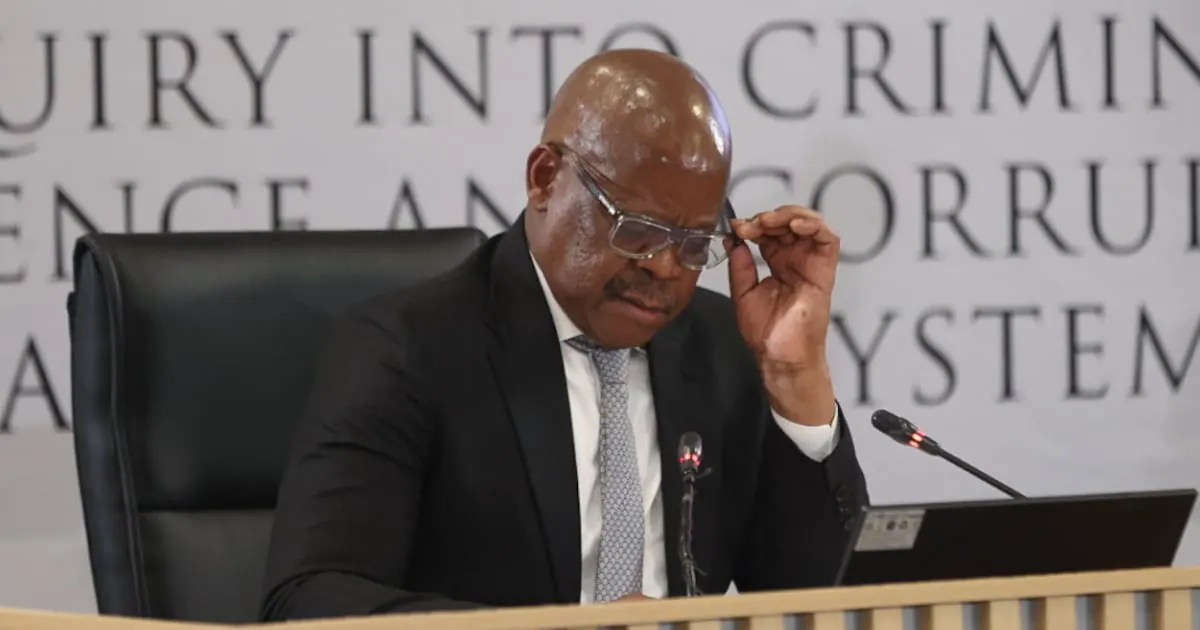
Mpumalanga taxi boss Joe "Ferrari" Sibanyoni recently testified before the Madlanga commission, where he raised several objections to the evidence and lines of questioning being presented. Sibanyoni challenged the commission's probe into areas he believes are outside its mandate or risk prejudicing his legal rights. His testimony highlighted several key issues that have raised questions about the commission's investigation. Sibanyoni's objections centered on the potential prejudice to his right to a fair trial.
One of the key issues Sibanyoni raised was the pending Kwaggafontein criminal case, in which he and his co-accused are alleged to have extorted R2m from a Mpumalanga businessman. Sibanyoni argued that the commission should not rely on this pending criminal docket or question him on allegations that are before a criminal court, as this could prejudice his right to a fair trial. The commission's investigation into this matter appears to be ongoing, with Sibanyoni's testimony being a crucial part of the proceedings.
Sibanyoni also addressed the Shosholoza stokvel, an investment vehicle comprising people in the taxi business. He rejected the commission's characterization of the stokvel as a "pipeline for improper cash flows," insisting that the money moving through the account represented member contributions and year-end distributions. This clarification suggests that the stokvel was a legitimate investment vehicle, but the commission's concerns about its operations remain.
Another area of contention was the Putco contracts, with Sibanyoni arguing that questions about alleged irregularities involving the bus company's contracts went beyond the specific matters he had been notified to answer under the Regulation 10(6) notice. This objection raises questions about the scope of the commission's investigation and whether it has overstepped its mandate.
Sibanyoni also challenged the commission's reliance on data obtained from his cellphone, arguing that its use violated his constitutional rights and that he should not be expected to respond to cellphone-derived evidence presented in proceedings held in his absence. This objection highlights the complexities of using digital evidence in investigations and the need for clear guidelines on its use.
During his testimony, Sibanyoni acknowledged that he knows several police officers but denied having any social, personal, or professional relationship with four officers. However, it was revealed that five police officers had access codes to his estate at some point, raising questions about potential improper relationships between Sibanyoni and law enforcement officials. This revelation has sparked concerns about the extent of Sibanyoni's connections to the police.
The Madlanga commission's investigation into Sibanyoni's activities continues, with his testimony being a crucial part of the proceedings. The commission's findings will likely have significant implications for Sibanyoni and the broader taxi industry in Mpumalanga. As the investigation unfolds, it will be important to monitor developments and assess the impact on the industry and the community.
Key points
- Sibanyoni challenges commission's reliance on cellphone data.
- Sibanyoni denies improper relationships with police officers.
- Commission's investigation into Sibanyoni's activities continues.