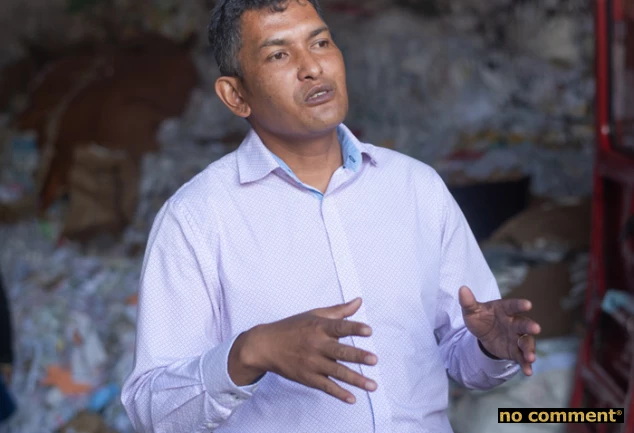
In Madagascar, a company called Spah is revolutionizing waste management by transforming it into essential hygiene products. Founded in 2012 by Nirina Rajaonary, Spah has been producing toilet paper from waste cellulose under the brand name Lys. The company's manager, Andriamamonjisoa Nandrianina, explains that their eco-friendly approach sets them apart as the only paper mill in the Indian Ocean. With a focus on responding to local needs, Spah aims to reduce waste and promote sustainable practices.
Spah's production process involves collecting waste paper from various sources, including printing companies, NGOs, businesses, and public institutions. The company recovers around 50 to 80 tons of waste per month, which is then transformed into 600,000 to 1,000,000 rolls of toilet paper. The products are sold at affordable prices, making them accessible to the local population. Notably, Spah also uses waste from individuals, cardboard, and fabric to produce fuel for their biomass boiler, reducing their reliance on wood.
The company's commitment to eco-friendliness extends to its production process, which involves sorting, crushing, and transforming waste into pulp. This pulp is then sieved, washed, and converted into "jumbo rolls" using a machine. The rolls are then dried, wound, and cut into individual rolls. Spah's innovative approach has made it the only factory in Madagascar to produce toilet paper from scratch, setting it apart from competitors who import "jumbo rolls" and re-transform them.
According to Andriamamonjisoa Nandrianina, the Malagasy population is gradually changing its mentality, with a growing preference for locally produced products. The company's "Vita Malagasy" (Made in Madagascar) label seems to be attracting customers. Spah's focus on recycling and waste transformation is crucial in addressing the country's waste management challenges. With the global emphasis on circular economies, Spah's approach serves as a model for other businesses to follow.
The company's impact extends beyond its products, as it also creates jobs and stimulates local economic growth. With 68 employees, half of whom are women, Spah is contributing to the country's development. The company plans to expand its product line to include other paper-based products, such as paper towels and tissues. By promoting sustainable practices and creating employment opportunities, Spah is making a positive impact on Madagascar's environment and economy.
As the world grapples with waste management challenges, Spah's innovative approach serves as a beacon of hope. The company's commitment to transforming waste into valuable products demonstrates that recycling can be a lucrative business. With the global emphasis on reducing waste and promoting sustainable practices, Spah's model could be replicated in other countries facing similar challenges.
In the next 20 years, Madagascar and other countries will face significant waste management challenges. Spah's approach offers a solution, demonstrating that waste can be transformed into valuable products. By supporting local businesses like Spah, consumers can contribute to the country's economic growth and environmental sustainability. As the company continues to grow and expand its product line, it is likely to have a lasting impact on Madagascar's environment and economy.
Key points
- Spah produces 600,000 to 1,000,000 rolls of toilet paper per month from 50 to 80 tons of waste.