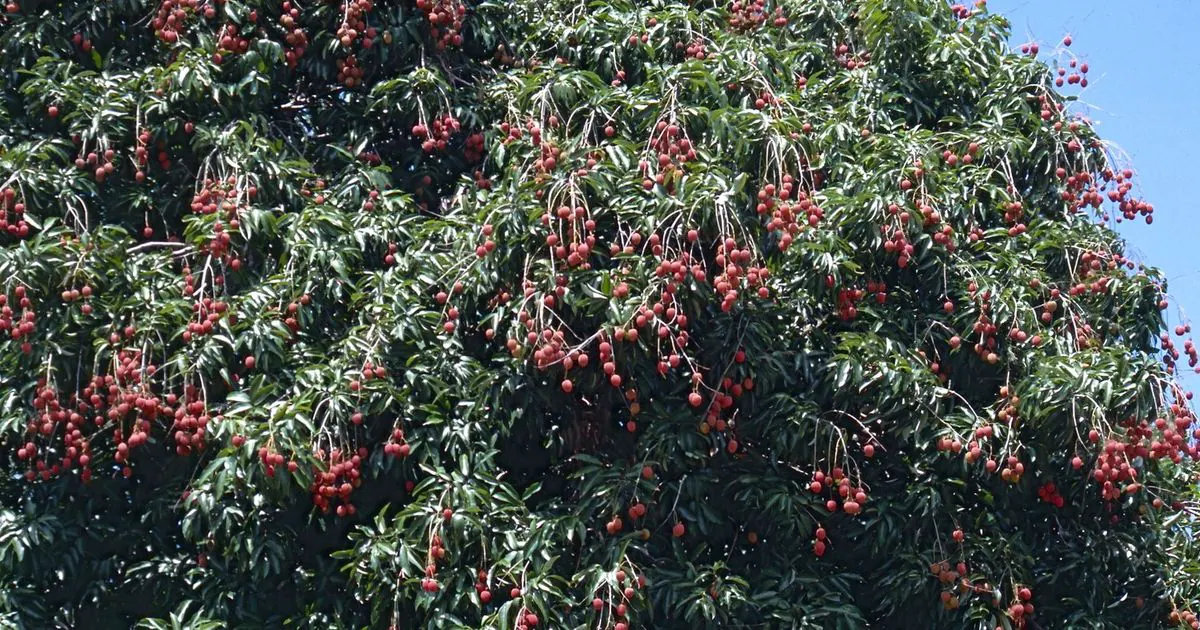
Madagascar produces approximately 100,000 tons of lychees per year, with the majority being consumed domestically. The country's Ministry of Commerce and Consumption recently reported this figure at the National Lychee Conference in Toamasina. For the 2025-2026 campaign, the export target was set at 20,000 tons, which is only one-fifth of the total production. This means that four-fifths of the lychees remain in the country, either for local consumption or unsold.
Madagascar is the world's leading exporter of lychees, accounting for 35% of global exports. The country's lychee industry provides a livelihood for around 100,000 families, primarily in the Atsinanana and Analanjirofo regions. A thousand collectors supply thirty licensed exporters, with Europe being the main market, absorbing around 15,000 tons annually. The lychees are mainly exported during the year-end festive season.
Despite being the top exporter, Madagascar faces challenges in increasing its lychee exports. The main constraint is the limited and short market window, particularly in Europe. Exporters argue that sending more lychees than the market can absorb would lead to a price drop. Additionally, the physical handling of lychees poses a challenge, as they degrade quickly if not properly stored and transported.
The price of lychees for the 2025-2026 campaign was set at 2,150 ariary per kilogram, which is double the price of the 2023-2024 campaign. However, this is still lower than the 5,000 ariary per kilogram fetched during the 2024-2025 season, when production was affected by rains. The current price only applies to lychees destined for export, while those sold locally fetch a lower price.
The lychee industry has identified several bottlenecks that hinder exports, including high airport fees, costly air freight, inadequate airport infrastructure, and lengthy customs procedures. The Groupement des Exportateurs de Litchi (Lychee Exporters Association) has called for the government to address these issues and provide relief to exporters who face difficulties in repatriating foreign exchange.
Madagascar is exploring new markets for its lychees, including China, Canada, the United States, and India. However, each of these markets requires a negotiated phytosanitary protocol, recognized controls, and a reliable commercial organization. The European Union recently conducted a positive sanitary and phytosanitary audit, which may pave the way for increased exports to this market.
As the 2026 campaign approaches, stakeholders are watching several key factors, including the price of reference, the export quota, and the implementation of recommendations from the National Lychee Conference. The industry is also concerned about the long-term sustainability of lychee production, as no new trees have been planted in 15 years, and the current production comes from aging trees.
Key points
- Madagascar produces 100,000 tons of lychees annually, with only one-fifth being exported.
- The country's lychee industry faces challenges, including limited market windows and high export costs.
- Madagascar is exploring new markets for its lychees, including China, Canada, the United States, and India.