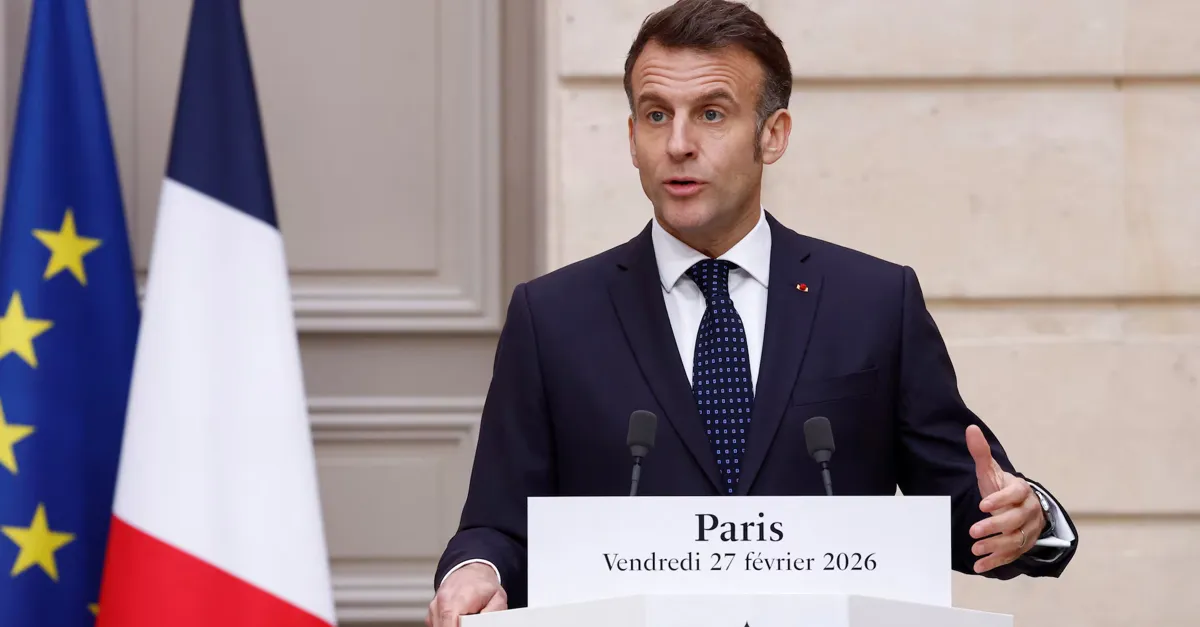
French President Emmanuel Macron has warned that oil product prices will rise sharply if the Strait of Hormuz is not opened soon. He stated that global oil inventories have decreased by over 500 million barrels due to the war in Iran. Macron's warning comes as the global energy market faces increasing pressure. The Strait of Hormuz is a critical waterway for oil exports.
Macron has written to the European Commission, urging them to delay new reporting rules on methane gas for oil and gas importers. He argues that these rules may create legal risks for importers as energy supplies dwindle. The rules, set to take effect on January 1, require monitoring and verification of methane emissions from fuel shipments to the European Union. The goal is to reduce greenhouse gas emissions and impose fines on non-compliant companies.
The new rules have been met with resistance from several European Union member states, including Germany, the largest gas market in Europe. In response, the European Commission issued instructions in July to exempt countries from financial penalties associated with these regulations until the end of 2029. However, the commission did not agree to delay the implementation of these rules. Macron has requested a one-year delay until January 1, 2028.
Methane is the second-largest contributor to global warming after carbon dioxide. The European Union aims to reduce methane emissions through these new regulations. Macron's letter to European Commission President Ursula von der Leyen, dated September 18, was published by the French newspaper Les Echos. The letter highlights the need for a more flexible approach to energy production and supply.
Macron has also proposed relaxing fuel quality rules to increase European production of kerosene and diesel by up to 20%. He suggests that French refineries can increase fuel production by 5-20% by relaxing certain specifications. Additionally, Macron recommends easing restrictions on blending biofuels, allowing distributors to replace diesel B7 with B10, which contains up to 10% biofuel.
The current energy market faces significant challenges due to the war in Iran and decreasing global oil inventories. Macron's proposals aim to address these challenges and ensure a stable energy supply. The European Commission will need to consider Macron's requests and find a balance between reducing greenhouse gas emissions and ensuring energy security.
The global energy market is closely watching the developments in the Strait of Hormuz and the European Union's response to Macron's proposals. A sharp rise in oil product prices could have significant economic implications. The European Commission's decision on Macron's requests will be crucial in determining the future of the energy market.
Key points
- Macron warns of a sharp rise in oil product prices if the Strait of Hormuz is not opened soon.
- Macron urges the European Commission to delay new reporting rules on methane gas for oil and gas importers.
- Macron proposes relaxing fuel quality rules to increase European production of kerosene and diesel.