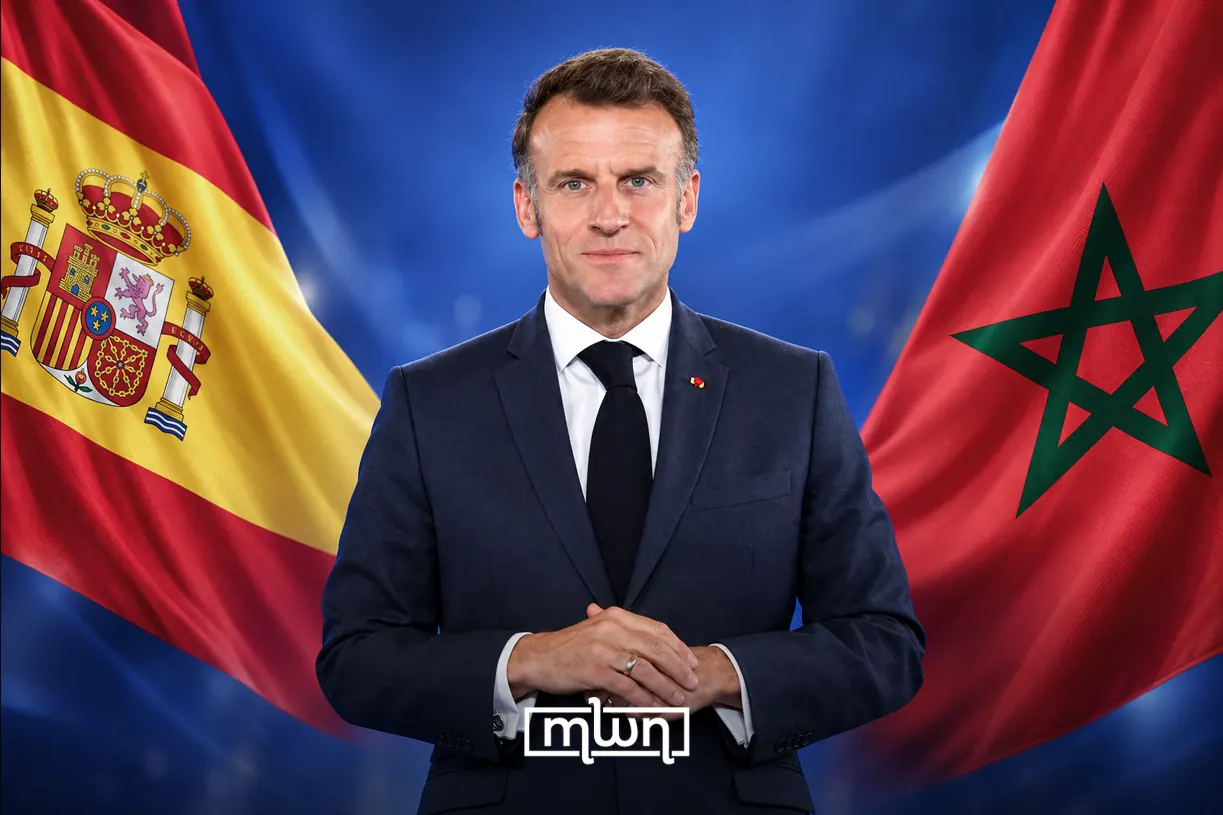
French President Emmanuel Macron recently visited Spain, where he met with Spanish Prime Minister Pedro Sanchez on September 30 to discuss various topics, including strengthening bilateral and energy cooperation, as well as the migration crisis in Ceuta. The Ceuta mass crossing, which occurred on July 30-31, saw tens of thousands of migrants enter the enclave, sparking one of the largest irregular migration crises in Morocco-Spain history.
The crisis sparked pressure on Spain from the far right, with many politicians attempting to weaponize the mass crossing to question Morocco's migration efforts, accusing it of blackmail and a hybrid attack. However, Macron joined a growing European consensus, arguing that what happened in Ceuta was an "undoubtedly external and multifaceted attack." He expressed support for increased cooperation between Spain and Morocco, attributing the Ceuta crisis to social media campaigns and agents of misinformation.
Macron emphasized that the analysis of the situation revealed that information attacks told people it was possible to cross into Ceuta, using misery to push tens of thousands of families, young people, and sometimes very young people, to take all the risks. He also questioned the lack of support from other European countries that have not shown support amid the Ceuta crisis. Macron stressed the need for the EU to continue working with Moroccan authorities to tackle migration and highly strategic issues.
Macron called for European solidarity and responsibility in the implementation of the Pact on Migration and Asylum, which entered into force on June 12. The pact sets rules for managing migration and establishing an asylum system at the EU level, covering different pillars, including robust screening, border procedures, and return protocols. Efficient returns will take place for those not eligible for international protection.
Morocco has strengthened its approach to tackling irregular migration, with international recognition supporting its efforts to combat human trafficking networks. However, the country frequently comes under the radar of far-right politicians and others who weaponize irregular migration whenever a mass crossing takes place. In the Ceuta crisis, Rabat responded to accusations by stressing its commitment to tackling irregular migration as part of its firm response against human trafficking.
Following the mass crossing, Morocco cooperated with Spain under an emergency agreement on the rapid return of all those who entered. Under the agreement, the majority have returned either voluntarily or through deportation. Only a few thousand migrants remain, with Rabat reiterating that Spain has to speed up the return of those who entered the Spanish-occupied city.
Macron's visit and statements highlight the importance of cooperation between Morocco, Spain, and Europe in tackling migration and related issues. He emphasized that when countries work together, everything goes well, and encouraged continued cooperation to address these challenges.
Key points
- Macron urges Spain and Europe to maintain migration cooperation with Morocco.
- The Ceuta mass crossing sparked a migration crisis, with far-right politicians questioning Morocco's migration efforts.
- The EU's Pact on Migration and Asylum aims to establish a comprehensive asylum system and manage migration effectively.