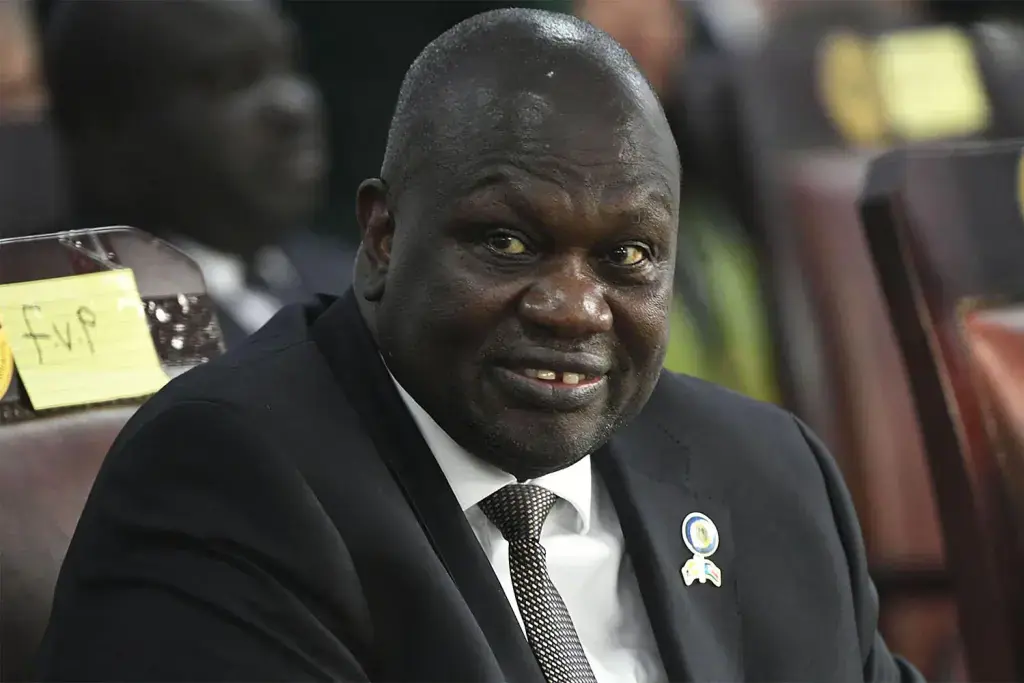
Former First Vice President Dr. Riek Machar has denied allegations of commanding the White Army, an armed youth group in South Sudan. During his defense testimony in the ongoing Nasir trial in Juba, Machar stated that the White Army lacks formal military structures, making it impossible for him to exercise control over its members. He emphasized that the group is a community-based force made up of young civilians who mobilize through clans and traditional leadership structures.
Machar, the fifth accused in the trial, also denied that the White Army receives military assistance, food supplies, or sponsorship from the Sudan People's Liberation Movement/Army-in-Opposition (SPLM/A-IO). He described the group's members as volunteer warriors who choose their own leaders and can remove them, with leadership changes occurring annually or whenever members decide. According to Machar, the White Army is known by different names in various geographical areas, including the White Army, Jogum, and Nyaborjok.
The trial, presided over by Judge Dr. James Alala Deng, involves Machar and seven co-accused facing charges over an attack on a South Sudan People's Defence Forces (SSPDF) garrison in Nasir, Upper Nile State, in March 2025. The prosecution alleges that the defendants were involved in the attack, which resulted in the deaths of government soldiers, including Maj. Gen. David Majur Dak. The charges include treason, murder, terrorism, conspiracy, and crimes against humanity.
Machar distinguished the White Army from other armed formations, including Dutkobeny and Mathiang Anyoor, while noting similarities with community-based groups such as Gelweng, Titweng, Monyemiji, and Lokoya youth, as well as age-set groups among the Murle. He rejected allegations that he formed the White Army, stating that claims linking him to its establishment date back to the 1991 split within the Sudan People's Liberation Movement/Army (SPLM/A).
Machar acknowledged leading the Nasir Declaration of August 28, 1991, but said the split resulted from disagreements over the objectives of the liberation struggle. He said one faction, led by the late Dr. John Garang, advocated for a united Sudan, while the Nasir Declaration called for self-determination and the independence of Southern Sudan. Machar and his co-accused have disputed the allegations against them.
The court adjourned the session until October 28, 2026, for Machar to continue his defense testimony. The trial is a significant development in South Sudan's ongoing efforts to address issues of conflict and accountability. Machar's testimony has provided insight into the nature of the White Army and its operations.
The case will continue to be closely watched, both domestically and internationally, as it has implications for the country's stability and the rule of law. The prosecution and defense will continue to present their cases, and the court will ultimately determine the fate of Machar and his co-accused.
Key points
- Machar denies commanding the White Army, citing its lack of formal military structures.
- The trial involves charges of treason, murder, terrorism, conspiracy, and crimes against humanity related to an attack on an SSPDF garrison in Nasir.
- Machar's testimony has provided insight into the nature of the White Army and its operations in South Sudan.