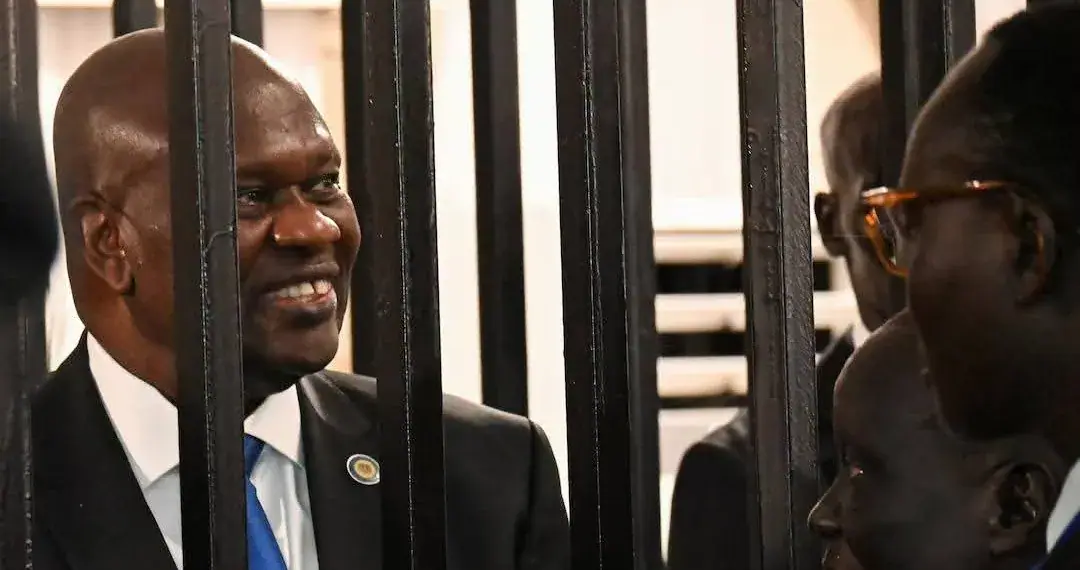
Former First Vice President Riek Machar has accused President Salva Kiir of failing to address security concerns ahead of the deadly violence in Nasir, Upper Nile State. Machar told a special court in Juba that Kiir ignored his letters warning of escalating tensions over government force deployments to Nasir County. Machar wrote to Kiir on February 20 and 27, 2025, but received no response. The lack of response coincided with the displacement of residents and fighting in Nyathor.
Machar criticised Kiir for managing national security without convening the National Security Council. He argued that the council should have been involved in addressing the crisis. Machar also questioned Kiir's appointment of security chiefs, citing concerns that all heads of security organs were drawn from Warrap State. This decision raised concerns among South Sudanese and the international community. Machar's testimony described disagreements between Chief of Defence Forces Gen. Paul Nang and Lt. Gen. Gabriel Duop over force deployments to Nasir.
Machar said Nang favoured deploying the South Sudan People's Defence Forces, while Duop proposed using the Necessary Unified Forces and joint riverine forces. These disagreements paralysed the Joint Defence Board during Nang's tenure, Machar said, accusing the army chief of being unwilling to work with officers from the SPLA-IO. Machar linked these military disagreements to fighting in Tambura and Nagero counties in Western Equatoria State in February 2025.
As government gunboats approached Nasir in mid-February 2025, Machar said helicopters and gunboats bombarded villages in Ulang, Nasir, Nyirol and Akobo. He contacted then Petroleum Minister Puot Kang Chol, former Upper Nile governor James Odhok Oyai, county commissioners, chiefs, elders and youth leaders to arrange a peaceful reception for the forces. Machar proposed that local leaders welcome the gunboats and persuade youth to do the same.
Local leaders agreed to receive the forces but requested an end to the bombardments. Machar contacted Lt. Gen. James Koang Chuol Ranley to stop the air bombardments and directed the formation of reception committees in Nasir and Ulang. He also arranged with Nang to hire six large boats after government gunboats became stranded. However, the mission was abandoned after the gunboat commander returned to Malakal.
By March 2, 2025, the Nasir commissioner informed Machar that young people from several sections had dispersed and returned to their villages. At an extended Presidency meeting on March 3, Vice President Benjamin Bol Mel reported fighting at the Nasir garrison. The meeting adopted five resolutions, including de-escalation along the Sobat corridor and convening the National Security Council.
Machar is the fifth accused in the trial of eight SPLM/A-IO figures over the events in Nasir. The court adjourned the case to Wednesday, November 25. Three other accused were absent due to health concerns. Machar's testimony highlights the complexities of South Sudan's security situation and the challenges of coordinating responses to crises.
Key points
- Machar accused Kiir of ignoring his warnings about escalating tensions in Nasir.
- Machar criticised Kiir's management of national security without convening the National Security Council.
- Disagreements between security chiefs contributed to the violence in Nasir.
Reporting sources
- Machar blames Kiir’s security decisions for Nasir bloodshed · sudanspost.com