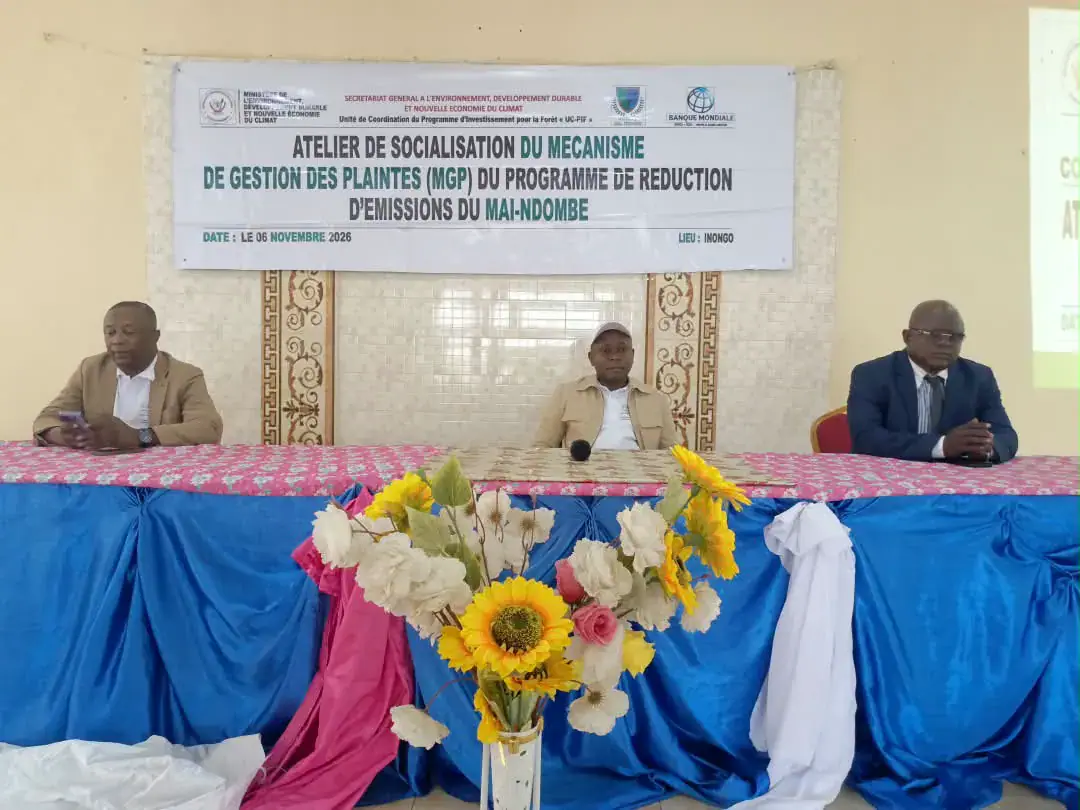
The governor of Maï-Ndombe province, Lebon Nkoso Kevani, has emphasized the importance of effective complaints management in ensuring transparency and protecting community rights. During a recent workshop in Inongo, the provincial capital, Kevani encouraged local actors to take ownership of the complaints management mechanism under the Emissions Reduction Program. This mechanism aims to prevent conflicts, protect rights, and foster trust between projects and communities.
The complaints management mechanism consists of three levels of management, ranging from local structures such as local development committees and local execution agencies to national and provincial steering bodies. Expert Samuel Begaa presented the objectives, principles, and procedures for receiving and handling complaints. The focus also included preventing and addressing gender-based violence, exploitation, and sexual abuse.
Expert Lauriane Sengoma highlighted the need for women's effective participation in community activities and decision-making processes. She stressed the importance of integrating female leadership in community structures and decision-making bodies, citing sociocultural barriers that still limit women's access to socioeconomic opportunities. Sengoma's remarks underscored the necessity of promoting women's inclusion in local development initiatives.
In line with these recommendations, Governor Kevani urged local execution agencies to prioritize female candidates when establishing or reorganizing local development committees. He cited a successful example of a committee led by a woman in Bolobo territory, praising its dynamism and organizational skills. By promoting women's participation, authorities aim to ensure more inclusive and representative decision-making processes.
The workshop concluded with a call to action for local stakeholders to take ownership of the complaints management mechanism and promote women's inclusion. Governor Kevani emphasized the importance of addressing community concerns and ensuring transparency in project implementation. The Emissions Reduction Program aims to reduce emissions and promote sustainable development in the region.
The initiative is part of a broader effort to promote sustainable development and reduce emissions in the Maï-Ndombe province. By strengthening complaints management and promoting women's participation, authorities hope to ensure that development initiatives are more effective and responsive to community needs. The program is being implemented in collaboration with various stakeholders, including local communities, government agencies, and development partners.
As the program moves forward, local stakeholders will play a crucial role in its success. By working together to address community concerns and promote women's inclusion, they can help ensure that development initiatives are sustainable and equitable. The Maï-Ndombe province is taking steps to promote more inclusive and effective development, and the complaints management mechanism is an important part of this effort.
Key points
- Authorities in Maï-Ndombe province are promoting women's participation in decision-making processes to ensure more inclusive development initiatives.
Reporting sources
- Maï-Ndombe : appel au renforcement de la gestion des plaintes et l’inclusion des femmes · Congolese press agency