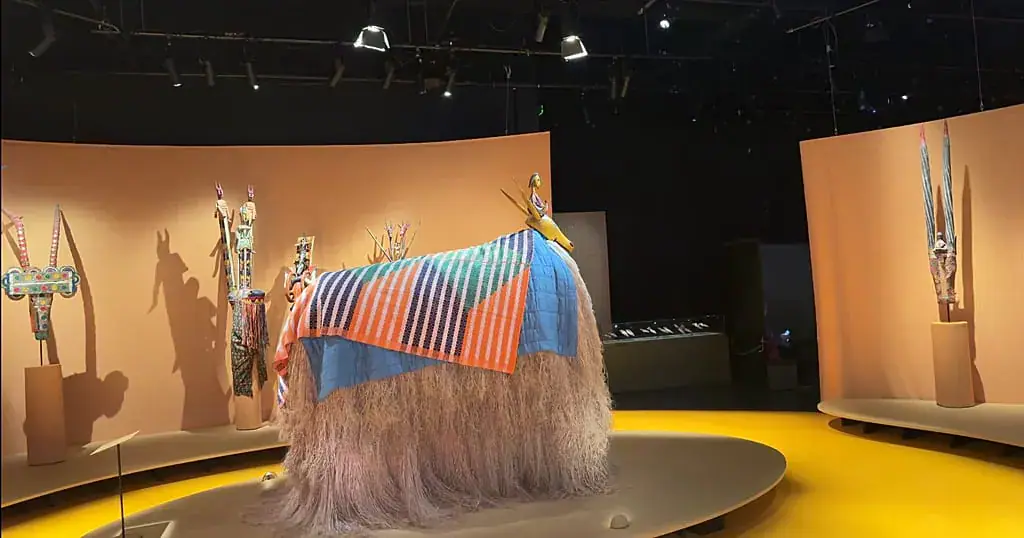
The Musée des Confluences in Lyon is hosting an exhibition that shines a light on Mali's rich cultural heritage, specifically the Sogo bò tradition. This traditional performance combines masks, puppets, music, and dance, and plays a vital role in village life in central-western Mali, particularly along the Niger River. The exhibition features ten figures representing the TON association, young people who organise festivities in their villages and welcome visitors.
Sogo bò is a centuries-old tradition that has been passed down through generations, with young people learning to make and operate the masks and puppets, while women perform the songs. The tradition is believed to have originated among the Bozo people on the banks of the Niger River. The exhibition is divided into two sections: the village and the river, reflecting this connection. Each character has a distinct identity, helping to pass down community stories and values.
The exhibition features 110 objects, including pieces donated by Sonia and Albert Loeb. Additionally, Lyon Opera costume designers have recreated iconic characters from archival videos, using plant fibres and fabric to bring animals such as antelopes to life. This showcase highlights the creativity and craftsmanship that goes into creating these performances. The Sogo bò tradition has been recognised by UNESCO, featuring on its Representative List of the Intangible Cultural Heritage of Humanity since 2014.
Despite its recognition, the Sogo bò tradition faces challenges in Mali. Insecurity, economic hardship, and environmental changes are making it increasingly difficult for communities to organise cultural events and keep this heritage alive. Festivals dedicated to masks and puppets are among the initiatives helping to preserve the tradition. However, more needs to be done to ensure the long-term survival of this cultural heritage.
The exhibition at the Musée des Confluences aims to raise awareness about the importance of Sogo bò and the challenges it faces. By showcasing this traditional performance, the museum hopes to inspire a new generation of artists and cultural enthusiasts to get involved in preserving this heritage. The exhibition also highlights the significance of community involvement in keeping cultural traditions alive.
The Sogo bò tradition is not just a performance; it is an integral part of village life in Mali. It brings people together, promoting social cohesion and community engagement. The exhibition in Lyon provides a unique opportunity for visitors to learn about this rich cultural heritage and appreciate its significance. By celebrating Sogo bò, we can help ensure its continued survival for future generations.
The exhibition is a testament to the power of cultural heritage to bring people together and promote understanding. It highlights the importance of preserving traditional performances like Sogo bò, which are an integral part of Mali's cultural identity. Key to preserving this heritage are initiatives such as festivals and community engagement, which help to keep the tradition alive.
Key points
- The Sogo bò tradition has been recognised by UNESCO, featuring on its Representative List of the Intangible Cultural Heritage of Humanity since 2014.
- The exhibition features 110 objects, including pieces donated by Sonia and Albert Loeb.
- Insecurity, economic hardship, and environmental changes are making it increasingly difficult for communities to organise cultural events and keep this heritage alive.
Reporting sources
- Lyon exhibition celebrates Mali’s Sogo bò heritage · Africanews