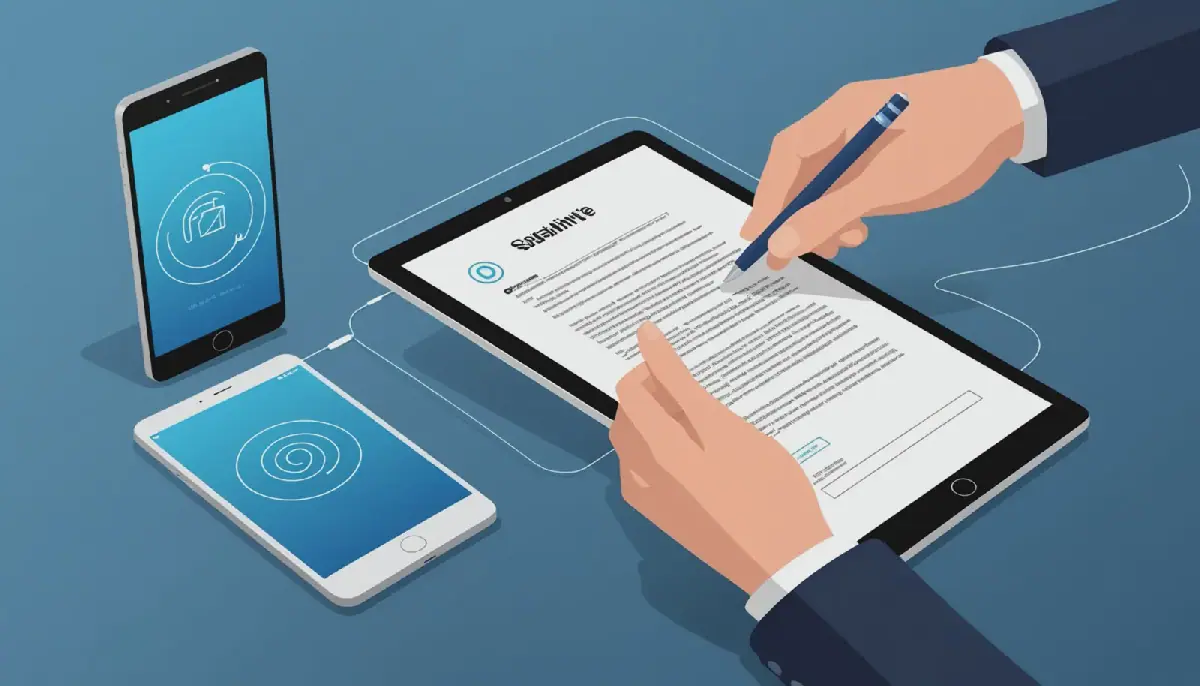
The use of electronic signatures is on the rise, with more and more professional documents being signed digitally. In France, the article 1367 of the Civil Code recognizes electronic signatures as having the same probative value as handwritten signatures, provided that the process used guarantees the identity of the signer and the integrity of the signed document. This recognition is further clarified by the European regulation eIDAS, which distinguishes three levels of electronic signatures: simple, advanced, and qualified.
The choice of electronic signature level depends on the stakes of the document to be signed. A simple signature, which relies on a code received by email or SMS, is suitable for low-stakes documents such as quotes or invoices. An advanced signature, which is based on a more thorough identity verification and a nominative certificate, is recommended for contracts with significant financial stakes, such as service contracts or commercial leases. A qualified signature, which requires a certificate issued by an accredited certification authority and a strict identity verification, is the only one that benefits from a presumption of reliability in court.
When choosing an electronic signature solution, several criteria must be considered. The level of eIDAS compliance offered, as well as its correspondence with the type of document signed, is crucial. The solution should also provide a clear audit trail, including timestamping, signature certificates, and a consultable audit trail in case of disputes. Integration with existing tools, such as messaging, CRM, or invoicing software, is also important. Additionally, the solution should ensure the long-term conservation of signed documents, with a probative value.
The cost of electronic signature solutions is often calculated per envelope or signature, and must be weighed against the actual volume of documents to be processed. However, cost is not the only consideration; the level of security and the quality of the audit trail are also essential. Some companies make the mistake of simply scanning a handwritten signature and pasting it onto a PDF, which offers no guarantee of identity or integrity and can be easily contested.
Another common pitfall is choosing a simple signature for a high-stakes contract, when it only provides a weak presumption in case of disagreement. Administrative managers must also ensure the protection of data associated with the signature process; a provider must guarantee the hosting and confidentiality of exchanged documents. The implementation of a new signature tool often requires other regulatory changes, such as updating general conditions, informing employees or clients of the new process, and compliant archiving under the GDPR.
Electronic signatures are valid for most documents, with a few exceptions, such as certain notarial acts or specific forms required by law. It is not always necessary to choose the highest level of signature; the qualified level, which is more expensive and more constraining to implement, is only necessary for high-stakes acts. For a quote or an invoice, a simple signature is usually sufficient. In case of a dispute, the validity of an electronic signature can be proven by the elements of proof conserved by the provider, such as the signer's identity certificate, timestamping, and the integrity of the document.
According to the ANSSI, the French National Agency for the Security of Information Systems, and France Num, electronic signatures have become an essential tool for businesses. By choosing the right electronic signature solution, businesses can ensure the validity and integrity of their documents, while also modernizing their management tools. The sources used to write this article include the ANSSI's guide to selecting the level of electronic signatures and France Num's guide to electronic signatures.
Key points
- The level of electronic signature should be chosen based on the stakes of the document to be signed.
- The solution should provide a clear audit trail, including timestamping, signature certificates, and a consultable audit trail in case of disputes.
- Electronic signatures are valid for most documents, with a few exceptions, such as certain notarial acts or specific forms required by law.