Patrice Emery Lumumba, the first Prime Minister of the Democratic Republic of Congo, was assassinated on November 16, 1961, by Belgian operatives. He died alongside his collaborators, Maurice Mpolo, the Minister of Youth and Sports, and Joseph Okito, the President of the Senate. Lumumba's death has been a topic of controversy and discussion for decades, with many Congolese people considering him a national hero who died for his convictions.
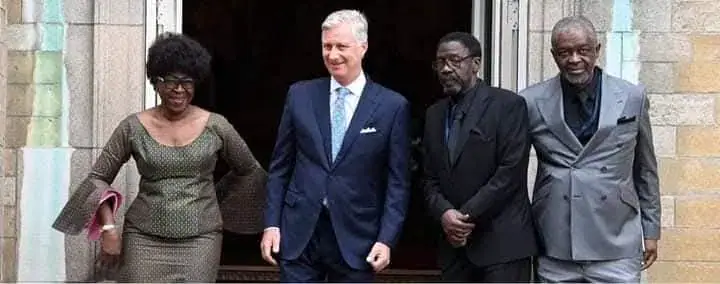
Recently, Lumumba's children, including François, Roland, and Juliana, have been accused of profiting from their father's death. According to critics, they have made a deal with the Belgian government to privatize their father's legacy in exchange for financial gain. This has sparked outrage among many Congolese people, who feel that the children are disrespecting their father's memory and legacy.
The accusations against Lumumba's children center around their alleged willingness to sell their father's belongings, including a tooth, without proper authentication or testing. Critics argue that this is a clear example of the children prioritizing financial gain over their father's legacy and the dignity of the Congolese people. Many are questioning how the children could accept such a deal without consulting the Congolese government or considering the historical significance of their father's death.
The Belgian government's involvement in Lumumba's assassination and its alleged role in corrupting his children have also been criticized. Many Congolese people feel that the Belgian government has not done enough to acknowledge its role in Lumumba's death and has instead sought to exploit the situation for its own gain. The Congolese government has been accused of being ineffective in protecting its citizens' interests and allowing the Belgian government to manipulate the situation.
Guy Lumumba, one of Patrice Lumumba's sons, has been vocal in his criticism of his siblings' actions. He has spoken out against their deal with the Belgian government and has called for greater transparency and accountability. Guy Lumumba's stance has been seen as a brave move, with many Congolese people praising him for standing up for his father's legacy.
The controversy surrounding Lumumba's children has sparked a wider debate about the legacy of Patrice Lumumba and the role of the Belgian government in his death. Many are calling for greater recognition of Lumumba's contributions to Congolese history and for the Belgian government to take responsibility for its actions. The situation has also highlighted the challenges faced by many African countries in dealing with their colonial past and the ongoing impact of colonialism.
Freddy Mulongo Mukena, a journalist and author, has written extensively on the topic. He argues that Lumumba's children have brought shame to their father's legacy and that their actions are a betrayal of his ideals. Mukena's comments reflect the outrage and disappointment felt by many Congolese people who see Lumumba's children as having sold out their father's legacy for personal gain.
Key points
- Patrice Lumumba was assassinated by Belgian operatives on November 16, 1961.
- Lumumba's children are accused of profiting from their father's death through a deal with the Belgian government.
- The controversy has sparked a wider debate about Lumumba's legacy and the role of the Belgian government in his death.