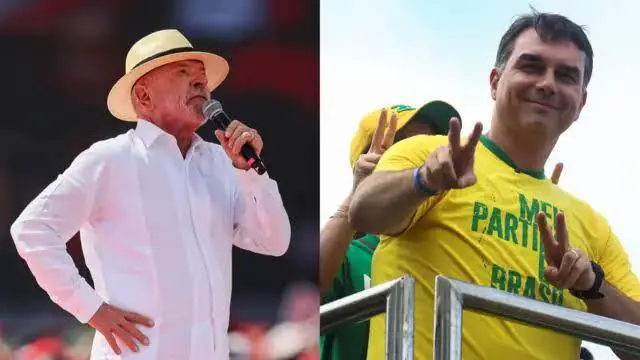
Brazil is set to hold its general elections on October 4, with President Lula da Silva seeking re-election amidst a regional surge in right-wing politics. Lula is currently the last leftist leader in South America's largest country and a key figure in the region. His main opponent, Flávio Bolsonaro, is the son of former President Jair Bolsonaro and represents the radical right in Brazil. The election outcome may have significant implications for Brazil's position in global affairs, particularly regarding its membership in the BRICS grouping with Russia and China.
The Brazilian election is being closely watched by analysts, who see it as a test for the left in South America. The region has experienced a shift to the right in recent years, with countries like Colombia and Peru electing conservative governments. According to Oliver Stuenkel, a professor of International Relations at the Getúlio Vargas Foundation, Brazil's leftist government is under pressure, but the current conservative trend may not be permanent. Stuenkel notes that Latin America tends to oscillate between left and right governments.
André Luiz Coelho, a political scientist at the Federal University of Rio de Janeiro, also believes that it's premature to talk about a "blue wave" in Latin America. Instead, he sees a succession of right-wing and center-right victories, accompanied by growing alternation between governments and opposition. Coelho attributes this movement to discontent with the cost of governing in the post-pandemic period, marked by inflation, weak growth, and organized crime.
The right-wing surge in Brazil is led by Flávio Bolsonaro, who has expressed admiration for the ideas of Argentine politician Javier Milei and El Salvador's President Nayib Bukele. Milei's ultra-liberal economic program and Bukele's security policies have been influential in the region. However, Stuenkel cautions that the Brazilian election should not be seen solely as a shift to the right, as the country remains deeply divided.
The Brazilian election will not only determine the presidency but also elect 513 members of the Chamber of Deputies and renew two-thirds of the 81 seats in the Senate. Polls suggest a tight contest between Lula da Silva and Flávio Bolsonaro, with a possible second round of voting on October 25 if no candidate achieves at least 50% of the votes.
The international implications of the Brazilian election are significant, with the country's position in global affairs likely to be affected by the outcome. A Lula da Silva victory would maintain Brazil's leftist government, while a Flávio Bolsonaro win could lead to a stronger alignment with the United States and a shift away from the BRICS grouping.
Experts agree that Lula da Silva is a crucial figure in South American politics, with no comparable leftist leader in the region. His re-election would ensure continuity for Brazil's leftist government, while a Bolsonaro victory would mark a significant shift in the country's politics and potentially have far-reaching consequences for the region.
Key points
- Lula da Silva's re-election would maintain Brazil's leftist government and its position in the BRICS grouping.
- The Brazilian election has significant implications for the country's and region's political future.
- Flávio Bolsonaro's campaign is influenced by the ideas of Javier Milei and Nayib Bukele.