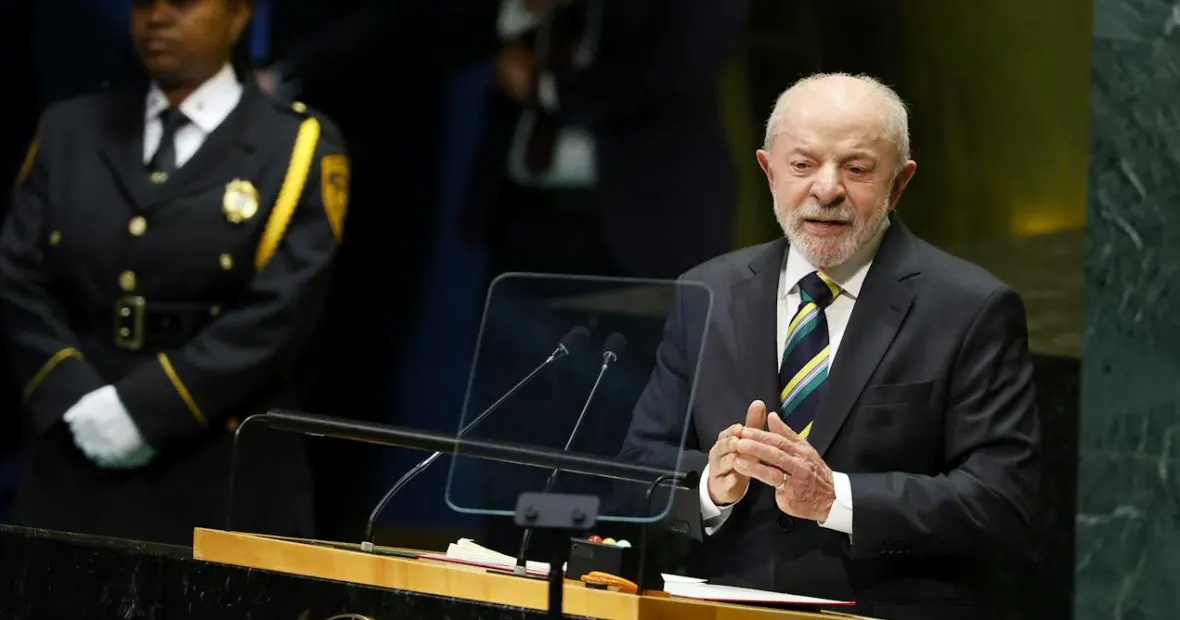
Brazilian President Luiz Inácio Lula da Silva addressed the United Nations General Assembly on September 22, 2026, posing a question to both international and domestic audiences: who will decide Brazil's future? This query comes as voters prepare to head to the polls on October 4, in an election marked by significant US interference. Lula's campaign has emphasized sovereignty, arguing that Brazil's political destiny must be determined by Brazilians, not foreign powers.
Lula's language has been uncompromising, denouncing members of the Bolsonaro family as traitors conspiring against the national interest. At a campaign rally in Brasília on September 16, Lula declared that Brazil would not tolerate politicians who "display the national flag by day and get on all fours for the United States at night." This rhetoric has contributed to Lula's small but steady lead in most polls.
The debate over nationalism in Brazil predates the current confrontation with the US and Lula himself. Brazilian political movements, both left and right, have competed to claim the nationalist mantle throughout the 20th century. These movements have argued about who is best positioned to ensure the nation lives up to its extraordinary natural potential, ascribing different meanings to concepts like sovereignty and the national interest.
Two nationalist traditions have emerged in Brazil: a progressive nationalist tradition that understands national sovereignty as the capacity to determine Brazil's economic and political development on its own terms, and a more conservative tradition that views progressive nationalism as using promises of reform to distract from corruption and irresponsibility. Lula's appeals to sovereignty belong to the progressive tradition, seeking greater room for maneuver in the international system.
Flávio Bolsonaro, the son of disgraced former President Jair Bolsonaro, presents a starkly different vision of Brazilian nationalism. He criticizes Brazilian democratic institutions, particularly the Supreme Court and electoral system, as obstacles to restoring the country's political order. A closer relationship with the US is seen as compatible with national renewal, with Flávio Bolsonaro promising to free his father and reform institutions.
Lula's UN speech insisted that powerful countries cannot dictate the political choices of weaker ones, a message that comes weeks after a leaked confidential report described the US pressure campaign as having reached a "critical" level. The report, shared with the Justice Ministry and Superior Electoral Court, indicates that foreign influence has become serious enough to warrant concern.
The outcome of the election will have significant implications for Brazil's future, with Lula's victory potentially leading to a more autonomous foreign policy and Flávio Bolsonaro's victory strengthening the transnational far-right current. The Brazilian people will ultimately decide which vision of nationalism will prevail, with the international community watching closely.
Key points
- Lula's UN address emphasized the importance of national sovereignty in determining Brazil's future.
- Flávio Bolsonaro's vision of nationalism prioritizes a closer relationship with the US.
- The Brazilian election will have significant implications for the country's foreign policy and democratic institutions.