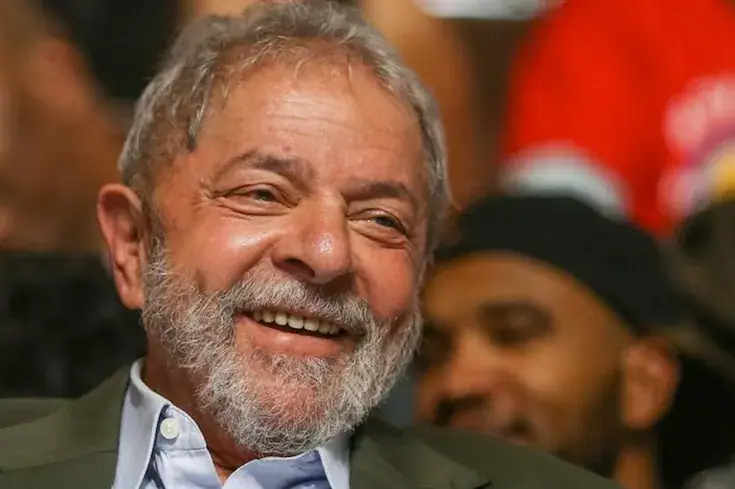
In a historic and highly anticipated move, Luiz Inácio Lula da Silva, commonly known as Lula, has won his fourth term as the President of Brazil. This victory marks a significant milestone in Brazilian politics, as Lula defeated far-right candidate Flávio Bolsonaro in the second round of the presidential election. Lula's win is being hailed as a triumph of civilization over barbarism, with many viewing it as a crucial moment in the country's history. The election saw a high level of polarization, with Lula's Workers' Party (PT) and Bolsonaro's supporters engaging in a fierce campaign.
The election results showed Lula securing 51.78% of the votes, while Bolsonaro garnered 48.22%. The narrow margin of victory highlights the deep divisions within Brazilian society. Lula's campaign focused on mobilizing support from various sectors, including young people, workers, and women. The former president's message resonated with many Brazilians who were concerned about the potential erosion of social rights and the country's sovereignty under a Bolsonaro presidency. Lula's win is seen as a significant achievement, given that he had to alter his campaign strategy after the first round of voting.
The first round of the election saw Bolsonaro gaining a slight lead over Lula, with a difference of around 2%. This narrow margin raised concerns among Lula's supporters and prompted a massive mobilization effort. Lula's campaign team, led by young politician André Janones, played a crucial role in galvanizing support through social media. The team created accounts and channels on various platforms, reaching millions of users and providing them with updates on Lula's campaign and proposals. This digital mobilization effort helped to shift public opinion in Lula's favor.
Lula's victory has been welcomed by various sectors of Brazilian society, including the progressive movement. Philosopher Judith Butler, in an interview before the election, highlighted the significance of Lula's win, stating that a Bolsonaro presidency would have meant "fear permanent for the Brazilian left, the favelas, women's bodies, and trans people's bodies." Butler also emphasized the importance of Lula's victory in the context of global politics, noting that it represents a desire for a different kind of future. Lula's win has sparked hope among progressives and has been seen as a significant achievement for the global South.
Lula's presidency is expected to have far-reaching implications for Brazil and the world. As a key player in the BRICS grouping, Brazil's shift towards a more progressive government is likely to have a positive impact on the global South. Lula's victory has also been seen as a setback for former US President Donald Trump's ambitions in the region. Trump's project to "qualify" Brazil and exploit its resources, particularly in the Amazon region, has been foiled by Lula's win. This development is likely to have significant implications for the region and the global economy.
Lula's re-election has also sparked debate about the country's future direction. With a Congress and Senate dominated by the right and far-right, Lula has promised to change his governing style. According to political analyst Valter Pomar, Brazil needs "urgent structural reforms" to ensure that the country's economic growth benefits all citizens. Lula has promised to prioritize education and investment in the digital, green, and creative economies. His re-election has raised hopes that Brazil will continue to play a key role in regional and global affairs.
Lula's legacy as a politician is complex and multifaceted. Known for his charisma, empathy, and humility, Lula has built a reputation as a skilled negotiator and leader. His ability to connect with ordinary Brazilians has been seen as a key factor in his success. As Lula begins his new term, he faces significant challenges, including addressing the country's deep-seated social and economic inequalities. Nevertheless, his re-election has sparked hope among Brazilians and has been seen as a significant achievement for progressive politics in the region.
Key points
- Lula's victory marks a significant milestone in Brazilian politics, as he defeats far-right candidate Flávio Bolsonaro.