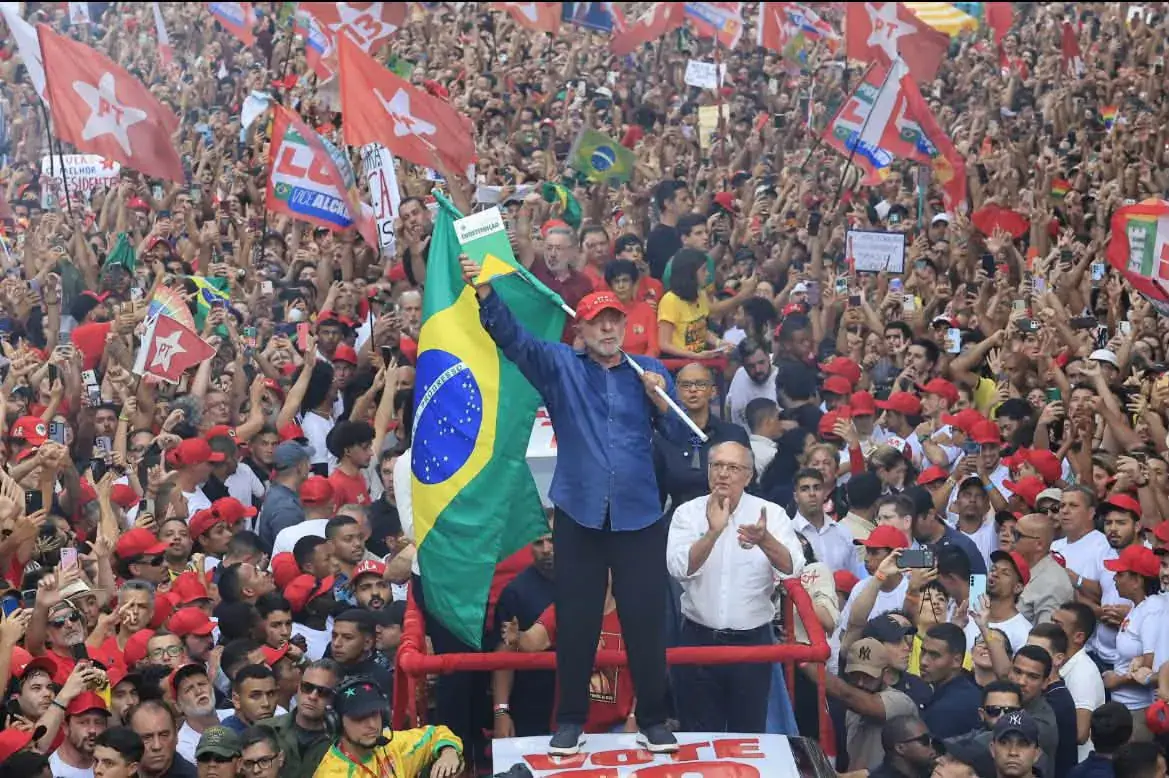
Luiz Inácio Lula da Silva has been elected to a fourth term as President of Brazil, securing 51.8% of the vote in the second round of the presidential election. He defeated Flávio Bolsonaro, who garnered 48.2% of the vote. The election was marked by a strong mobilization of voters and persistent polarization in Brazilian society. Lula's victory is seen as a significant upset, as he trailed behind Bolsonaro in the first round of voting.
Lula's campaign focused on remobilizing his base, particularly through social media and public rallies. His victory marks a return to power for the left-wing leader, who had previously served as President from 2003 to 2011. The election result is a setback for the conservative opposition, which had gained momentum in recent years. Lula's win is also seen as a significant development in the regional context, where conservative forces have been gaining ground in Latin America.
The election result has significant implications for Brazil's economic policy, particularly with regards to the country's finances, debt, and inflation. Investors are closely watching Lula's economic plans, seeking clarity on his intentions for fiscal discipline and growth. The real Brazilian currency, stock market, and sovereign bonds are likely to be affected by the election result. Lula's team will need to balance social spending with economic stability to maintain investor confidence.
Lula's victory has sparked concerns about the country's deepening political divisions. The election result highlights the persistent polarization in Brazilian society, with nearly half of voters supporting the opposition candidate. The new term will require Lula to navigate a complex landscape, balancing competing demands from different segments of society. He will need to address pressing issues such as the cost of living, security, and social welfare.
The international community is closely watching Lula's re-election, particularly with regards to Brazil's relationships with major trading partners such as China and the United States. Lula's foreign policy agenda is expected to prioritize autonomy and economic cooperation with key partners. His re-election is seen as a positive development for regional stability, as Brazil is a key player in Latin American affairs.
Lula's next steps will be crucial in determining the country's economic trajectory. He will need to outline his economic plans, including spending, investment, and taxation policies. The market reaction to his re-election will depend on the credibility of his economic agenda and the extent to which he can balance social spending with fiscal discipline. The coming days will be critical in determining the market's response to Lula's re-election.
Lula's re-election marks a significant turning point in Brazilian politics, but the economic implications remain to be seen. While the result provides institutional continuity, it does not dispel concerns about public finances, growth, and investor confidence. The coming weeks and months will be critical in determining the country's economic trajectory and Lula's ability to deliver on his campaign promises.
Key points
- Lula's victory marks a significant upset, as he trailed behind Bolsonaro in the first round of voting.
- The election result has significant implications for Brazil's economic policy, particularly with regards to the country's finances, debt, and inflation.
- Lula's re-election marks a significant turning point in Brazilian politics, but the economic implications remain to be seen.