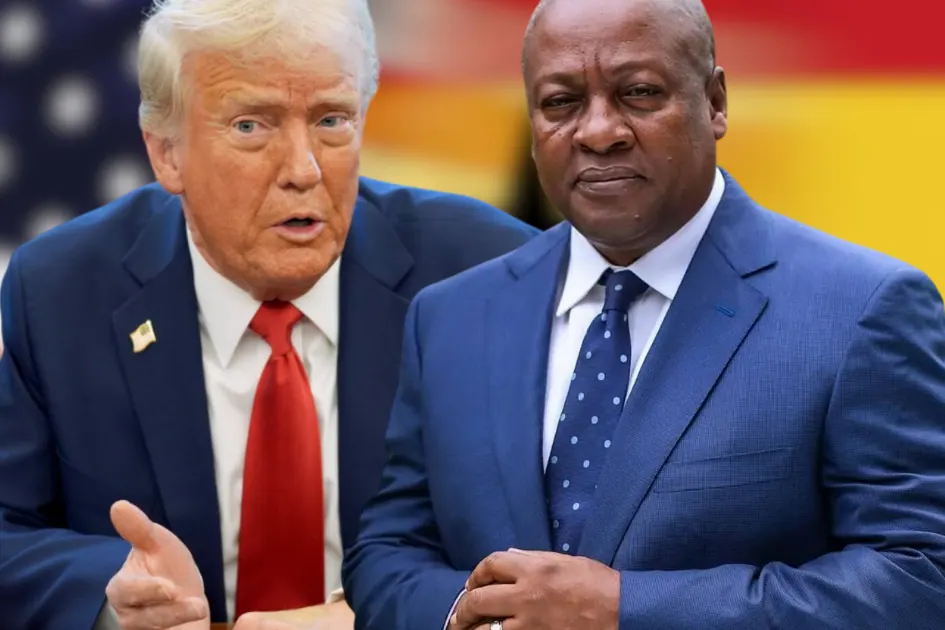
A recent AP-NORC poll in the United States has revealed that 82% of Americans disapprove of President Donald Trump's handling of the cost of living, despite the country's inflation rate being reported at 3.4%. This disconnect between official inflation figures and citizens' experiences is not unique to the US, as Ghana is facing a similar situation under the administration of President John Mahama. In Ghana, inflation is reported to be around 5%, but citizens are complaining about rising utility tariffs, fuel prices, transportation costs, rent, and prices of goods and services.
The frustration in Ghana is evident on social media and in everyday conversations, with many citizens expressing their discontent about the high cost of living and doing business in the country. For instance, author Chris-Vincent Agyapong recently posted on Facebook about the high cost of printing his book in Ghana compared to China, highlighting the challenges of doing business in the country. Similarly, supermarket shopper Mohammed Hassan Albezem posted a video lamenting the high cost of goods and services, which is "getting closer to your salary."
The issue of high cost of living is not limited to urban areas, as market women in Ghana are also feeling the pinch. Traders at Makola and Kaneshie Markets are reporting that produce is rotting because buyers have no money, and they are struggling to make a profit due to high transportation costs and rent. A trader at Makola Market noted that people are not buying as much as they used to, and goods are staying in the market for too long, leading to losses.
The situation in Ghana and the US highlights the challenges faced by governments in addressing the concerns of citizens, despite official economic indicators showing low inflation. Both President Mahama and President Trump have faced criticism for their handling of the economy, with citizens expressing frustration about the high cost of living. Interestingly, both presidents have staged comebacks after being voted out of office after their respective first terms.
The issue of high cost of living is not just an economic challenge but also a social one, as it affects the well-being and livelihoods of citizens. In Ghana, the high cost of electricity, transportation, and food is having a ripple effect on the economy, with many citizens struggling to make ends meet. The situation is similar in the US, where citizens are expressing frustration about the high cost of living, despite the country's strong economy.
The concerns about the high cost of living are not limited to Ghana and the US, as many countries are facing similar challenges. The global economy is facing uncertainty, and governments are struggling to address the concerns of citizens. In Ghana, the government is working to address the challenges, but citizens are calling for more action to be taken to reduce the cost of living.
The story of low inflation on paper and high cost of living is a complex one, and it requires a nuanced understanding of the economy and the concerns of citizens. Both President Mahama and President Trump will need to work to address the concerns of citizens and find solutions to the high cost of living, which is affecting the well-being and livelihoods of many people.
Key points
- Despite low inflation rates, citizens in Ghana and the US are expressing frustration about the high cost of living.
- The high cost of living is affecting the well-being and livelihoods of citizens, with many struggling to make ends meet.
- Governments in Ghana and the US are facing criticism for their handling of the economy, despite official economic indicators showing low inflation.