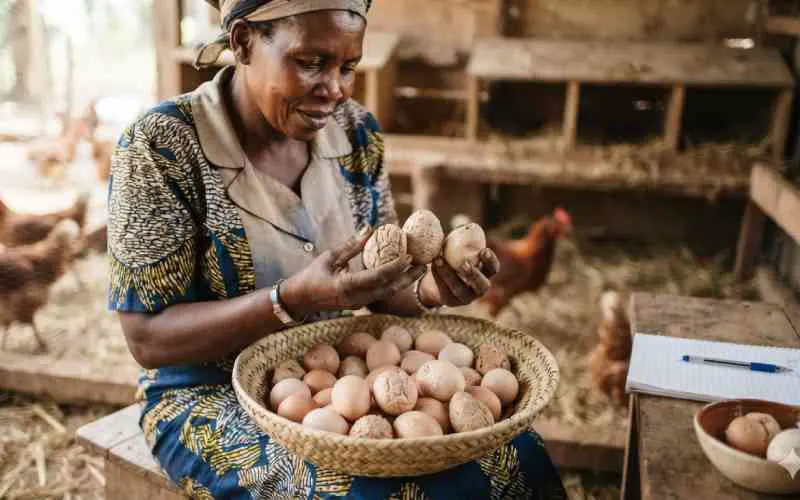
Eggs are a valuable source of high-quality protein and essential nutrients, making them a crucial product for both consumers and poultry farmers. A healthy hen can produce an egg almost every day, with the entire process taking about 25 hours as the egg moves through the reproductive tract. Under good management, a well-performing commercial layer can produce more than 300 eggs in a year. However, things can occasionally go wrong, resulting in cracked, soft, rough, tiny, pale, or oddly shaped eggs.
These abnormalities are not simply cosmetic problems, as they can indicate underlying issues with nutrition, disease, management, housing, or environmental conditions. Blood-stained eggs, for instance, can be caused by injury around the cloaca, often due to vent pecking by other birds. This can be prevented by maintaining appropriate lighting programs, reducing factors that encourage pecking, and ensuring birds have adequate space, feed, and water.
Misshapen eggs can be produced by young pullets when they first come into lay or by older hens towards the end of the production cycle. However, if misshapen eggs suddenly become common, disease should be considered. Infectious bronchitis, Newcastle disease, and egg drop syndrome can interfere with normal egg formation. A sound vaccination program and close monitoring of the flock for signs of disease can help prevent these issues.
Extremely small eggs may be seen when pullets begin laying too early, particularly when immature birds are exposed to light stimulation prematurely. Heat stress can also reduce feed intake, leading to smaller eggs. During hot weather, ensuring birds have plenty of clean, cool water and good ventilation can help maintain feed intake. Feeding during the cooler parts of the day can also help.
Rough or corrugated shells can occur, particularly in older flocks, and may be associated with nutritional problems, certain diseases, stress, and disturbances during shell formation. Mycoplasma infections, for example, may affect egg quality. Excessive calcium intake can also contribute to some shell abnormalities, so simply adding more calcium is not always the answer.
Thin, soft, porous, or shell-less eggs can be frustrating for layer farmers, as they often crack easily. Shell quality depends on a proper balance of calcium, phosphorus, vitamin D, and trace minerals such as zinc and manganese. Poor feed intake, heat stress, and sudden disturbances can also interfere with shell formation. Diseases like Infectious Bronchitis may also cause this problem.
Pale or discolored shells can be caused by disease, stress, and some medications. A sudden change in shell color across many birds should be treated as a flock management or health warning. Cracked eggs are a significant loss for farmers, and checking the basics, such as ensuring adequate nesting space and collecting eggs frequently, can help reduce breakage.
Key points
- Eggshell abnormalities can indicate underlying issues with nutrition, disease, management, housing, or environmental conditions.
- A sound vaccination program and close monitoring of the flock for signs of disease can help prevent egg abnormalities.
- Ensuring adequate nesting space and collecting eggs frequently can help reduce breakage and losses for farmers.