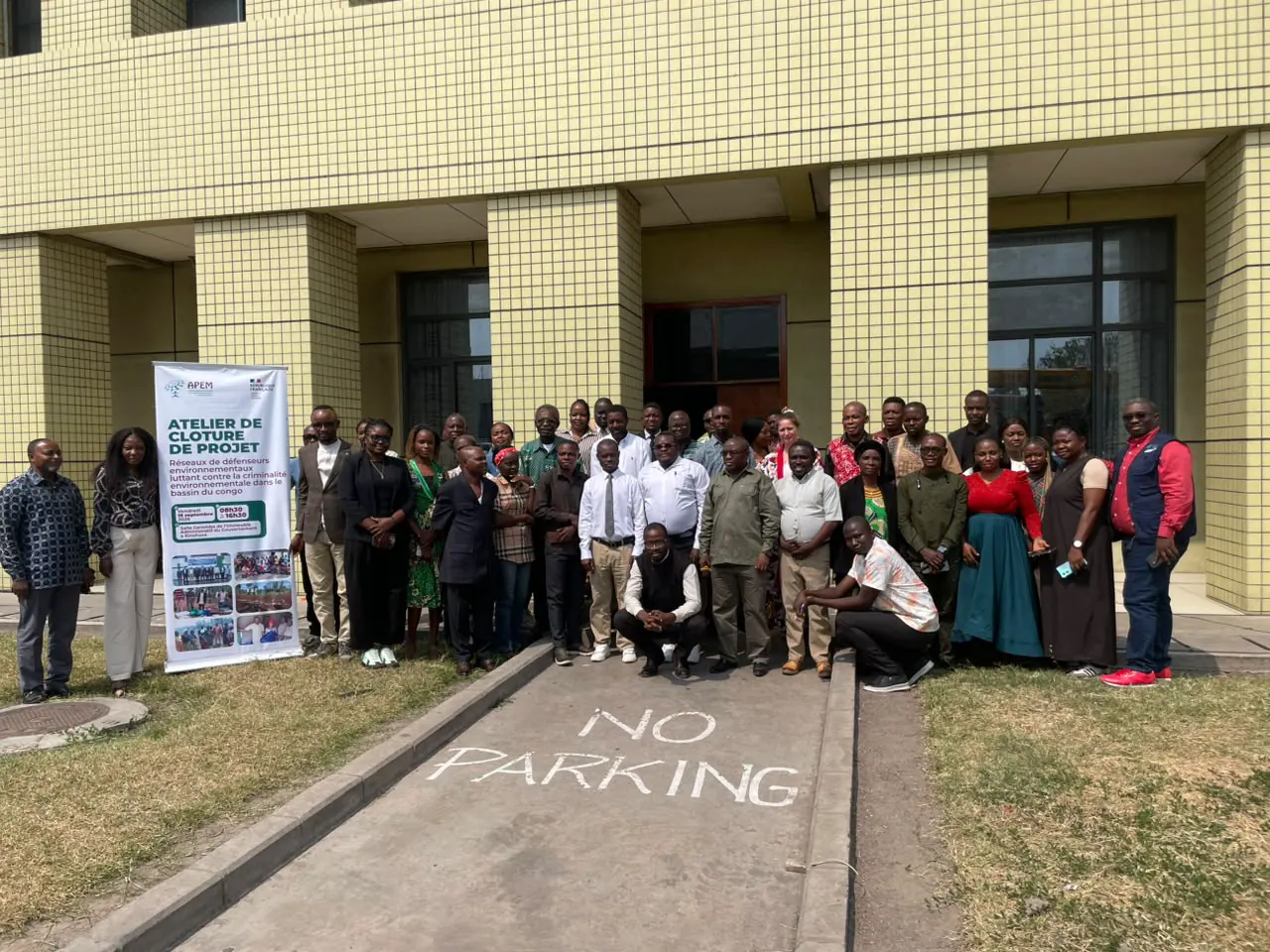
A recent workshop held in Kinshasa, Democratic Republic of the Congo, aimed to empower local communities to combat illegal forest exploitation in the Congo Basin. The event, which took place on September 20, 2026, brought together around 70 participants and was conducted in conjunction with a virtual conference in Bukavu. The workshop focused on presenting the results of a project titled "Environmental Defenders Network to Combat Environmental Crime in the Congo Basin."
The project, implemented by the NGO "Actions for the Promotion and Protection of Peoples and Threatened Species" (APEM), had three primary objectives. These included establishing a local network of environmental defenders to alert authorities about illegal forest exploitation, setting up an environmental observatory in Cameroon, and supporting the resilience of community leaders through micro-grants. According to Blaise Mudodosi, coordinator of APEM, the project's main goal was to equip local communities with a civic shield to denounce and curb illegal forest exploitation.
As part of the project, APEM financed ten income-generating activities, which helped to redirect individuals previously involved in environmental crime towards more sustainable livelihoods. These activities included agriculture, tailoring, phone repair, and livestock management. Mudodosi noted that the project had not only achieved its objectives but also led to the implementation of a ban on the exploitation of minerals, wood, and charcoal in the Kahuzi-Biega National Park.
The project, which began in 2024 and was extended until September 2026 due to security concerns, was a sub-regional initiative implemented by APEM in the DRC, APADIM in Cameroon, and ACOSA in Gabon. The workshop provided a platform for stakeholders to review the project's outcomes and capitalize on best practices to ensure the sustainability of its achievements.
The event was attended by representatives from the Congolese Institute for Conservation of Nature (ICCN), as well as officials from the ministries of Environment, Forests, Mines, Justice, and Human Rights. Participants emphasized the importance of collaboration and knowledge sharing to combat environmental crime in the Congo Basin.
The project's impact extends beyond its immediate objectives, as it has contributed to a broader effort to protect the Congo Basin's ecosystems. The region is home to some of the world's most biodiverse and valuable forests, which play a critical role in regulating the global climate.
The workshop's outcomes are expected to inform future initiatives aimed at promoting sustainable forest management and combating environmental crime in the Congo Basin. Key stakeholders will continue to work together to build on the project's achievements and address the complex challenges facing the region's ecosystems.
Key points
- Local communities have been empowered to denounce and curb illegal forest exploitation in the Congo Basin through a project implemented by APEM.
- The project established a local network of environmental defenders and supported the resilience of community leaders through micro-grants.
- The initiative led to a ban on the exploitation of minerals, wood, and charcoal in the Kahuzi-Biega National Park.