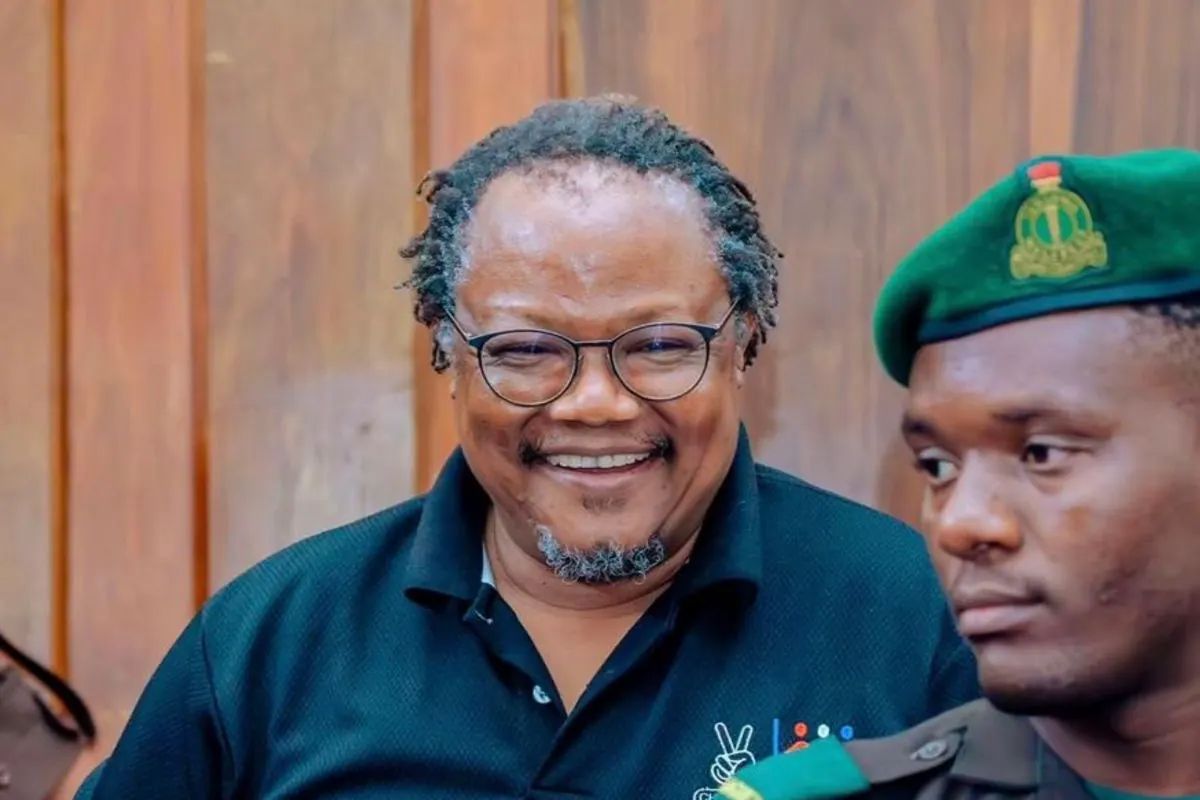
The treason trial of Chadema Chairman Tundu Lissu is set to enter its final submissions stage on Wednesday, September 23, 2026. Lissu faces a single charge of showing intent to threaten the government over allegations of inciting the public to prevent the 2025 general election. The trial will be presided over by a three-judge High Court panel at the Dar es Salaam Sub-Registry, led by Judge Dunstan Ndunguru, assisted by judges James Karayemaha and Ferdinand Kiwonde.
Lissu's trial has been ongoing, with the defence case closing on Friday, September 18, 2026. The accused, a qualified advocate, admitted to uttering and online publishing remarks construed by the State as threatening the government to obstruct the 2025 General Election. Disputed remarks attributed to Lissu include, "We will block the election, we will incite rebellion" and "this election we will truly disrupt it." However, Lissu denies that these remarks constitute the charged offence.
The prosecution must prove the charge to the required standard, whereas the defence seeks to cast doubt on the Republic's evidence. Both sides will analyse evidence strengths and weaknesses, referencing statutes and pertinent case law. Key statutes include the Penal Code, the Criminal Procedure Code, the Evidence Act, and the Constitution of the United Republic of Tanzania. The central debate will centre on whether Lissu's words, interpreted contextually, legally prove governmental threat intent.
The Republic argues that Lissu manifested this intent by publishing the remarks on YouTube via Jambo TV. The defence will contest Lissu's publication involvement, while the state attempts substantiation through court evidence. Lissu initially planned to call three additional witnesses, including Director of Criminal Investigations Commissioner of Police Ramadhani Kingai, Chief of Defence Forces General Jacob Mkunda, and Inspector General of Police Camillius Wambura. However, Lissu informed the Court that Kingai declined to testify.
According to Lissu, Kingai stated he supported those anticipating a guilty verdict. Lissu further claimed that Mkunda and Wambura, currently abroad, were likewise unwilling to testify for the defence. Lissu then prayed to close the defence's evidence, concluding his testimony as one of five defence witnesses. The final submissions phase marks a critical stage in the trial, with both parties presenting arguments before the High Court panel.
The judges will deliberate upon submissions from both sides before delivering their verdict in accordance with the law. Lissu's case has garnered significant attention, with many stakeholders following the developments closely. The trial's outcome is expected to have far-reaching implications for Tanzania's political landscape. The court's decision will ultimately determine whether Lissu's alleged remarks constitute a treasonous offence.
The trial's progression to the final submissions stage marks a significant milestone. Both parties are expected to present robust arguments, and the court's verdict will be keenly anticipated. The case has raised important questions about free speech, sedition, and the limits of political expression in Tanzania. The court's ruling will provide clarity on these issues and have a lasting impact on the country's democratic processes.
Key points
- Lissu faces a single charge of showing intent to threaten the government over allegations of inciting the public to prevent the 2025 general election.
- The defence case closed on Friday, September 18, 2026, with Lissu concluding his testimony as one of five defence witnesses.
- The judges will deliberate upon submissions from both sides before delivering their verdict in accordance with the law.