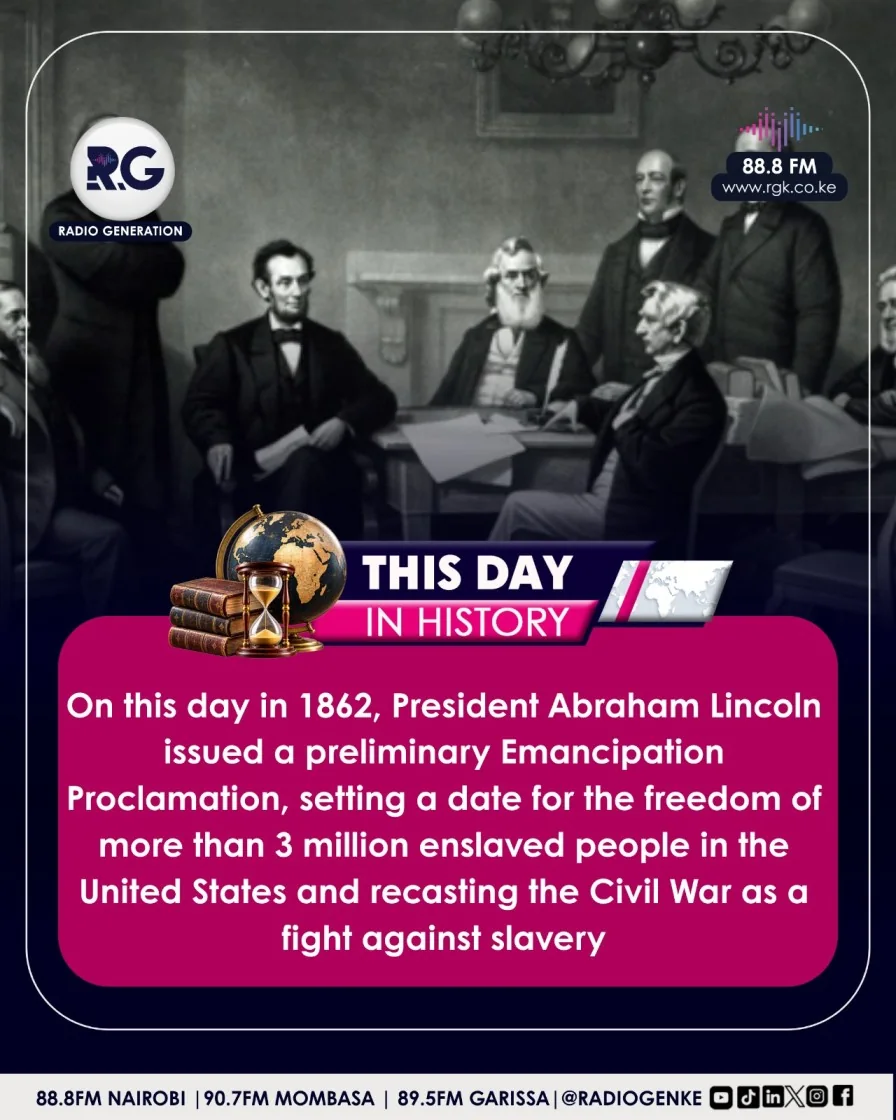
On September 22, 1862, U.S. President Abraham Lincoln issued a preliminary Emancipation Proclamation, a presidential proclamation that paved the way for the freedom of millions of enslaved people in Confederate-held territories. The proclamation was a major turning point in the American Civil War, which had begun in 1861. At the start of the war, Lincoln's primary objective was to preserve the Union, not to abolish slavery. However, as the war progressed, Lincoln began to see the abolition of slavery as a key goal.
The Battle of Antietam, fought in September 1862, was a significant Union victory that gave Lincoln the opportunity to issue the Emancipation Proclamation. The proclamation declared that enslaved people in areas still in rebellion against the Union would be freed as of January 1, 1863. This move was a strategic one, as it allowed Black men to join the Union Army and Navy, with approximately 180,000 serving in the army and another 18,000 in the navy.
The Emancipation Proclamation did not immediately end slavery across the United States, as it only applied to areas under Confederate control. However, it was a crucial step towards the eventual abolition of slavery. Lincoln supported a constitutional amendment to permanently abolish slavery, which would eventually become the 13th Amendment to the U.S. Constitution.
The 13th Amendment, ratified in 1865, formally ended slavery throughout the United States. The Emancipation Proclamation is preserved at the U.S. National Archives in Washington, D.C., serving as a reminder of Lincoln's commitment to ending slavery. The proclamation also marked a significant shift in the war's purpose, from preserving the Union to also fighting for the abolition of slavery.
The Emancipation Proclamation had a profound impact on the lives of millions of enslaved people in the United States. It paved the way for their freedom and equality, and marked a significant milestone in the country's ongoing struggle for human rights. The proclamation also had international implications, as it changed the global perception of the American Civil War.
Historians and scholars continue to study the Emancipation Proclamation and its significance in American history. The proclamation is seen as a key moment in the development of the United States, marking a turning point in the country's ongoing struggle for freedom and equality. It is a testament to Lincoln's leadership and commitment to the principles of liberty and justice.
Today, the Emancipation Proclamation is remembered as a landmark moment in American history. It serves as a reminder of the country's complex and often fraught past, and the ongoing struggle for human rights and equality. The proclamation's legacy continues to inspire people around the world, and its impact is still felt today.
Key points
- The Emancipation Proclamation applied mainly to areas under Confederate control.
- The proclamation allowed Black men to join the Union Army and Navy.
- The 13th Amendment, ratified in 1865, formally ended slavery throughout the United States.