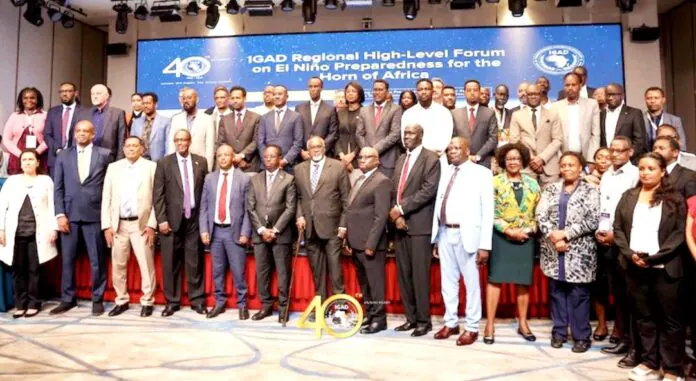
The Intergovernmental Authority on Development (IGAD) recently convened in Addis Abeba from September 15-17 to prepare for an impending El Niño event that could have severe consequences for the region. The meeting brought together policymakers from IGAD member states to discuss ways to strengthen their early warning systems and response mechanisms. The goal is to reduce the potential human, economic, and environmental impacts of El Niño. The region is already vulnerable to droughts, floods, and humanitarian crises.
The IGAD meeting focused on anticipation and regional coordination, recognizing that the region is prone to climate-related shocks. El Niño could bring above-normal rainfall, which may replenish water resources and improve pastures but also risks triggering floods, damaging infrastructure, and disrupting agricultural activities. The organization emphasizes that preparedness is key to mitigating these effects. IGAD member states are encouraged to develop and update their emergency plans, strengthen early warning systems, and pre-position essential supplies.
Djibouti's representative, Ahmed Mohamed Madar, stressed the need for enhanced preparedness and coordination. He noted that Djibouti, located at the crossroads of several regional dynamics, is particularly vulnerable to climate-related risks, conflicts, and geopolitical tensions. The country has hosted over 3,000 Yemeni refugees and is exposed to developments in the Middle East and the Bab el-Mandeb Strait. Madar emphasized that the ambition should be to anticipate, prepare, and respond more effectively to climate-related disasters.
El Niño does not necessarily mean catastrophe, but it can bring significant challenges. While increased rainfall can be beneficial in areas affected by drought, it can also lead to floods, displacement, and damage to infrastructure. The livestock sector is particularly vulnerable, with potential disruptions to animal movements and the spread of transboundary diseases. IGAD recommends strengthening health surveillance, vaccination, and water and pasture management to mitigate these risks.
The IGAD meeting drew on lessons from previous El Niño events, including those in 1997-1998, 2015-2016, and 2023-2024, which caused significant flooding, displacement, and agricultural losses. These experiences highlight the need for proactive measures to reduce the impacts of El Niño. The organization recommends that member states prioritize the protection of critical infrastructure, such as schools and health centers, and enhance their emergency response plans.
The IGAD meeting called for urgent action to prepare for El Niño. Member states are encouraged to increase funding for preparedness and integrate disaster risk into their policies and investments. The organization also urges development partners and donors to support resilience programs and facilitate the sharing of climate data. With the October-December rainy season approaching, there is a need to translate warnings and recommendations into operational actions to mitigate the effects of El Niño.
The response to El Niño requires a collective effort, as climate-related disasters and population movements often transcend national borders. IGAD member states must work together to address these challenges, and the organization is urging a coordinated and anticipatory approach to reduce the potential impacts of El Niño.
Key points
- Djibouti and other IGAD member states are urged to enhance preparedness and coordination to mitigate the effects of El Niño.