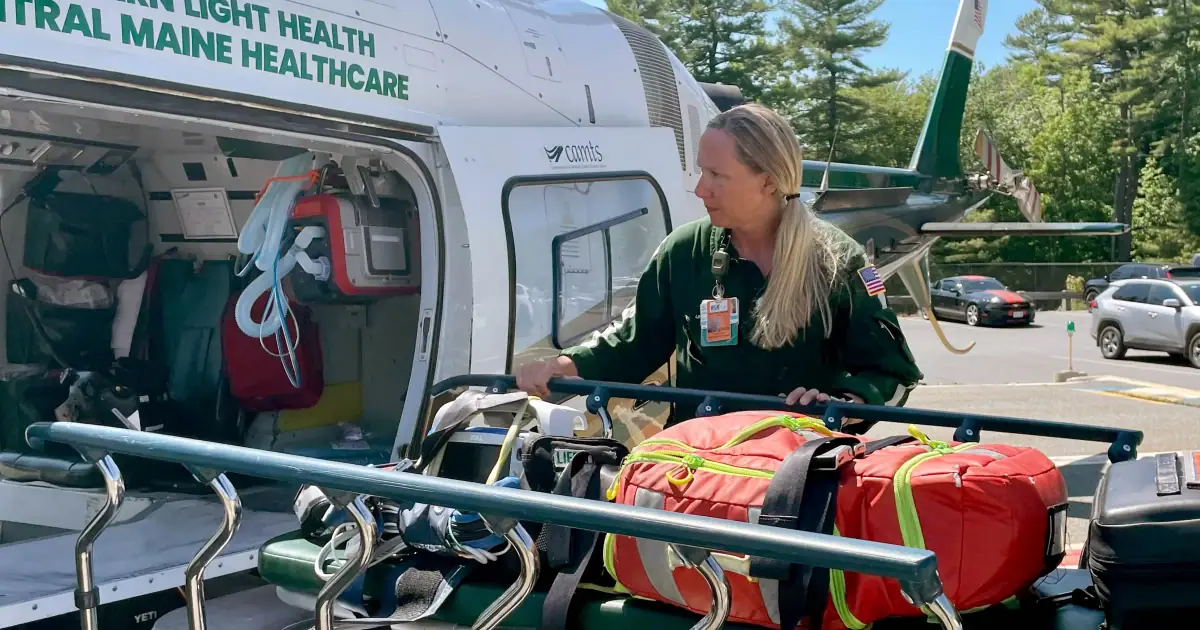
LifeFlight of Maine, a nonprofit air ambulance service, is addressing the growing demand for medical flights in the state's rural areas. With demand doubling since 2015 and increasing by 10% this year, the organization is working to improve its services. In 2025, LifeFlight crews flew 3,031 flights, more than one every three hours. The air ambulance service plays a critical role in Maine, one of the country's most rural states.
The rural healthcare system in Maine is facing significant challenges, including hospital closures and a shortage of ground ambulance services. As a result, air medical services like LifeFlight are being called upon to fill the gaps. Nicholas George, who runs the ETHOS Database, a national tracking system for air medical programs, notes that the need for air medical services is increasing year over year. This trend is expected to continue, with hundreds of rural hospitals and maternity departments at risk of closing.
LifeFlight's crews are seeing more patients every day, with many transports being interfacility transfers from small, local hospitals to larger, better-resourced ones. Flight nurse Denise Saucier notes that the organization's role in Maine is crucial, given the state's vast rural areas. The pressure is also on air ambulances as ground services in Maine are increasingly strained, with patients sometimes falling through the cracks. Last year, a woman in a small northern Maine town died while the county dispatch center called 10 ambulance services, none of which responded.
Air ambulance services face unique challenges, including staffing shortages and high rates of burnout. Almost a quarter of ground-based EMS workers leave the field every year, and while there's no comprehensive staffing data for air medical services, flight clinicians face significant stresses, including long shifts, unpredictable hours, and mental health burdens. LifeFlight CEO Joe Kellner notes that the job is demanding, with clinicians seeing people on their worst day, over and over again.
To address these challenges, LifeFlight has taken an innovative approach, including better training, higher pay, and in-house mental health support. The organization's Critical Care Academy, a six- to eight-month orientation program, is designed to provide clinicians with the skills they need to succeed. The program includes simulations of real-life medical crises, such as emergency births and newborn resuscitation. This approach has helped LifeFlight to nearly fully staffed this year, a first in nine years.
LifeFlight's approach has been recognized as a model program for the industry by EMS expert Mike Abernethy. The organization's commitment to quality care and clinician well-being sets it apart from for-profit air medical businesses, which have reputations for charging exorbitant prices. Abernethy argues that LifeFlight's aviation and medical quality is unmatched in the industry.
LifeFlight's efforts to address the rural healthcare challenges in Maine are ongoing. The organization's innovative approach to training and staffing is helping to ensure that clinicians have the skills and support they need to provide high-quality care. As the demand for air medical services continues to grow, LifeFlight's model may serve as an example for other organizations seeking to address the needs of rural communities.
Key points
- Demand for medical flights in Maine has doubled since 2015 and increased by 10% this year.
- LifeFlight of Maine has implemented a Critical Care Academy to provide clinicians with better training and support.
- The organization's approach has been recognized as a model program for the industry by EMS expert Mike Abernethy.