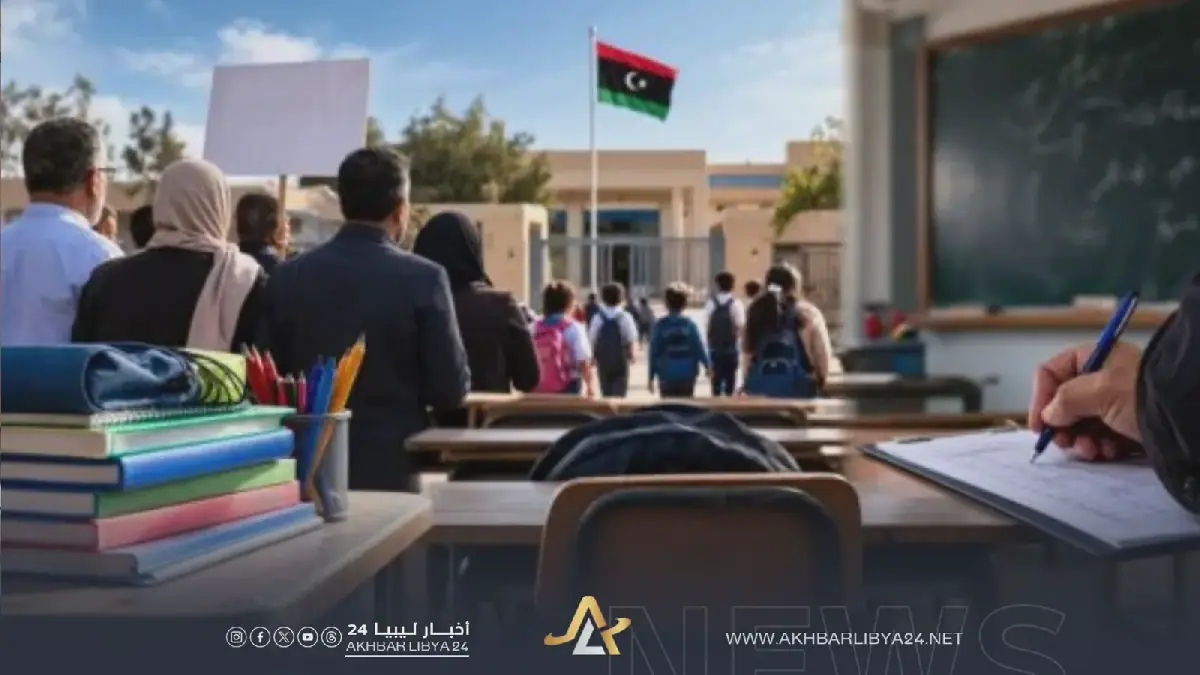
The Libyan Finance Ministry, under the outgoing government of Prime Minister Abdul Hamid al-Dbeiba, has allocated 719 million Libyan dinars to the Ministry of Education. This move aims to address the escalating crisis in the education sector, which has been plagued by teacher protests. The allocation was announced on November 8, 2026, as part of efforts to meet the financial demands of teachers.
Despite the allocation, the Libyan Teachers' Union has reaffirmed its decision to continue with a comprehensive strike. The union's general secretary, Ramadan Hamom, emphasized that the strike will persist until all demands are met. These demands include the implementation of a unified salary scale, payment of outstanding financial differences, and settlement of overdue payments to contract teachers.
On November 8, 2026, a meeting was held in Benghazi, chaired by the Speaker of the House of Representatives, Aguila Saleh, and attended by the Director of the Development and Reconstruction Fund, Belqasim Hafter. The meeting aimed to discuss the outstanding financial claims of teachers. The Libyan Teachers' Union's general secretary, Ramadan Hamom, attended the meeting, highlighting the challenges faced by educators across Libya.
Hamom stressed that the union's primary demands focus on improving teachers' living standards through a unified salary scale. Additionally, the union seeks the payment of owed financial differences and the settlement of overdue payments to contract teachers. The union also demands the provision of comprehensive health insurance for teachers.
The Libyan Teachers' Union has emphasized that its members' basic rights are not negotiable. The union has pledged to continue defending these rights and supporting teachers until their demands are fully met. This comes amid anticipation of further developments in the ongoing protests.
The crisis in Libya's education sector has been ongoing, with teachers demanding better working conditions and financial benefits. The situation has led to disruptions in the education system, affecting thousands of students across the country. The government's allocation of funds to the Education Ministry is seen as a step towards addressing these demands.
The outcome of the Finance Ministry's allocation and the Teachers' Union's continued strike remains uncertain. The situation is being closely watched by various stakeholders, including government officials, educators, and students. The Libyan government faces pressure to resolve the crisis and ensure the smooth operation of the education sector.
Key points
- The Libyan Finance Ministry has allocated 719 million Libyan dinars to the Education Ministry to address teacher demands.
- The Libyan Teachers' Union has reaffirmed its decision to continue a comprehensive strike until all demands are met.
- The union's demands include implementing a unified salary scale and providing comprehensive health insurance for teachers.