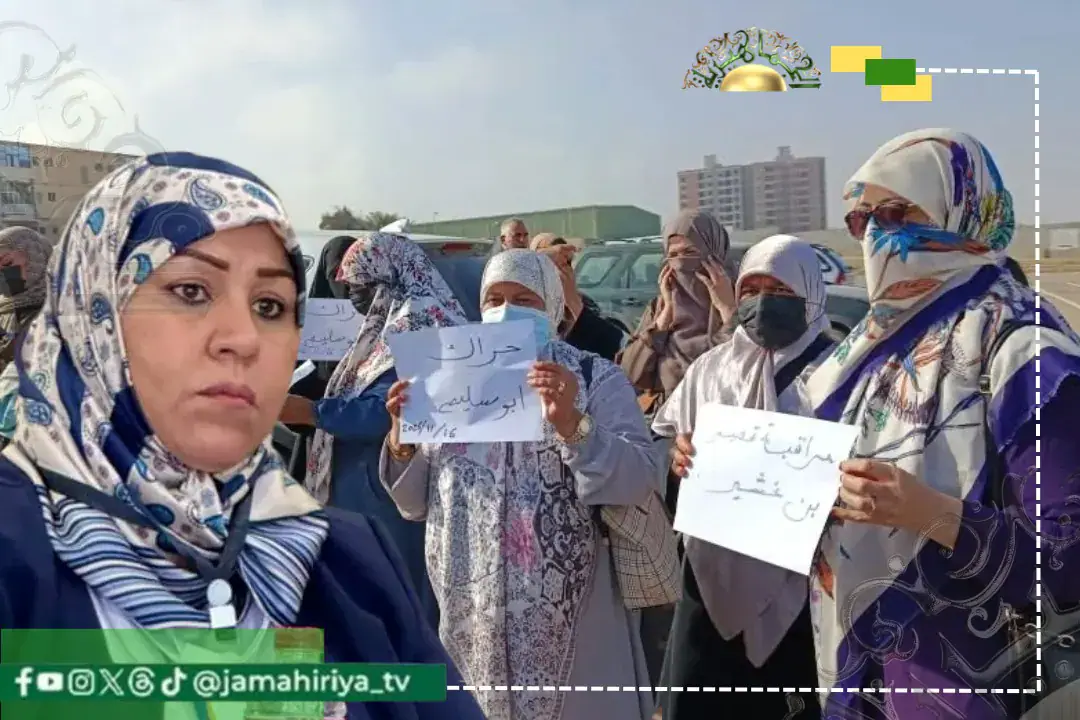
On Monday, November 16, 2026, a group of Libyan teachers organized a protest in front of the UN Support Mission in Libya, located in the Genzour area. The protest was part of a growing movement to demand better working conditions and payment for teachers. According to Zineb Mohamed Shklabou, a teacher and educator, the protest aimed to draw attention to the plight of teachers in Libya, who have been facing difficulties due to the ongoing political division and lack of serious solutions to address their professional and financial issues.
Shklabou, who was part of a four-member delegation that met with the UN Support Mission, stated that the protest was a necessary step to push for change. The delegation, which included Wajdi Bashir Fleifel, Nidal Mustafa Dghman, and Mustafa Hassan Al-Rahbani, presented a formal statement to the UN mission, highlighting the demands of the teachers and emphasizing the need for urgent action to address their rights. Shklabou expressed frustration with the continued political and institutional paralysis in the country, which has hindered efforts to unify the executive authority and address key issues such as salaries and benefits.
The ongoing crisis in Libya has had a significant impact on the education sector, with teachers facing significant challenges in terms of payment and working conditions. Shklabou noted that the lack of a unified and fair system for paying salaries has created uncertainty and hardship for teachers. She also criticized the UN Support Mission for not doing enough to address the root causes of the crisis, saying that the continued division and lack of progress on key issues raises questions about the effectiveness of the current political process.
Shklabou emphasized that the issue of teachers' rights is closely linked to the broader challenges facing Libya's institutions. She argued that addressing the crisis in the education sector requires a comprehensive approach that involves both short-term solutions and long-term reforms. This includes efforts to unify the executive authority and establish a fair and transparent system for paying salaries.
The protest by Libyan teachers highlights the growing frustration with the ongoing crisis in the country. Shklabou stated that teachers can no longer tolerate empty promises and delayed solutions, and that ensuring their rights and improving their working conditions is a national responsibility that requires clear and decisive action. She also called on all parties involved to take responsibility and take concrete steps to address the crisis and guarantee the rights of Libyan teachers.
The UN Support Mission in Libya has a critical role to play in facilitating a political process that can address the country's challenges. However, Shklabou's comments suggest that the mission's efforts to date have been insufficient. She argued that the continued crisis and lack of progress on key issues undermine the legitimacy of the current political process and highlight the need for a new approach.
The protest by Libyan teachers is a reminder of the need for urgent action to address the country's challenges. Shklabou concluded by emphasizing that the struggle for teachers' rights is part of a broader effort to build a more stable and prosperous Libya. She called on all parties involved to work together to find solutions that prioritize the needs of Libyan citizens, including teachers.
Key points
- Libyan teachers staged a protest in front of the UN Support Mission in Tripoli, demanding better working conditions and payment.