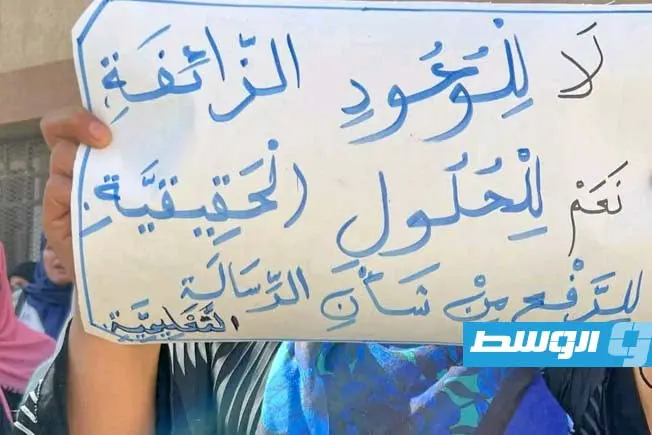
The Libyan teachers' movement, led by Ashraf Ahmed, has announced that it will go on a nationwide strike if the authorities do not meet its demands by the end of Thursday. The movement has been protesting for improved working conditions, including unified and better salaries, payment of delayed financial dues, and health insurance. The strike, if implemented, will be a peaceful and organized labor action aimed at pressuring the authorities to meet the teachers' demands.
The teachers' movement has been ongoing, with Ahmed stating that they have given the authorities sufficient time to respond to their demands, but the lack of concrete actions has led them to continue their protests. The movement is demanding that the authorities take concrete steps to address their concerns, including the implementation of a unified salary scale, payment of delayed financial dues, and improved working conditions.
The teachers' demands also include the amendment of Law No. 4 to improve their living conditions, payment of allowances and benefits, and the implementation of a "lesson allowance." Additionally, the movement is calling for the regularization of the status of teachers working in remote areas and the resolution of pensioners' issues. The movement has emphasized that its demands are legitimate and that it will not back down until they are met.
The Libyan Minister of Education, in the interim government, has pledged to protect the rights of teachers and improve their working conditions. However, the teachers' movement has expressed skepticism, stating that they have heard promises before but have not seen concrete actions. The movement has called on the authorities to take concrete steps to address their concerns, rather than just making promises.
The teachers' movement has been protesting for several weeks, with demonstrations and sit-ins held in various parts of the country. The movement has gained widespread support from teachers and education workers, who are demanding improved working conditions and better salaries. The Libyan education sector has been facing significant challenges in recent years, including a shortage of teachers and inadequate infrastructure.
The nationwide strike, if implemented, will likely have significant implications for the education sector in Libya. The movement has emphasized that its goal is not to disrupt the education process but to pressure the authorities to meet its demands. The Libyan government has been facing significant challenges in recent years, including a shortage of funds and a struggling economy.
The teachers' movement has called on teachers to unite and remain committed to peaceful protests. The movement has also warned against rumors and misinformation, emphasizing that it will not be swayed by false promises or distractions. The situation remains tense, with the authorities yet to respond to the teachers' demands.
Key points
- The Libyan teachers' movement is demanding improved working conditions, including unified and better salaries, payment of delayed financial dues, and health insurance.
- The movement has threatened a nationwide strike if its demands are not met by the end of Thursday.
- The Libyan government has been facing significant challenges in recent years, including a shortage of funds and a struggling economy.