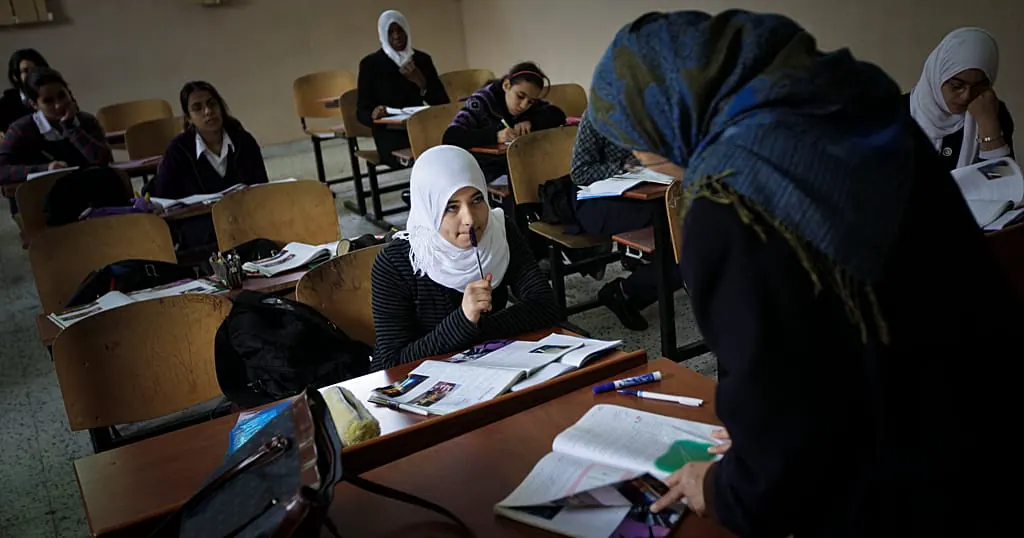
Public school teachers in Libya are continuing their strike over pay and working conditions, with demonstrations held in Tripoli for a third consecutive week. The strike, which began just weeks into the 2026-2027 academic year, is disrupting classes in public schools. Teachers are demanding better pay and equal salaries across the public sector, amid rising inflation and difficult living conditions.
The strike is led by the General Union of Teachers of Libya, which says government promises are no longer enough to address the teachers' concerns. The union's spokesperson, Achraf Abou Raoui, stated that the main demand is to overhaul the unified pay scale to ensure social justice and decent living conditions. The union also wants outstanding payments under Law Number Four, classroom allowances, and benefits for school principals and administrative staff.
Teachers are also calling for health insurance for themselves and their families, as well as improved conditions for contract workers. The strike has passed the point of no return, according to Achraf, with the profession demanding tangible action and concrete measures from the government. The Ministry of Education is monitoring the impact on schools, while the education minister has stressed the need to protect students' rights and ensure continuity in their studies.
The dispute is taking place as the General Teachers' Union elects a new president, with Ramadan Mohammed Ramadan Al-Maqtouf announced as the winner. The union's new leadership will likely play a key role in negotiations with the government. The strike is affecting schools across the country, with teachers holding signs calling for higher salaries and equal pay outside a school in the capital, Tripoli.
The unified pay scale review is seen as crucial to addressing the teachers' concerns, as it would provide a fair and equitable salary structure across the public sector. The teachers' union believes that a comprehensive overhaul of the pay scale would not only benefit public sector workers but also support the national economy. The government has yet to respond to the union's demands, but the strike is likely to continue until a resolution is reached.
The strike has significant implications for the education sector in Libya, with thousands of students affected by the disruption to classes. The Ministry of Education will need to find a solution to the dispute quickly to minimize the impact on the academic year. The teachers' union has made it clear that it will not back down until its demands are met, adding pressure on the government to take action.
The situation remains tense, with no immediate end to the strike in sight. The government's response to the teachers' demands will be crucial in determining the outcome of the dispute. As the strike continues, students and teachers alike are hoping for a swift resolution that will allow classes to resume and the academic year to continue without further disruption.
Key points
- Libyan teachers are demanding a review of the unified pay scale to ensure social justice and decent living conditions amid rising inflation.
- The strike is disrupting classes in public schools just weeks into the 2026-2027 academic year.
- The General Teachers' Union says government promises are no longer enough to address the teachers' concerns, and tangible action is needed.