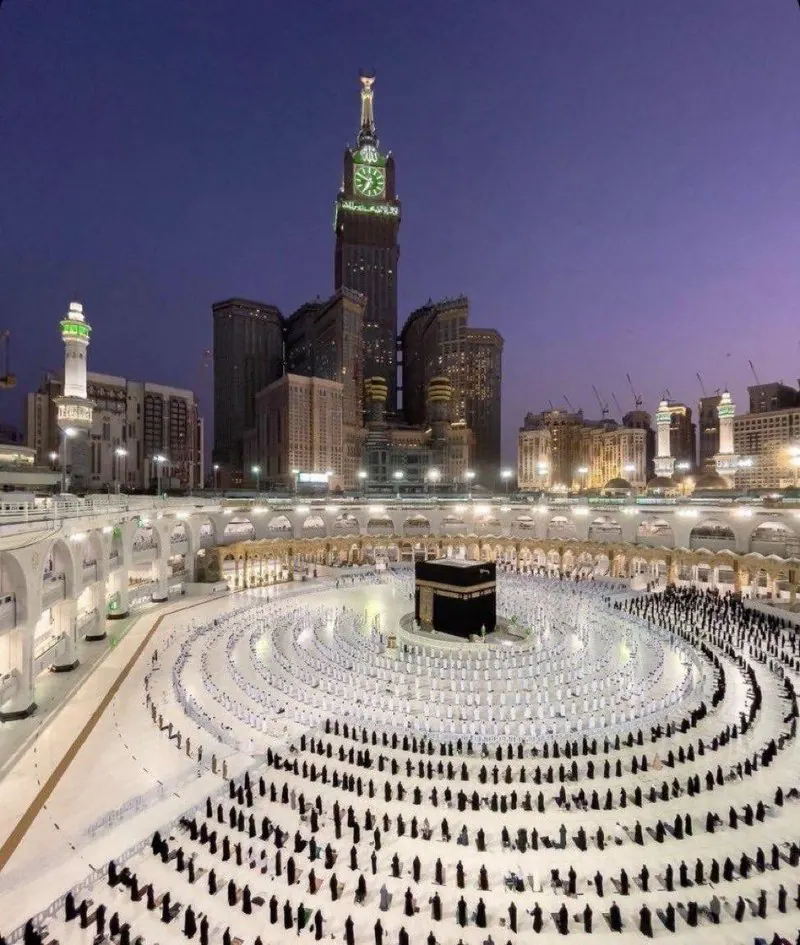
On March 23, 2023, a Facebook page published a claim that the Saudi government had banned photography inside Mecca's Grand Mosque due to content creators taking promotional photos and videos. The post garnered over 13.4 thousand interactions and 1.6 thousand comments. The Libyan social media monitoring group, Annir, investigated the claim and found it to be misleading.
Annir's investigation led them to the official Twitter account of the Saudi Ministry of Islamic Affairs, Dawah and Guidance, which published a circular on March 3, 2023. The circular stated that camera installations in mosques should be restricted and not used to photograph imams and worshippers during prayers. Additionally, the circular prohibited the broadcast of prayers in the media.
A spokesperson for the Ministry of Islamic Affairs told the Al-Ekhbariya TV channel that the ban on photography was intended to protect pulpits from exploitation and prevent the dissemination of incorrect messages that could affect Muslims. The spokesperson emphasized that the ban was not related to personal photography by pilgrims and worshippers in the Grand Mosque.
According to the French Press Agency, a senior official from the Ministry of Islamic Affairs denied reports circulating on social media, stating that the decision had nothing to do with personal photography by pilgrims and worshippers in the Grand Mosque. The official added that thousands of visitors to the Grand Mosque were still taking personal photos.
Annir's investigation found that the original claim was misleading, as it took the information out of context. The claim was spread across multiple social media pages, contributing to its wide reach. The Libyan social media monitoring group aims to verify information and debunk false claims.
The incident highlights the importance of fact-checking and verifying information before sharing it on social media. The spread of misinformation can have significant consequences, especially when it comes to sensitive topics such as religious practices. Annir's work in monitoring and debunking false claims helps maintain the integrity of information.
Annir has been actively involved in fact-checking and debunking false claims on various topics, including cultural and local issues. Their efforts aim to promote accurate information and prevent the spread of misinformation. By verifying information, Annir helps maintain trust in online sources and promotes a more informed public discourse.
Key points
- A Libyan social media monitoring group, Annir, debunked a claim that the Saudi government had banned photography inside Mecca's Grand Mosque.
- The claim was found to be misleading, as it took information out of context.
- The Saudi government had actually restricted camera installations in mosques to prevent exploitation and the dissemination of incorrect messages.