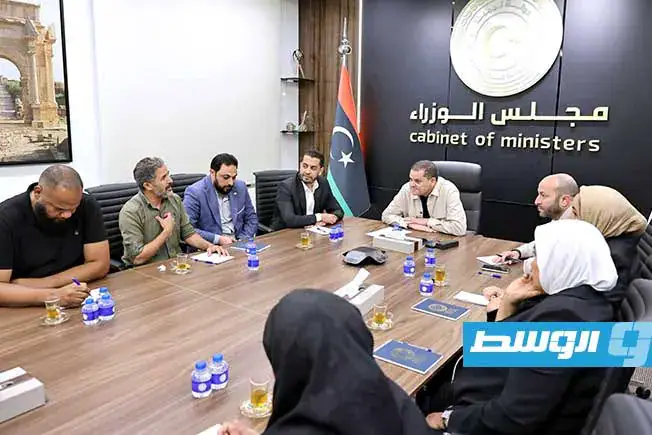
Libyan Prime Minister Abdulhamid Dbeiba held a meeting with teachers' unions and education officials on November 15, 2026, to discuss the resumption of the education process. The meeting, which took place in Tripoli, was attended by several officials, including the Minister of State for the Prime Minister and the Council of Ministers, Muhammad bin Ghalbun. The discussions focused on the current state of the education sector and the demands of the teachers.
The teachers' union has been on strike since September 13, 2026, demanding better working conditions, a unified salary scale, and payment of outstanding financial entitlements. The union's demands also include improvements to the living conditions of education sector employees. The strike has disrupted the start of the new academic year, which was initially scheduled to begin in September.
During the meeting, Dbeiba listened to the teachers' concerns and demands, and emphasized the importance of resuming the education process. He also assured them that their demands would be addressed and that the government would work to improve the education sector. The meeting concluded with an agreement to continue monitoring the situation and addressing the teachers' demands.
Despite the meeting, the "Harakat al-Mu'allimin" (Teachers' Movement) announced that it would continue its strike until all its demands are met. The movement had previously rejected the outcomes of a meeting between Dbeiba and the General Teachers' Union, saying that it would not back down until its demands are fully addressed.
In October 2026, Dbeiba had announced the resumption of the education process following a meeting with the General Teachers' Union. However, the teachers' movement rejected this decision, saying that it did not address their core demands. The ongoing strike has raised concerns about the impact on the education sector and the future of Libyan students.
The meeting between Dbeiba and the teachers' unions was seen as a positive step towards resolving the crisis. However, it remains to be seen whether the government's efforts will be enough to address the teachers' demands and end the strike. The education sector has been facing significant challenges in recent years, including a lack of funding, infrastructure, and qualified teachers.
The Libyan government faces a significant challenge in addressing the demands of the teachers and other public sector employees. The country's economy has been struggling, and the government has limited resources to meet the demands of its citizens. However, the education sector is critical to the country's future, and finding a solution to the crisis is essential to ensuring the well-being of Libyan students and the country's long-term development.
Key points
- The Libyan prime minister has pledged to address the demands of the teachers' union and work towards improving the education sector.
- The teachers' union has been on strike since September 13, 2026, demanding better working conditions and payment of outstanding financial entitlements.
- The strike has disrupted the start of the new academic year, raising concerns about the impact on Libyan students.
Reporting sources
- Wasat TV · Wasat TV