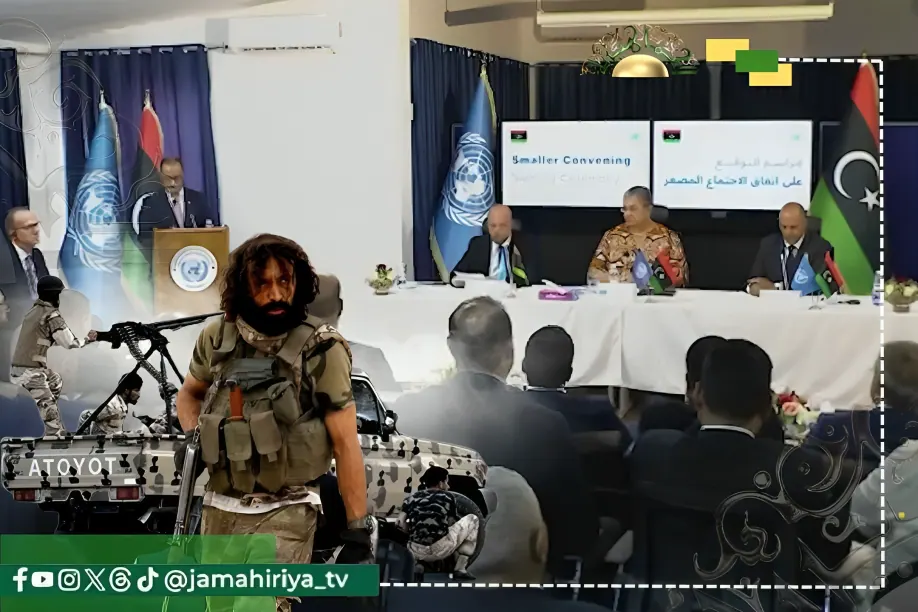
Libyan political analyst Abdel Basit Attiqi has expressed skepticism about the 4+4 agreement's ability to guarantee the country's transition to elections and end the ongoing division. In a statement reported by the Egyptian newspaper Al-Nahar, Attiqi emphasized that the real test lies in the ability of Libyan parties to implement the agreed-upon terms and accept the results of the political process. He noted that having a timeline, modifying electoral laws, or restructuring the High National Election Commission does not provide sufficient guarantees for the completion of the electoral process.
Attiqi pointed to Libya's previous experience, which showed that obstacles were not always related to the technical capacity to organize elections. Despite having a functioning election commission and a unified executive authority, the country failed to complete the electoral process in December 2021. This experience, he argued, highlights the importance of the political environment surrounding the elections. Attiqi warned against considering the two-year period as a guaranteed outcome, viewing it instead as a genuine test of the will of powerful centers to accept a transfer of power and respect the results of the ballot box.
The 4+4 agreement, Attiqi stressed, should be seen as the beginning of a political process rather than a definitive solution to Libya's division. He noted that political agreements establish the rules of the game but do not guarantee that all parties will adhere to their outcomes when they conflict with their interests. Past experiences, he observed, have shown the danger of treating the signing of agreements as synonymous with resolving the crisis. The real evaluation of any agreement, Attiqi asserted, should be based on what happens after the signing and the ability of parties to implement their agreed-upon commitments.
Attiqi cautioned against reducing Libya's challenge to merely organizing elections, warning that a new crisis could emerge after the electoral process, related to the acceptance of results and the transfer of power. He emphasized that concerns extend beyond the possibility of electoral setbacks to scenarios where elections are held but disputes arise over the legitimacy of results or mechanisms for transferring power. This issue, he argued, represents the core of Libya's political crisis.
The success of the electoral process, Attiqi stressed, is not measured solely by the opening of polling stations and the announcement of results but by the ability of all centers of power to respect the outcomes of the ballot box and enable elected institutions to exercise their powers. He highlighted that the previous experience demonstrates that the absence of a unified government and parliament does not necessarily hinder the electoral process but rather complicates the post-election phase.
Attiqi also noted that reaching a unified government, parliament, and institutions does not necessarily mean that centers of power controlling land, resources, and security have become part of a unified state system. While unifying institutions is an important step, it is not sufficient on its own to end the division. The country still faces significant challenges in integrating the various power centers into a cohesive national framework.
The analyst's comments reflect broader concerns about the fragility of Libya's political process and the potential for setbacks. As the country navigates its complex transition, the 4+4 agreement's impact on the electoral process and national unity remains uncertain. The road to stability and democracy in Libya appears long and fraught with challenges, with many questioning whether the current efforts will ultimately succeed in bringing peace and prosperity to the war-torn nation.
Key points
- Libyan political analyst Abdel Basit Attiqi questions the 4+4 agreement's ability to guarantee elections and end the country's division.
- Attiqi emphasizes that the real test lies in the ability of Libyan parties to implement the agreed-upon terms and accept the results of the political process.
- The success of the electoral process is not measured solely by the opening of polling stations and the announcement of results but by the ability of all centers of power to respect the outcomes of the ballot box.