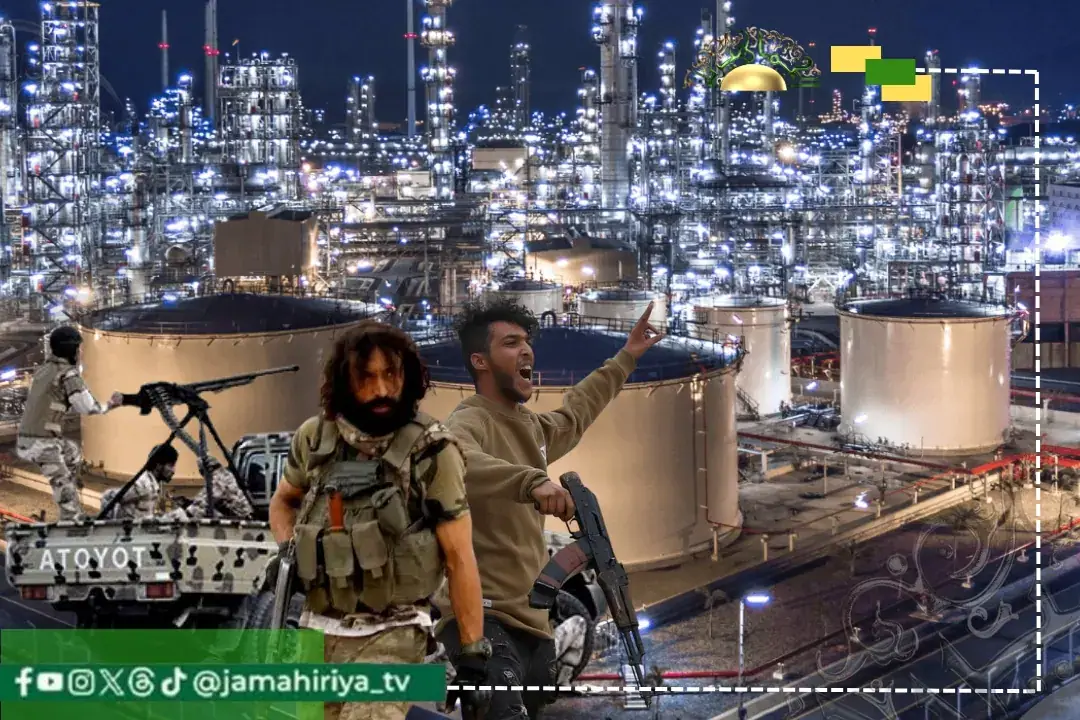
A report by Middle East Online highlighted the closure of a valve on the Hamada pipeline, which connects the oil field to the Zawiya refinery, resulting in the halt of around 15,000 barrels per day of crude oil production. This development comes after another valve was closed on the Hamada-Zawiya pipeline on October 22, reducing production at the Hamada and Thahara fields, according to the National Oil Corporation.
The recurrence of such closures within a short period reveals the ongoing fragility of the security and operational situation in the oil sector, which has become a battleground for armed militias and local parties seeking to fulfill financial and administrative demands. The shutdowns not only lead to direct losses from halted production but also impact refinery operations and the supply of petroleum derivatives to the local market.
These closures are linked to repeated demands from members of the Petroleum Facilities Guard, concerning financial and administrative issues, including the transfer of the Guard's administrative and financial oversight to the National Oil Corporation, and setting a timeline for implementation. Such demands were accompanied by movements in September that included production cuts and threats to halt operations in several fields.
The critical nature of these developments is underscored by Libya's heavy reliance on oil for budget financing, with oil revenues constituting around 90% of state income and production standing at approximately 1.4 million barrels per day. Libya faces a paradox of having significant oil reserves and production capabilities but struggling to protect its oil flow from recurrent closures.
The shutdowns and closures of pipelines and fields to bargaining tools widen the cost of disputes, affecting public revenues and the government's ability to finance commitments, as well as eroding investor and international partner confidence in sector stability. The problem seems deeper than a temporary closure, relating to the continued subjection of oil wealth to influence and factional demands.
The Libyan economy pays the price of using its primary resource as a bargaining chip in endless conflicts. The National Oil Corporation had previously announced the closure of a valve on the pipeline transporting crude from the Sharara field, one of Libya's largest oil fields, leading to a significant production decline, concurrent with the closure of Zawiya complex gates and its refinery by protesters.
The situation highlights the challenges faced by Libya in maintaining its oil production and the impact of militia actions on the country's economy and energy sector. The international community and Libyan authorities face the task of addressing these issues to ensure stability and security in the region.
Key points
- Libyan militias are using oil valves as a pressure card to fulfill financial and administrative demands.
- The closures have resulted in the halt of around 15,000 barrels per day of crude oil production.
- Libya's economy is heavily reliant on oil, with oil revenues constituting around 90% of state income.