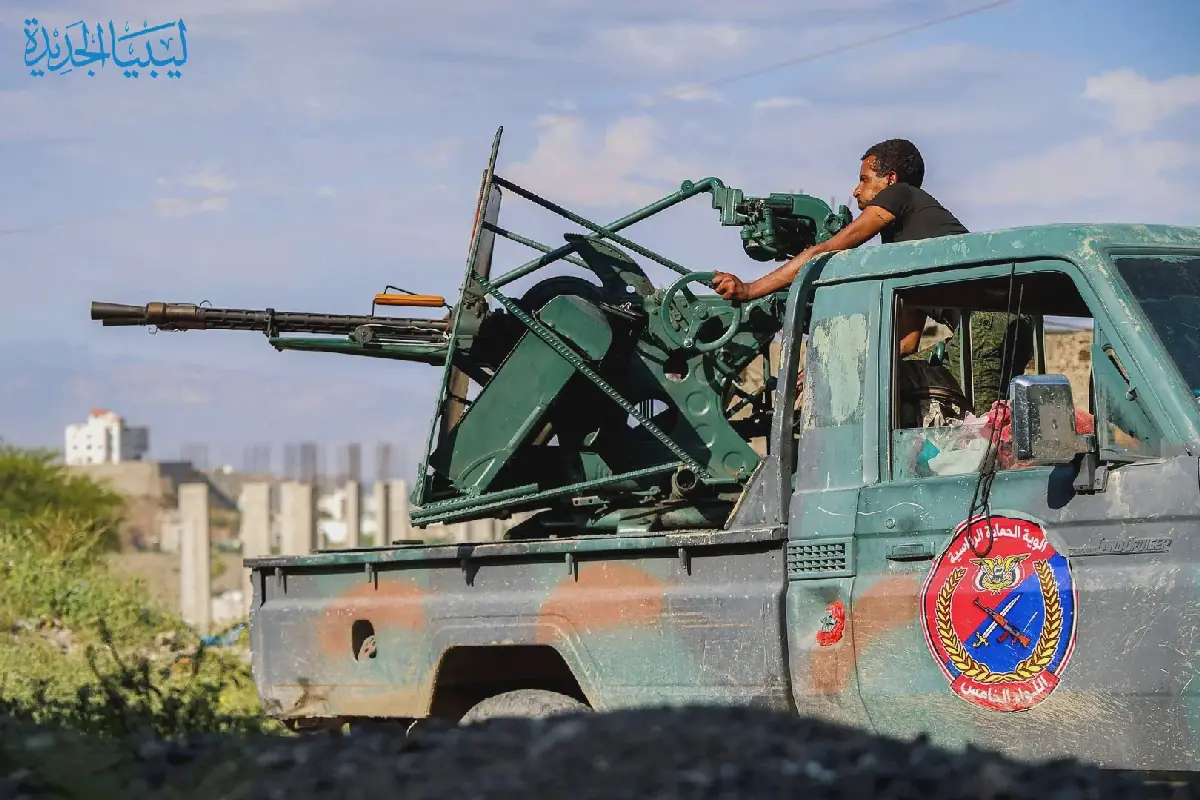
A recent surge in military operations by the Yemeni government against Houthi rebels has not led to a significant shift in the balance of power on the ground. According to Dr. Ali Al-Dhahab, a Libyan military expert, the 1119 operations carried out by the Yemeni government have not resulted in a tangible change in the control map. He attributes this to the lack of investment in the results of these operations on the ground, which has hindered the government's ability to achieve a decisive advantage.
The Yemeni government had announced that the operations, which targeted Houthi leaders, gatherings, and reinforcements, were part of an effort to regain control of territory. However, Dr. Al-Dhahab notes that the intensity of these operations has not translated into a corresponding change in the ground situation. He emphasizes that military strikes alone do not necessarily lead to a change in the control map, unless their results are invested in on the ground through the advancement of forces and the achievement of military gains.
In a related development, Dr. Al-Dhahab points to a limited change in the Al-Jawf governorate, where government forces have managed to gain control of mountainous areas east of the city of Al-Hazm. This development provides government forces with a firepower advantage, allowing them to monitor Houthi supply lines or approach the center of the Al-Hazm district. However, this limited progress is offset by the Houthis' continued advance in other areas, including the Lahj governorate.
The ongoing conflict in Yemen has resulted in significant human suffering and infrastructure damage. The Houthi rebels have been engaged in a longstanding conflict with the Yemeni government, which has been exacerbated by external interventions. Dr. Al-Dhahab's analysis highlights the complexities of the conflict and the challenges faced by the Yemeni government in regaining control of territory.
According to Dr. Al-Dhahab, the Yemeni government's failure to achieve a decisive advantage on the ground raises questions about the effectiveness of its military strategy. He notes that the absence of air support for government forces has hindered their ability to make significant gains. This has led to concerns about the organizational and leadership capabilities of the government forces.
The conflict in Yemen has also had regional implications, with neighboring countries closely monitoring the situation. Dr. Al-Dhahab's comments suggest that the Yemeni government's efforts to regain control of territory will require a more comprehensive strategy that addresses the underlying challenges facing its military. This may involve increased support from external partners or a re-evaluation of the government's military approach.
The situation in Yemen remains volatile, with ongoing clashes between government forces and Houthi rebels. Dr. Al-Dhahab's analysis underscores the need for a sustainable solution to the conflict, which will require a combination of military and diplomatic efforts. The international community continues to watch the situation closely, with many calling for a peaceful resolution to the conflict.
Key points
- The Yemeni government's 1119 operations against Houthi rebels have not led to a significant shift in the balance of power on the ground.