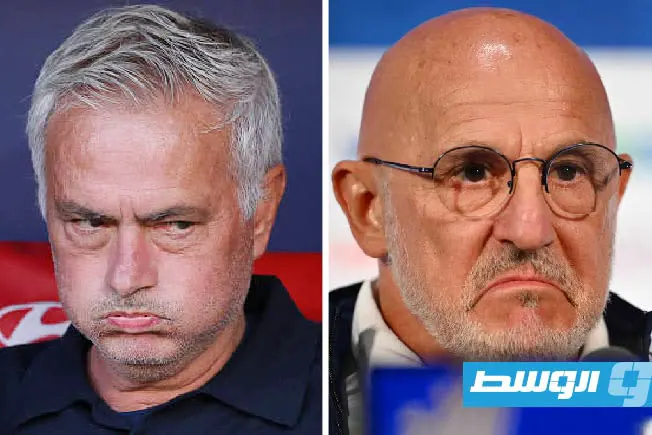
A recent controversy in Spanish football, involving Real Madrid coach Jose Mourinho's criticism of referees, is unlikely to have a direct impact on Libyan football. The issue arose after Mourinho expressed frustration with refereeing decisions in a match against Atletico Madrid, suggesting that the competition was not run fairly. In response, Spanish national team coach Luis de la Fuente defended the country's referees, stating that they are among the best in the world.
De la Fuente made it clear that he does not share Mourinho's concerns about refereeing bias, saying that he does not think about conspiracy theories or match-fixing. He emphasized the importance of fair play and the integrity of the game, suggesting that if anyone doubts this integrity, it would be better to stop playing altogether. This stance is reflective of the broader Spanish football community's commitment to fair play.
The controversy in Spanish football has garnered significant attention, with many commentators weighing in on the issue. Some have supported Mourinho's concerns, while others have backed de la Fuente's defense of the referees. The debate highlights the challenges of ensuring fair play in professional sports and the importance of maintaining the integrity of competitions.
In Libya, football is a popular sport, but it is not directly impacted by the controversy in Spanish football. The Libyan football league has its own set of challenges, including issues related to infrastructure, funding, and security. However, the country's football community can learn from the experiences of other countries, including Spain, in terms of promoting fair play and integrity.
The incident involving Mourinho and de la Fuente has sparked a wider discussion about the role of referees in football and the challenges they face. Referees play a crucial role in ensuring that matches are played fairly, but they are not immune to making mistakes. The use of technology, such as video assistant referees (VARs), has helped to reduce errors, but it is not a foolproof solution.
De la Fuente's comments about the quality of Spanish referees reflect a broader sense of pride in the country's football tradition. Spain has a rich football history and has produced some of the world's top players and teams. The country's football community takes pride in its commitment to fair play and sportsmanship.
In conclusion, while the controversy in Spanish football has generated significant attention, it is unlikely to have a direct impact on Libyan football. However, the debate highlights the importance of promoting fair play and integrity in football, which is a key concern for football communities around the world, including in Libya.
Key points
- The controversy in Spanish football has sparked a wider discussion about the role of referees and the challenges they face in ensuring fair play.
- Spanish national team coach Luis de la Fuente has defended the country's referees, stating that they are among the best in the world.
- The incident has highlighted the importance of promoting fair play and integrity in football, which is a key concern for football communities around the world.