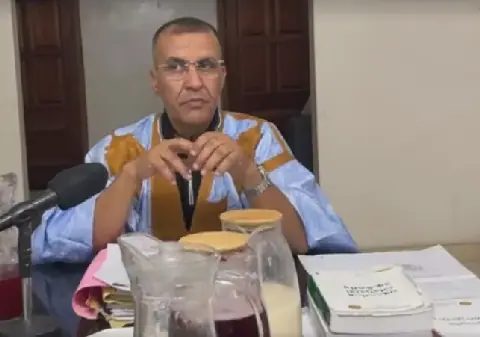
Libyan economist and politician Sadiq bin Sharada has issued a warning against treating the symptoms of the country's economic crisis, instead calling for a comprehensive reform plan to tackle its root causes. In a recent post on social media, bin Sharada emphasized that increasing salaries alone will not solve the country's economic problems, as it may lead to a rapid decline in the value of the Libyan dinar and a rise in prices. He stressed that a thorough reform plan is needed to address the country's economic challenges.
Bin Sharada pointed out that the country's economic crisis goes beyond financial decisions related to salary increases or adjustments to wage tables. He noted that the crisis reveals deeper imbalances related to public financial management, government spending, and subsidy bill growth. The economist called for a package of financial, monetary, and administrative policies to address the causes of the crisis, rather than just its symptoms. He also emphasized the need for a fair and efficient system for distributing subsidies and ensuring that benefits reach those who need them most.
The subsidy bill has risen from around 6 billion dinars to 15 billion dinars, according to bin Sharada. He called for a review of this system and its reduction to pre-2021 levels. Bin Sharada also stressed the need for rationalizing government spending, as continued expansion in expenditures without clear controls limits the state's ability to direct resources towards basic priorities. This is particularly important in a country heavily dependent on oil revenues, where controlling spending is crucial to addressing revenue fluctuations and providing basic population needs.
Bin Sharada also criticized the country's open import policy, which has led to the importation of basic necessities, including drinking water, using dollars. He argued that this has put pressure on foreign currency demand and increased the sensitivity of the local market to any disturbance in currency availability or exchange rate changes. The economist called for a more disciplined economic policy that balances citizen needs with foreign currency conservation and reduces unnecessary imports.
Bin Sharada also touched on the issue of appointments to public office, criticizing the phenomenon of reaching high-level positions without sufficient experience or qualifications. He compared this to countries where career paths are built on competence, gradual progression, and experience. Bin Sharada emphasized the importance of efficient management of public institutions and the selection of qualified individuals for leadership positions, particularly in managing complex economic files such as monetary policy and public spending.
Bin Sharada called for listening to experts and economic experiences, citing a session sponsored by the House of Representatives. He urged consideration of the questions raised by Dr. Amaraj Gith, the warnings and diagnoses presented by Dr. Suleiman Al-Shukumi, and the expertise of Dr. Mohamed Abusnina, as well as the economic thought and philosophy of Dr. Atia Al-Fituri. This, he believes, can help transform economic diagnoses into executable policies with clear responsibilities, timelines, and performance indicators.
Finally, bin Sharada discussed his meeting with the Governor of the Central Bank of Libya, where they emphasized the need to maintain the state's reserves and keep the central bank away from political conflicts and divisions. The meeting also highlighted the importance of working as a single team within the management committee and establishing principles of governance and institutional management. Bin Sharada expressed his hope that the Governor and the management committee will succeed in their duties, ensuring the stability of the financial and monetary system.
Key points
- The Libyan economist Sadiq bin Sharada has called for a comprehensive reform plan to address the country's economic crisis, warning that treating symptoms alone will not solve the problem.
- Bin Sharada emphasized the need for rationalizing government spending, reducing the subsidy bill, and implementing a more disciplined economic policy to conserve foreign currency.
- He also stressed the importance of efficient management of public institutions, selecting qualified individuals for leadership positions, and listening to experts and economic experiences.