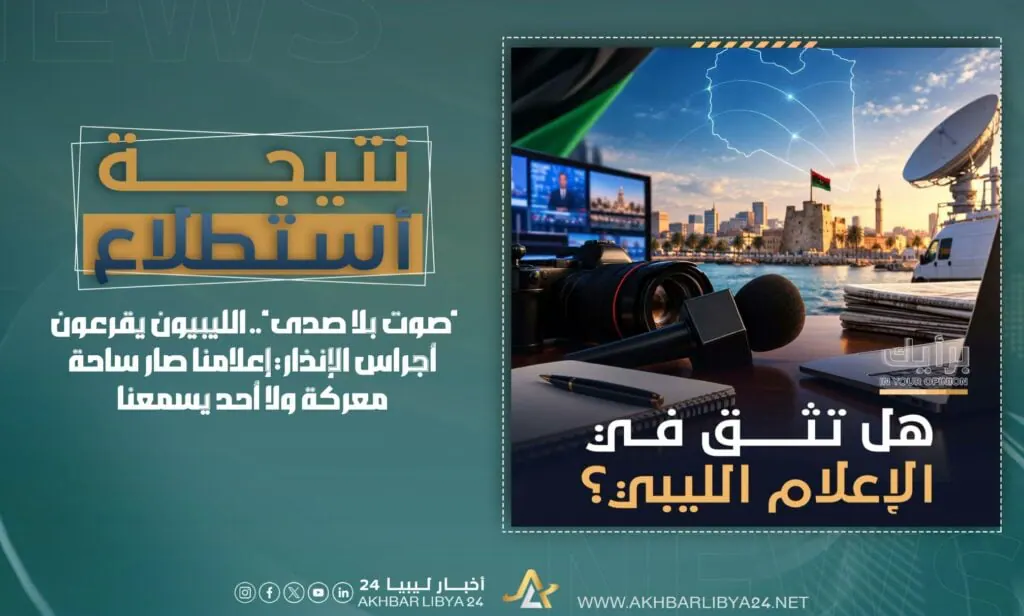
The media landscape in Libya has become increasingly polarized, with many citizens expressing frustration with the lack of credible news sources. A recent survey conducted by Akhbar Libya 24 found that Libyans have lost trust in the media, citing bias and propaganda. The survey revealed that the proliferation of media outlets since 2011 has not been accompanied by effective regulation or professional standards, leading to a situation where many outlets have become tools for political factions.
The proliferation of media outlets in Libya has led to a situation where each outlet is aligned with a particular political faction, further exacerbating the polarization of the media landscape. This has resulted in a lack of independent and impartial reporting, with many outlets prioritizing the interests of their sponsors over factual reporting. On social media platforms, the situation is not much better, with many users exposed to misinformation and propaganda.
Libyan citizens have expressed frustration with the lack of credible media, citing the emotional toll of consuming biased or misleading information. Many have turned to social media platforms as a source of news, but even these platforms are not immune to the problems of misinformation and propaganda. The situation has led to a crisis of trust, with many citizens questioning the reliability of all media sources.
The economic and social implications of the media crisis in Libya are significant. The lack of credible media has made it difficult to hold those in power accountable for their actions, and has contributed to a culture of corruption and impunity. The crisis has also had a profound impact on the social fabric of Libyan society, with many citizens feeling increasingly disconnected from the media and from each other.
The security situation for journalists in Libya is also a major concern. Since 2014, many journalists have been targeted for their work, with some being forced into exile or silence. This has created a culture of fear and self-censorship, where even independent journalists are reluctant to report on sensitive topics.
The crisis in Libya's media landscape has significant implications for the country's future. The lack of credible media has made it difficult for citizens to make informed decisions about their lives, and has contributed to a sense of disconnection and disillusionment with the political process. To address this crisis, there is a need for a comprehensive approach that prioritizes the development of independent and impartial media outlets.
Ultimately, the restoration of trust in Libya's media will require a concerted effort from all stakeholders, including the government, civil society, and the media itself. This will involve a commitment to promoting independent and impartial reporting, as well as measures to protect journalists and ensure their safety. Only then can Libyans begin to rebuild their media landscape and reclaim their right to accurate and unbiased information.
Key points
- Libyans are calling for credible media sources amid a crisis of trust in the country's media landscape.
- The media crisis in Libya has significant economic and social implications, including a lack of accountability and a culture of corruption.
- The security situation for journalists in Libya remains a major concern, with many facing threats and intimidation.