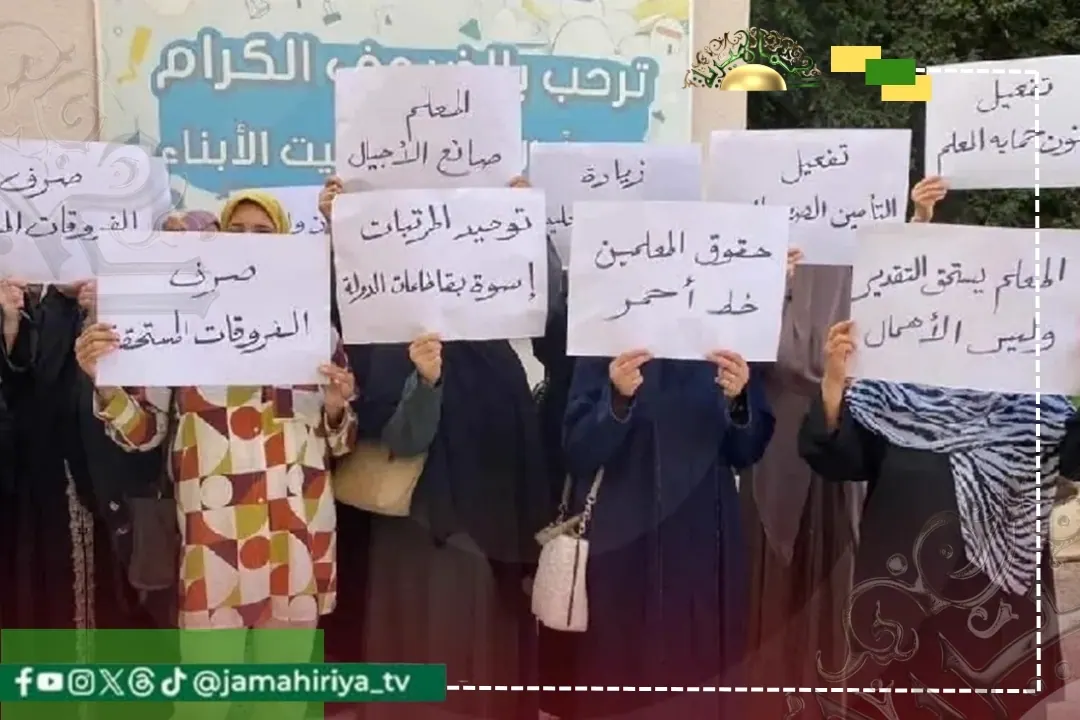
The teacher strike in Libya has entered its second week, with tens of thousands of educators refusing to work, causing widespread disruptions to public school education. The strike is centered on demands for higher salaries, payment of financial differences, and implementation of benefits and rights for teachers. According to a report by the Arabi 21 website, the education sector employs around 650,000 staff, with approximately 180,000 teachers directly employed in schools.
The report highlights that the average monthly income for education sector workers is around 1,800 Libyan dinars, equivalent to approximately $190 based on the parallel market exchange rate. Supporters of the teachers' demands argue that improving their living and professional conditions is crucial for developing the education system and supporting social and economic development. However, critics oppose salary increases, citing the presence of many non-practicing or low-productivity education sector workers.
The issue of salaries raises significant financial concerns, with the total wage bill in Libya nearing 75 billion dinars annually, accounting for over half of public spending. Opponents of salary increases fear that meeting the teachers' demands could set a precedent for other government sectors to make similar demands, further increasing public expenditure. This has sparked a complex debate, intertwining economic, political, administrative, and social factors.
The strike has brought to the forefront the challenges facing Libya's education sector, with an estimated 60% of the education workforce either unemployed or unproductive, according to official estimates. This hampers efforts to address the salary issue without first addressing sector imbalances. The ongoing political crisis in Libya is seen as exacerbating economic and social challenges, making it difficult to find lasting solutions to the education crisis.
The report emphasizes that resolving the education crisis requires addressing administrative and financial imbalances, as well as a broader resolution to Libya's political and economic challenges. The intertwined nature of these issues suggests that a comprehensive approach will be necessary to bring about meaningful change. As the strike continues, the situation remains uncertain, with no clear resolution in sight.
The Libyan government faces mounting pressure to address the teachers' demands, with the strike now in its second week. The situation is being closely watched by various stakeholders, including international organizations and human rights groups. The impact of the strike on the country's education system and the broader economy is a growing concern.
As the crisis deepens, there are growing calls for a national dialogue to address the root causes of the education sector's challenges. This could involve a broad-based discussion on the future of education in Libya, including issues related to funding, curriculum development, and teacher training. The outcome of the strike and the government's response will likely have far-reaching implications for Libya's education system and its people.
Key points
- The Libyan teacher strike has entered its second week, with tens of thousands of educators demanding higher salaries and better working conditions.
- The education sector employs around 650,000 staff, with approximately 180,000 teachers directly employed in schools.
- The average monthly income for education sector workers is around 1,800 Libyan dinars, equivalent to approximately $190.