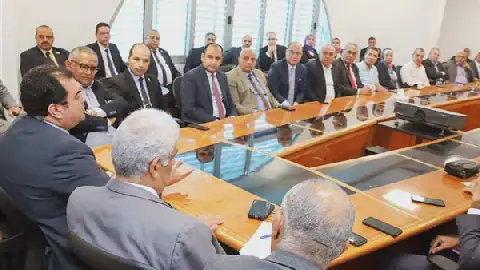
The Nigerian federal government has initiated a process to strengthen the regulatory framework governing the country's Special Economic Zones (SEZs). This move aims to close loopholes that could undermine the Free Zones scheme while ensuring that legitimate investors' incentives remain intact. The Minister of Industry, Trade and Investment, Dr. Jumoke Oduwole, made this assurance in Abuja as a committee began drafting revised legislative and regulatory instruments.
The Special Economic Zones Legislative and Regulatory Reform Committee's drafting retreat brought together various stakeholders, including the Federal Ministry of Justice, Federal Ministry of Industry, Trade and Investment (FMITI), Nigeria Export Processing Zones Authority (NEPZA), Oil and Gas Free Zones Authority (OGFZA), Nigeria Customs Service, and Nigeria Revenue Service (NRS). Presentations from the Nigeria Economic Zones Association (NEZA), National Single Window, Customs, and NRS were also featured, incorporating issues raised during a September 17 stakeholder engagement.
According to Dr. Oduwole, the reform is not intended to dismantle the Free Zones regime or withdraw incentives that have historically attracted investments into the country. Incentives such as duty-free importation of capital goods, tax exemption on qualifying export profits, 100 per cent foreign ownership, and unrestricted repatriation will remain central to the framework. The minister emphasized that the goal is to protect legitimate investors by making rules clearer and institutional responsibilities more defined.
The reform comes amid renewed scrutiny of the Free Zones scheme following recent enforcement actions by the Nigeria Customs Service. These actions were based on allegations that goods imported under Free Zone concessions were diverted into the domestic market. Dr. Oduwole stated that the government would address such weaknesses without undermining investors and operators that have complied with existing regulations.
The minister highlighted that the choice before Nigeria is not between preserving the Free Zones scheme and dismantling it, but rather whether the country can preserve what works, correct what does not, and build a framework capable of serving the economy. The inclusion of Customs and NRS as core members of the drafting committee was deliberate, as both institutions will implement key customs and tax provisions under the new framework.
The reform seeks to address several issues, including the treatment of existing investments, transition arrangements for current licensees, and the proposed 75:25 export-to-domestic-sales framework. Other areas of focus include customs coordination, joint inspections, simplified Customs exit procedures, foreign exchange and tax reporting, and services provided within Free Zones. The goal is to reduce multiple regulatory interfaces while ensuring that NEPZA and OGFZA retain their coordinating responsibilities within their statutory mandates.
A key principle emerging from the reform process is the need to balance the goals of attracting investment and protecting the domestic market. The government aims to create a framework that serves the economy while preventing the misuse of Free Zones for unauthorized activities. The revised legislative and regulatory instruments are expected to provide a clearer and more predictable environment for investors and operators in the SEZs.
Key points
- The Nigerian government is reforming its Special Economic Zones regulations to prevent loopholes and protect legitimate investors.
- Existing incentives for investors in Free Zones will remain intact, including duty-free importation of capital goods and tax exemptions.
- The reform aims to balance attracting investment and protecting the domestic market, preventing the misuse of Free Zones.